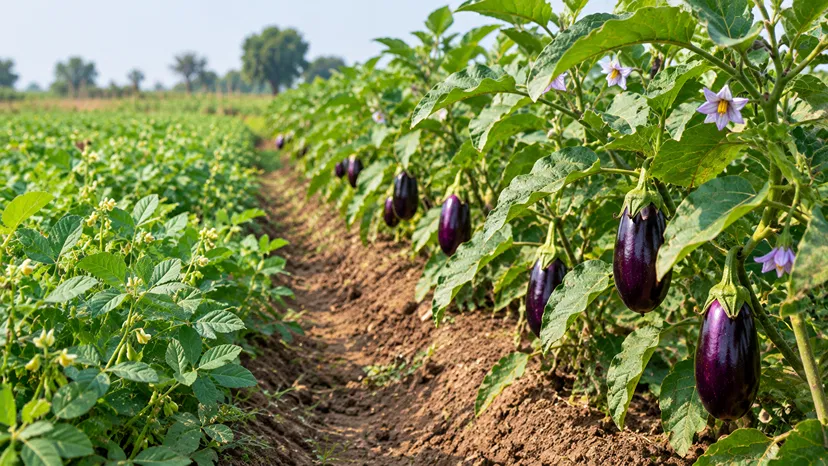
Brinjal (eggplant/baingan) is one of India's most widely grown vegetable crops — and also one of the most heavily attacked. From the moment seedlings are transplanted to the last harvest, brinjal plants are under constant pressure from sap-sucking insects and fruit-boring caterpillars that can cut yields by 30–90% if left unchecked.
The six most damaging brinjal pests are: shoot & fruit borer, whitefly, leafhoppers (jassids), thrips, aphids, and mites. Each one attacks a different part of the plant and needs a different control strategy — spraying the wrong product at the wrong stage is one of the biggest reasons brinjal growers lose money on pest control every season.
In this guide, we break down how to identify each pest, the damage it causes, and the solutions to control it, so you can plan sprays that actually work for the problem in your field.
1. Shoot & Fruit Borer (Leucinodes orbonalis)
This is brinjal’s number-one enemy. The caterpillar bores into tender shoots first, causing wilted, drooping “dead hearts,” then moves into developing fruits — leaving them riddled with holes and frass, and unfit for sale. Left unmanaged, shoot & fruit borer alone can destroy 50–90% of the marketable crop.
How to Spot It
Wilting shoot tips, small entry holes plugged with excreta on fruit, larvae visible inside cut-open fruit.
Solutions to Control It
| Product (Brand) | Active Ingredient |
|---|---|
| Coragen (FMC) | Chlorantraniliprole 18.5% SC |
| Fame (Bayer) | Flubendiamide 39.35% SC |
| Tracer (Corteva) | Spinosad 45% SC |
Bonus: Solomon (Bayer — Beta-cyfluthrin + Imidacloprid) is registered on brinjal for aphids, jassids and shoot & fruit borer together, so it’s a good rotation option when more than one of these pests is active at once.
2. Whitefly (Bemisia tabaci)
Whiteflies cluster on the underside of leaves, sucking sap and secreting honeydew that leads to sooty mould on leaves and fruit. Beyond direct feeding damage, whitefly is also the primary vector for leaf curl virus in brinjal — so early control matters more than the visible damage suggests.
How to Spot It
Tiny white moth-like insects that fly up in clouds when the plant is disturbed; sticky, blackened (sooty) leaves.
Solutions to Control It
| Product (Brand) | Active Ingredient |
|---|---|
| Actara (Syngenta) | Thiamethoxam 25% WG |
| Pegasus (Syngenta) | Diafenthiuron 50% WP |
| Oberon (Bayer) | Spiromesifen 22.9% SC |
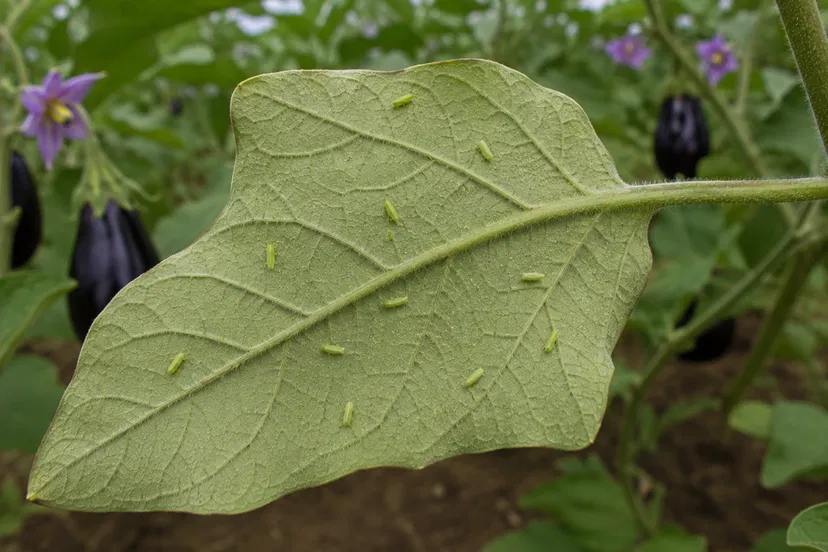
3. Leafhoppers / Jassids (Amrasca biguttula biguttula)
Jassids feed by piercing the underside of leaves and sucking sap, which causes the classic “hopper burn” — leaf margins curling downward and turning bronze/reddish before drying out. Heavy infestations stunt plant growth and reduce fruiting.
How to Spot It
Leaves curling downward at the edges with a yellow-to-bronze discoloration; small wedge-shaped green insects that hop or fly when disturbed.
Solutions to Control It
| Product (Brand) | Active Ingredient |
|---|---|
| Solomon (Bayer) | Beta-cyfluthrin 8.49% + Imidacloprid 19.81% OD |
| Ulala (UPL) | Flonicamid 50% WG |
| Lano (Sumitomo) | Pyriproxyfen 10% EC |
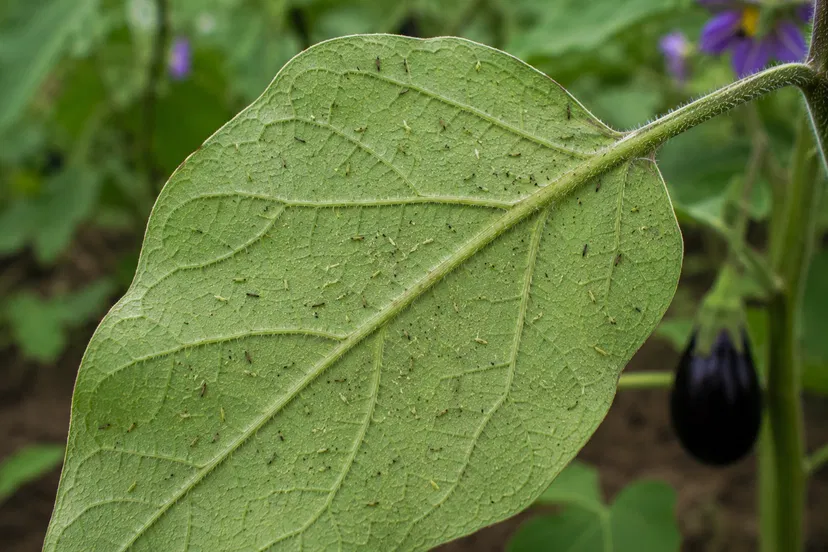
4. Thrips (Thrips palmi / Scirtothrips dorsalis)
Thrips scrape and feed on leaf and flower tissue, giving leaves a silvery, streaked appearance and causing flower and fruit drop under heavy pressure. They also hide in leaf folds and flower buds, making thorough spray coverage essential.
How to Spot It
Silvery streaks or patches on leaves, distorted young leaves, black specks (thrips excreta) on the underside of foliage.
Solutions to Control It
| Product (Brand) | Active Ingredient |
|---|---|
| Gracia (Godrej) | Fluxametamide 10% EC |
| Brofreya (PI Industries) | Broflanilide 20% SC |
| Lanevo (IIL) | Fluxametamide 5.81% + Bifenthrin 5.81% EC |
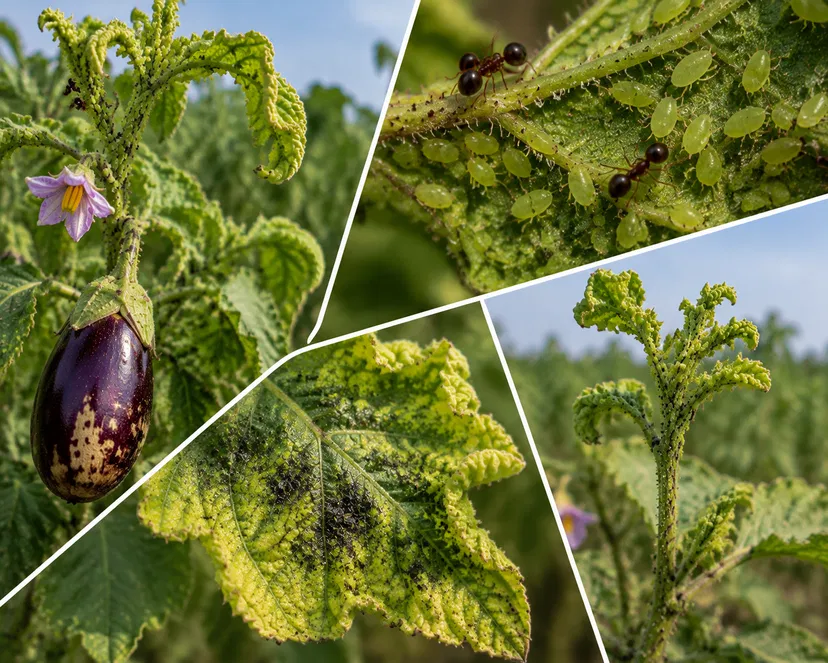
5. Aphids (Aphis gossypii)
Aphids colonise the underside of young leaves and shoot tips, sucking sap and stunting new growth. Like whitefly, they excrete honeydew that invites sooty mould, and heavy colonies can distort young leaves and reduce flowering.
How to Spot It
Clusters of small green/black soft-bodied insects on shoot tips and leaf undersides; curled, sticky young leaves; ants farming the colonies for honeydew.
Solutions to Control It
| Product (Brand) | Active Ingredient |
|---|---|
| Solomon (Bayer) | Beta-cyfluthrin 8.49% + Imidacloprid 19.81% OD |
| Ulala (UPL) | Flonicamid 50% WG |
| Tatafen (Tata Rallis) | Fenvalerate 20% EC |
6. Mites (Tetranychus urticae — Red Spider Mite)
Mites are barely visible to the naked eye but do outsized damage — feeding on the underside of leaves causes stippling (tiny pale dots) that spreads into bronzing and leaf drop. Populations explode fast in hot, dry weather, so early detection is critical.
How to Spot It
Fine yellow/white speckling on leaves, bronzed or dried-looking foliage, fine webbing on the underside of heavily infested leaves.
Solutions to Control It
| Product (Brand) | Active Ingredient |
|---|---|
| Oberon (Bayer) | Spiromesifen 22.9% SC |
| Magister (Corteva) | Fenazaquin 10% EC |
| Kunoichi (IIL) | Cyenopyrafen 30% SC |
Frequently Asked Questions
1. Which pest causes the most damage to brinjal?
Shoot & fruit borer (Leucinodes orbonalis) is generally the most destructive, since it attacks the marketable fruit directly and can destroy the majority of a crop’s yield if not managed from the vegetative stage onward.
2. How often should brinjal be sprayed for pest control?
Most labels recommend spraying at first pest appearance and repeating every 10–15 days depending on pest pressure, always respecting the pre-harvest waiting period before the next picking.
3. Can one product control multiple brinjal pests at once?
Yes — broad-spectrum products like Solomon (aphids, jassids, shoot & fruit borer) and Oberon (mites and whitefly) are registered for more than one pest on brinjal, which can reduce the number of separate sprays needed.
4. Why does the pre-harvest waiting period matter for brinjal?
Brinjal is typically picked every 3–5 days through the season, so a product with a longer waiting period needs to be timed carefully around your picking schedule to avoid residue issues.