

Introduction
The early monsoon period is one of the most important stages in cotton cultivation. Healthy crop establishment during the first 30–45 days helps the plant develop strong roots, proper branching, and better boll formation later in the season. However, this stage is also highly sensitive to pest attack. As soon as the crop emerges after sowing, several sucking pests begin attacking tender leaves and shoots.
In recent years, farmers have also become more alert about pink bollworm because early prevention is now considered very important in cotton farming. If pests are ignored during the initial stage, plant growth becomes weak and yield potential may reduce from the beginning itself.
Regular field monitoring, early identification, trap installation, and timely first spray are essential for protecting the crop during monsoon conditions.
Why Early Pest Management is Important in Cotton
Young cotton plants are soft and tender, making them highly attractive to sucking pests. These pests feed on plant sap and weaken the crop during the establishment stage. Heavy infestation may result in:
- Slow crop growth
- Poor root and shoot development
- Reduced leaf area
- Curling and drying of leaves
- Weak branching
- Delayed flowering and boll formation later
During monsoon weather, cloudy conditions and humidity also favor rapid pest multiplication. Farmers should begin crop scouting immediately after germination and continue regular inspection throughout the vegetative stage.
1. Thrips in Cotton
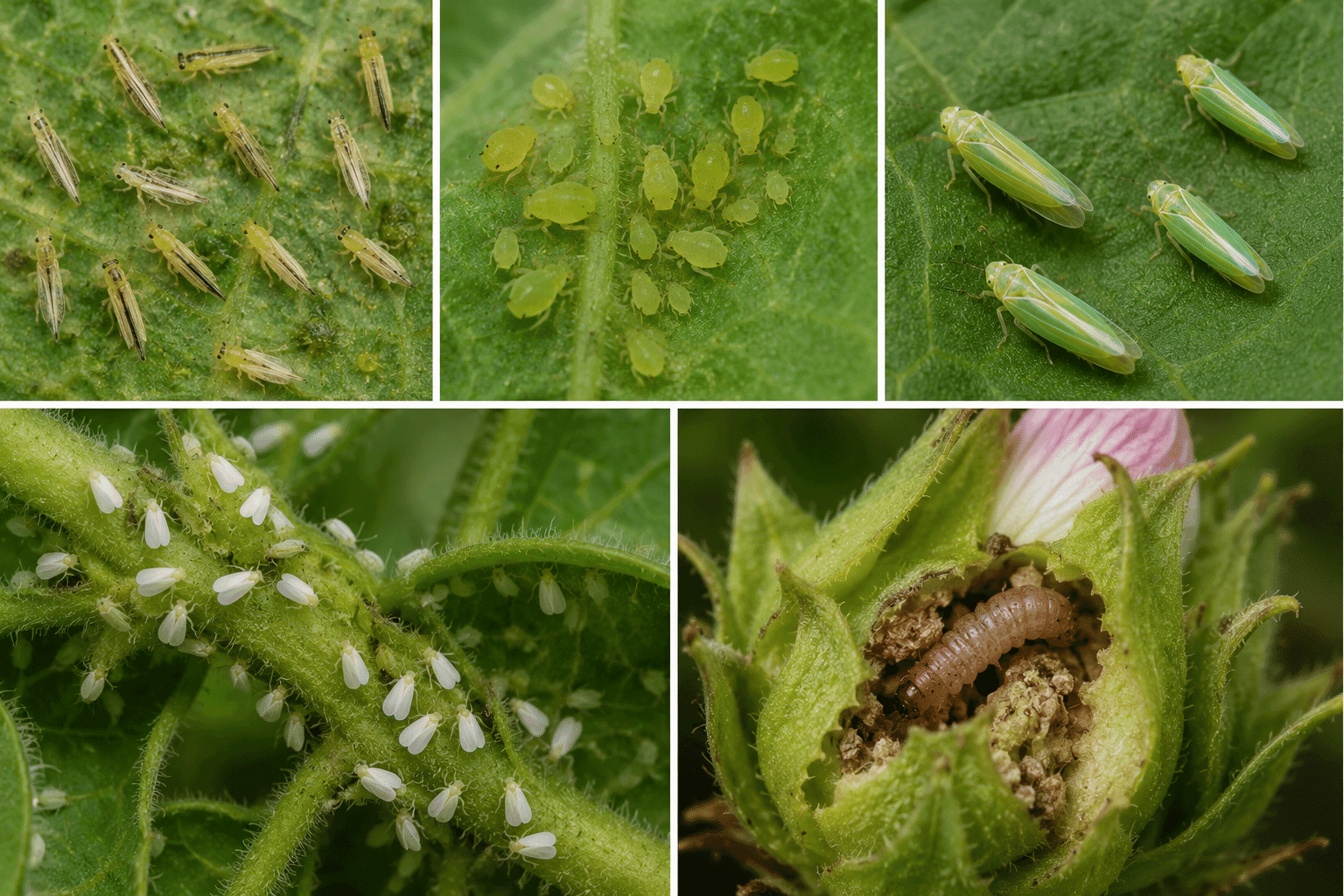
Thrips are among the first pests seen in newly emerged cotton fields. They are tiny slender insects that feed by scraping and sucking sap from tender leaves.
Symptoms of Thrips Damage
Farmers may observe:
- Silvery or shiny streaks on leaves
- Curling of young leaves upward
- Rough leaf surface
- Drying of leaf margins
- Stunted plant growth
- Weak seedlings in severe infestation
Thrips attack is usually more severe during dry spells after sowing.
Economic Threshold Level (ETL)
Control measures should be started when:
- Curling and silvering symptoms increase rapidly on young leaves
- Thrips population is visible on tender leaves and growing points
First Spray Recommendation
Farmers should:
- Monitor the crop from seedling stage
- Avoid unnecessary nitrogen application
- Use only recommended insecticides when infestation crosses ETL
- Ensure proper spray coverage on tender leaves
Early-stage spraying gives better control before leaves become heavily damaged.
2. Aphids in Cotton
Aphids are soft-bodied sucking pests commonly found on the lower side of leaves and tender shoots. They multiply very quickly during cool and humid weather.
Symptoms of Aphid Attack
Common symptoms include:
- Curling of leaves
- Sticky honeydew secretion on leaves
- Black sooty mold development
- Weak and pale plants
- Ant movement on plants
- Clusters of small insects on leaves
Heavy infestation affects plant vigor and early growth.
Economic Threshold Level (ETL)
Farmers should take action when:
- Aphid colonies start spreading across multiple plants
- Honeydew and leaf curling become visible in patches
First Spray Recommendation
- Encourage natural predators like ladybird beetles and lacewings
- Avoid repeated broad-spectrum pesticide use
- Spray recommended insecticides only after proper field observation
- Cover the lower side of leaves properly during spraying
Early management prevents rapid spread across the field.
3. Jassids (Leaf Hoppers) in Cotton
Jassids are one of the most damaging early sucking pests in cotton. Both nymphs and adults suck sap from leaves and cause hopper burn symptoms.
Symptoms of Jassid Infestation
Farmers may notice:
- Yellowing along leaf margins
- Downward curling of leaves
- Brown or reddish leaf edges
- Drying of leaf margins
- Hopper burn symptoms
- Weak crop growth
Young plants are highly sensitive to jassid attack.
Economic Threshold Level (ETL)
Management should begin when:
- Leaf margin yellowing appears on young leaves
- Jassids are visible on the lower side of leaves
- Hopper burn symptoms begin spreading in the field
First Spray Recommendation
- Monitor fields regularly from early vegetative stage
- Use balanced fertilizers and avoid excess nitrogen
- Maintain proper plant spacing
- Spray recommended insecticides only after ETL is reached
- Ensure proper spray coverage on lower leaf surfaces
Timely control during the early stage helps maintain healthy vegetative growth.
4. Whiteflies in Cotton
Whiteflies are serious sucking pests in cotton because they not only weaken plants but also spread cotton leaf curl disease.
Symptoms of Whitefly Attack
Farmers should watch for:
- Small white insects flying when plants are disturbed
- Yellowing of leaves
- Sticky honeydew on leaves
- Black sooty mold development
- Weak crop growth
- Curling and drying of leaves
Whiteflies usually remain on the lower side of leaves.
Economic Threshold Level (ETL)
Control measures should begin when:
- Whitefly population starts increasing rapidly
- Honeydew and leaf yellowing become visible
- Whiteflies are easily seen flying during crop inspection
First Spray Recommendation
- Install yellow sticky traps early for monitoring
- Remove weeds around the field
- Avoid excess nitrogen fertilizer
- Spray recommended insecticides only after need-based observation
- Rotate insecticides with different modes of action
Early whitefly management also helps reduce virus spread.
5. Early Pink Bollworm Prevention
Pink bollworm has become one of the most important pests in cotton farming. Farmers now start preventive measures early instead of waiting for boll damage.
Although pink bollworm mainly damages squares and bolls later in the season, early monitoring is very important to reduce future infestation.
Early Warning Signs
Farmers should focus on:
- Monitoring moth activity
- Installing pheromone traps early
- Avoiding continuous cotton cultivation
- Destroying leftover cotton stalks from previous crop
Trap Installation Timing
Pheromone traps should be installed:
- Soon after crop emergence or within 30–35 days after sowing
- Before flowering stage begins
- Across different parts of the field for proper monitoring
Trap monitoring helps farmers understand moth activity and decide future management practices.
Early Prevention Measures
Farmers should:
- Use recommended sowing time for the region
- Avoid ratoon cotton and leftover plants
- Remove volunteer cotton plants nearby
- Follow proper field sanitation
- Encourage balanced crop growth
- Monitor traps regularly
Early prevention is more effective than late-season control after larvae enter bolls.
General First Spray Guidelines for Cotton Farmers
The first spray in cotton should never be done blindly. Farmers should base spraying decisions on pest observation and economic threshold levels.
Important spray precautions include:
- Inspect the field regularly before spraying
- Spray during morning or evening hours
- Avoid spraying during rainfall or strong winds
- Use clean water for spray preparation
- Follow recommended dosage only
- Rotate chemicals with different modes of action
- Avoid repeated spraying of the same insecticide
- Wear gloves, mask, and protective clothing during spraying
Unnecessary spraying during early crop stage can kill beneficial insects and lead to pest resurgence later.
Importance of Sticky Traps and Pheromone Traps
Trap installation has become an important part of early cotton pest management.
Yellow Sticky Traps
Useful for monitoring:
- Whiteflies
- Aphids
- Jassids
Install traps soon after crop emergence.
Blue Sticky Traps
Useful for monitoring thrips population.
Pheromone Traps
Useful for:
- Pink bollworm monitoring
- Early moth activity detection
Regular trap observation helps farmers take timely action before heavy infestation occurs.
Preventive Tips for Farmers During Early Monsoon
Farmers can reduce pest pressure by following simple preventive practices:
- Use healthy and recommended seed
- Follow timely sowing
- Maintain proper plant spacing
- Avoid excess nitrogen fertilizers
- Keep the field and bunds weed-free
- Monitor crop every 3–4 days
- Encourage natural enemies in the field
- Install traps at the correct time
- Avoid unnecessary pesticide sprays
Healthy early crop growth is the foundation for higher cotton yield later in the season.
Conclusion
Early monsoon pest management is very important in cotton cultivation because young plants are highly vulnerable to sucking pests and early pink bollworm activity. Thrips, aphids, jassids, and whiteflies can weaken crop growth during the initial stages, while early monitoring for pink bollworm helps reduce future boll damage.
Farmers should focus on regular field scouting, economic threshold levels, timely trap installation, balanced fertilizer use, and need-based first spray recommendations instead of routine spraying. Integrated pest management practices not only protect the crop but also help conserve beneficial insects and reduce unnecessary pesticide costs. Proper early-season management supports strong crop growth, healthy boll formation, and better overall yield.