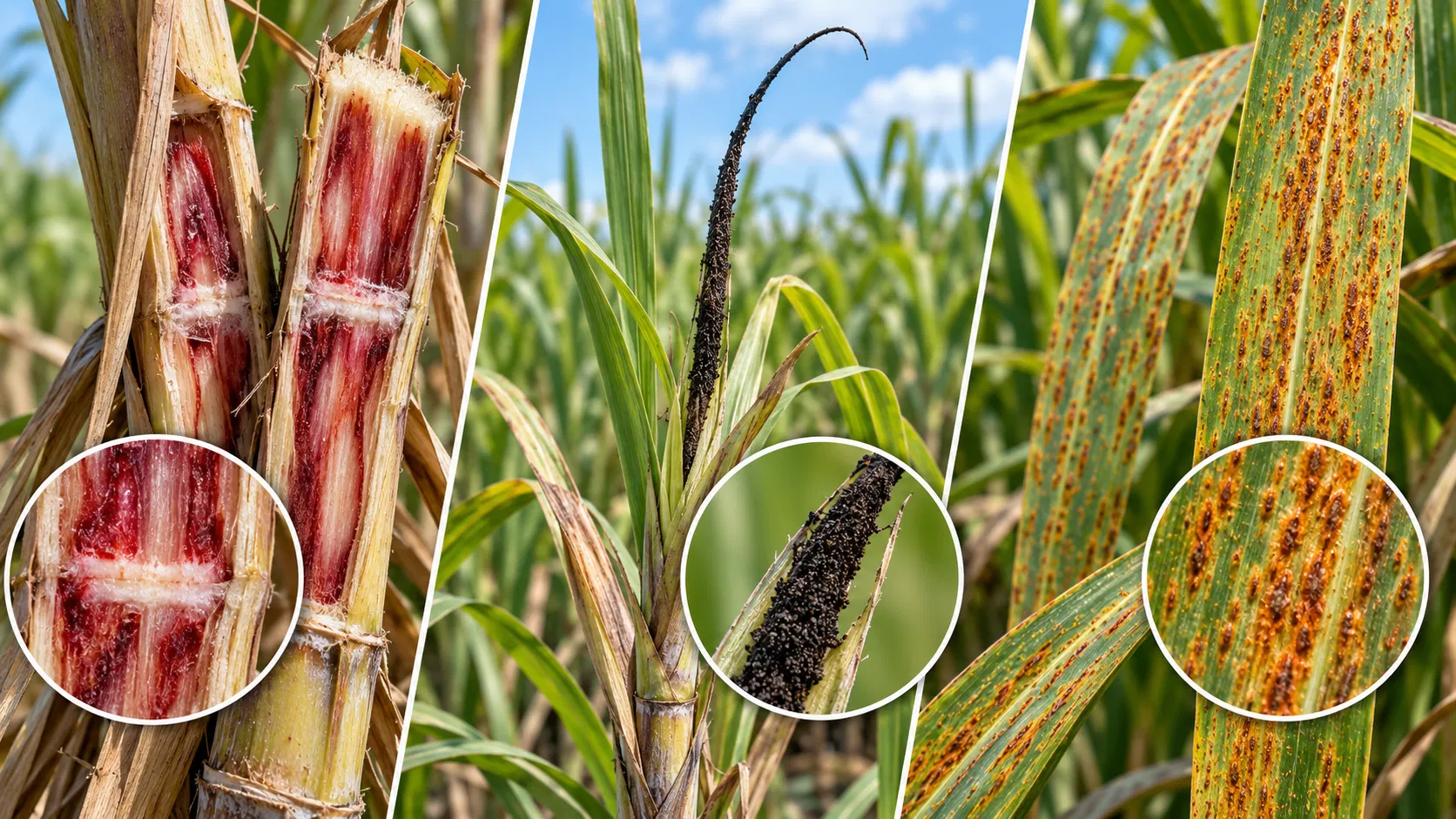
Sugarcane is a long-duration crop grown across large parts of India, and its yield depends heavily on the health of the standing cane through multiple seasons. Because the crop is propagated from setts and stays in the field for close to a year, fungal diseases that take hold early can spread through a field, weaken tonnage, and cut sugar recovery long before harvest.
This guide covers the three fungal diseases that most commonly affect sugarcane, how to identify each one in the field, and the fungicide solution available to manage them.
1. Red Rot (Colletotrichum falcatum)
Red rot is one of the most destructive sugarcane diseases. It attacks the internal stalk tissue, causing internode reddening, reduced juice quality, and can kill affected canes outright, leading to serious stand and tonnage losses in susceptible varieties.
How to Spot It
Externally, look for yellowing and drying of leaves starting from the midrib, along with drooping or dead top shoots on affected canes. Splitting an infected stalk open reveals red discoloration of the internal tissue interrupted by white patches, along with a distinct alcohol-like or vinegary smell in advanced infections.
Solutions to Manage/Control It
| Product | Active Ingredient |
|---|---|
| Syngenta Amistar Top Fungicide | Azoxystrobin 18.2% + Difenoconazole 11.4% SC |
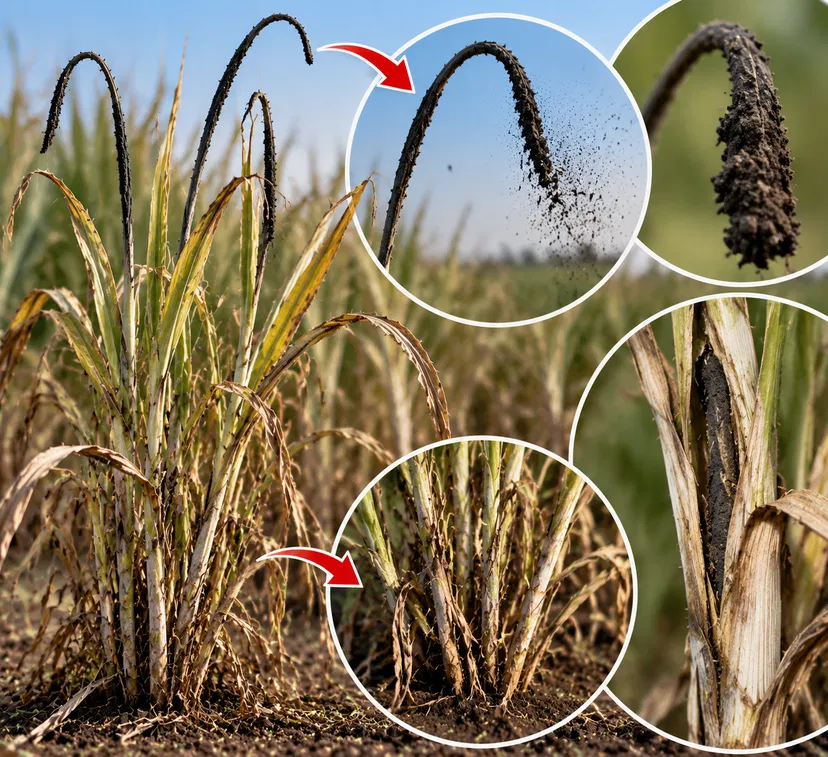
2. Smut (Sporisorium scitamineum)
Smut is a systemic fungal disease that produces a characteristic black whip from the shoot apex. Infected clumps put out thin, spindly canes with reduced girth, cutting both tonnage and sugar recovery over the crop cycle.
How to Spot It
Watch for a long, black to grey, whip-like structure emerging from the growing point of the cane, covered by a thin silvery membrane that ruptures to release black spores as it matures. Affected clumps also produce narrow, grass-like shoots that look distinctly thinner than healthy cane.
Solutions to Manage/Control It
| Product | Active Ingredient |
|---|---|
| Syngenta Amistar Top Fungicide | Azoxystrobin 18.2% + Difenoconazole 11.4% SC |
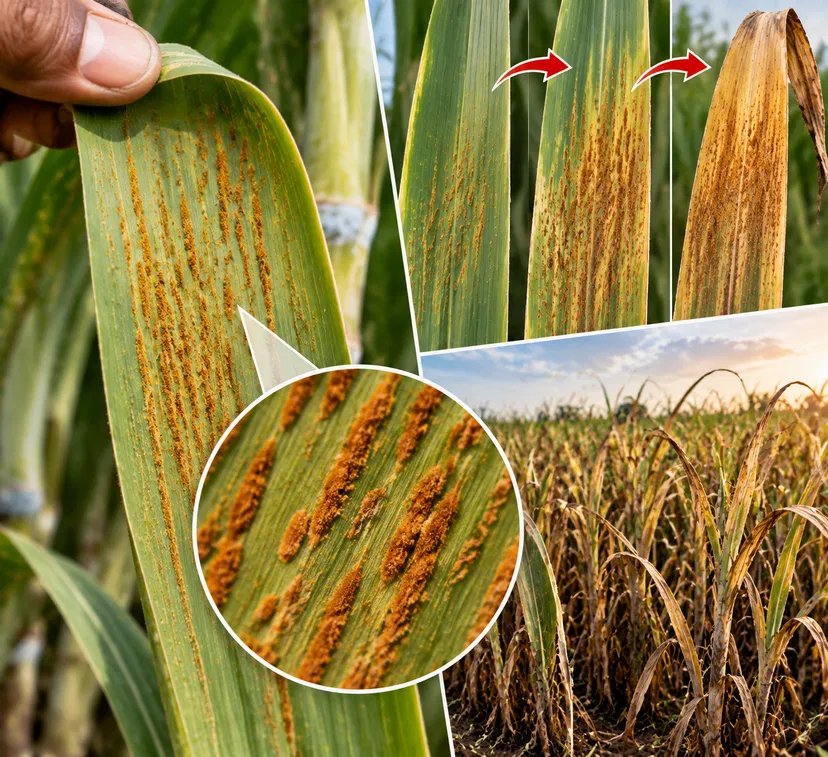
3. Rust (Puccinia melanocephala)
Rust reduces the leaf area available for photosynthesis, weakening overall plant vigour. Under humid conditions it can spread quickly across a field, lowering cane yield and juice quality by the time of harvest.
How to Spot It
Look for small, elongated, yellowish to orange-brown pustules running parallel to the leaf veins, mostly on the upper leaf surface. As the disease progresses, the pustules rupture and release a powdery, rust-coloured spore mass, and heavily infected leaves turn yellow and dry out prematurely.
Solutions to Manage/Control It
| Product | Active Ingredient |
|---|---|
| Syngenta Amistar Top Fungicide | Azoxystrobin 18.2% + Difenoconazole 11.4% SC |
Frequently Asked Questions
Which sugarcane disease causes the most yield loss?
Red rot is generally considered the most damaging, since it attacks the internal stalk tissue and can kill affected canes outright, leading to significant stand and tonnage loss in susceptible varieties.
Can a single fungicide spray control red rot, smut and rust together?
Yes, certain broad-spectrum systemic fungicides are registered for all three diseases on sugarcane, so one spray schedule can help manage the foliar and stalk-level spread of each.
Does fungicide spray alone fully control red rot in sugarcane?
Fungicide spray helps limit spread, but red rot is a systemic disease that also needs to be managed with disease-free setts, resistant varieties, sett treatment, and timely removal of infected clumps.
How does sugarcane smut spread between fields?
Smut spreads mainly through wind-borne spores released from the black whip, as well as through the use of infected setts for planting new fields.
- Always confirm the current label registration, approved dosage, and pre-harvest interval (PHI) for your state before using any product, as labels are periodically revised by regulatory authorities.
- This is general advisory content. Please do your own research and verify with a local agronomist or dealer before making any purchase, spray, or crop-management decision.