Nothing is more frustrating than planting seeds, waiting patiently, and ending up with an empty tray. If you’ve ever wondered whether old seeds are still worth planting, the good news is that you can test seed viability at home with a few easy methods. Knowing which seeds are viable saves time, money, and garden space while helping you plan a more successful growing season.
What Seed Viability Means
Seed viability refers to whether a seed is alive and capable of germinating under the right conditions. A viable seed has an embryo that is still healthy enough to sprout. Non-viable seeds may be damaged, too old, improperly stored, or simply no longer able to grow.
Testing seed viability at home is useful for older seed packets, saved seeds from your garden, or any seeds stored through winter. Instead of guessing, you can quickly find out which ones are worth planting.
The Easiest Seed Viability Test: The Paper Towel Method
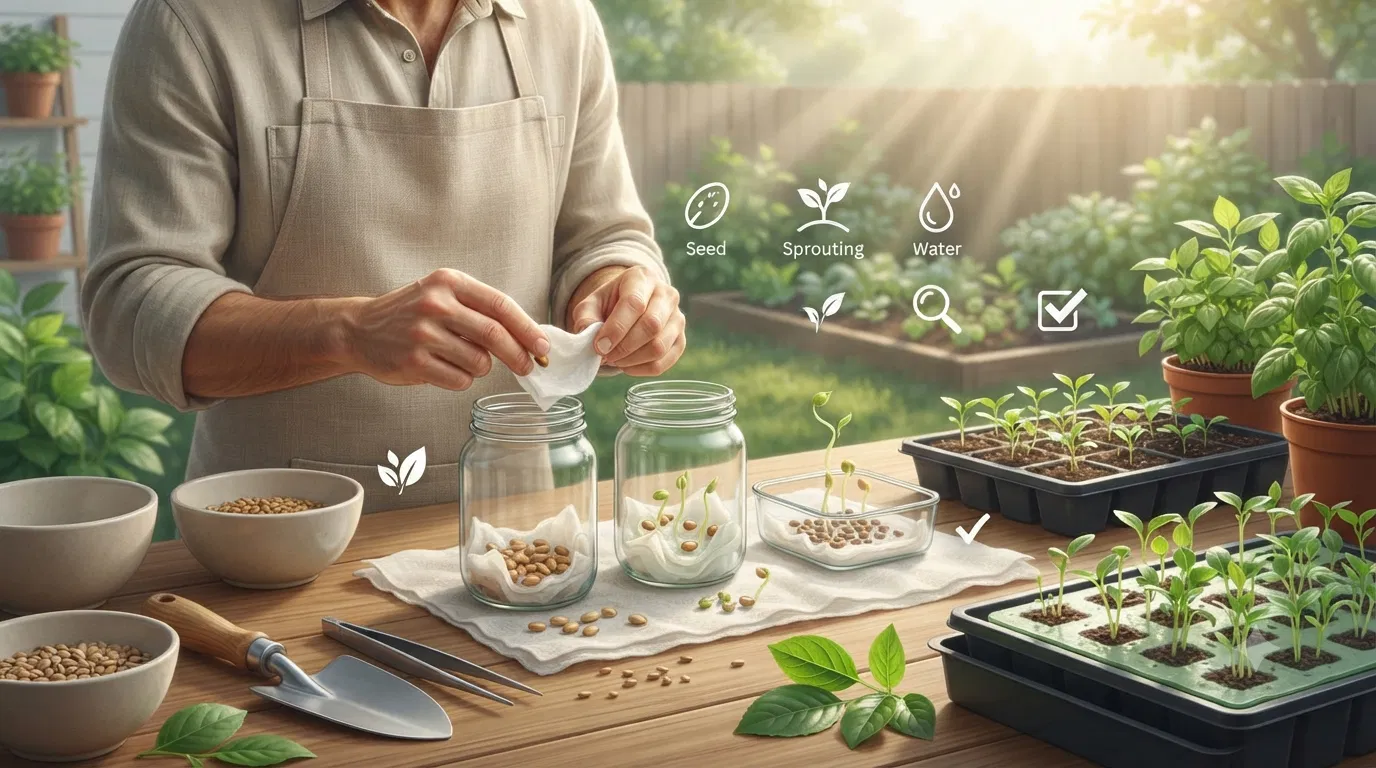
The paper towel test is one of the most reliable and beginner-friendly ways to test seed germination at home. It gives you a clear idea of how many seeds are likely to sprout before you plant them in soil.
What You Need
- Seeds you want to test
- Paper towels or a damp coffee filter
- A plate or plastic bag
- Water
- A marker for labeling
How to Do It
- Dampen a paper towel so it is moist but not dripping wet.
- Place 10 seeds on one half of the towel, spacing them apart.
- Fold the towel over the seeds to cover them.
- Place the towel on a plate or inside a labeled plastic bag.
- Keep it in a warm place that matches the seed’s ideal germination temperature.
- Check daily to make sure the towel stays moist.
Most seeds will begin germinating within a few days to two weeks, depending on the plant type. When the test is complete, count how many seeds sprouted.
How to Read the Results
If 8 out of 10 seeds sprout, your seed viability rate is 80 percent. That means you can expect a strong germination rate in the garden. If only 3 out of 10 sprout, the seeds may still grow, but you’ll likely need to sow more seeds to get a full planting.
Tip: A germination rate of 70 percent or higher is usually considered good for most home gardeners.
Another Simple Option: The Water Float Test
The water float test is a fast way to screen seeds, though it is not always as accurate as the paper towel method. It works best for larger seeds and older batches when you want a quick first check.
How to Do It
- Fill a bowl or glass with room-temperature water.
- Place the seeds in the water.
- Let them sit for 15 minutes to a few hours.
- Watch which seeds sink and which float.
Many gardeners assume sinking seeds are viable and floating seeds are not. While this can be helpful, it is not a perfect test. Some viable seeds float because of air pockets or seed coat traits, and some non-viable seeds may sink.
Use the float test as a quick sorting method, then confirm with a paper towel germination test if you want a more accurate result.
Signs Seeds May No Longer Be Viable
Even without testing, certain clues can suggest that seeds have lost their viability. Before you plant, inspect them for the following:
- Cracked, moldy, or soft seed coats
- Discoloration or unusual spots
- Seeds that feel hollow or papery
- Strong musty or rotten smells
- Very old seeds stored in hot, humid conditions
Healthy seeds should usually look dry, firm, and uniform for their type. If they appear damaged or degraded, their germination rate may be low even if a few still sprout.
How Seed Storage Affects Viability
Proper storage has a major impact on how long seeds stay viable. Cool, dry, dark conditions help preserve seed life much longer than warm, damp, or sunny spaces.
Seeds stored in airtight containers in a pantry, basement, or refrigerator often last longer than seeds left in a shed or garage. Moisture and heat are the biggest threats to seed viability. Even a great seed batch can lose its ability to germinate if stored poorly.
Best Storage Tips
- Keep seeds in a cool location
- Store them in airtight containers
- Protect them from direct sunlight
- Use silica gel packets or dry rice to reduce moisture
- Label packets with the seed name and date
How Long Do Seeds Stay Viable?
Seed lifespan depends on the plant variety, storage conditions, and seed quality. Some seeds remain viable for only a year or two, while others can last much longer.
For example, onion and parsley seeds often lose viability relatively quickly, while tomato, cucumber, and bean seeds can remain viable for several years when stored properly. Dense, hard-coated seeds often last longer than delicate ones.
If you are unsure about the age of your seeds, a home seed germination test is the safest way to know what to expect before planting season begins.
What to Do With Low-Viability Seeds
If your test shows a low germination rate, you do not necessarily need to throw the seeds away. You can still use them strategically.
Ways to Use Older Seeds
- Plant more seeds per hole or cell
- Sow them more densely in rows
- Use them for microgreens or sprouts if safe for eating
- Replace weak batches with fresh seed for important crops
For crops where every plant matters, such as tomatoes, peppers, or herbs, fresh seed is often worth the investment. For fast-growing greens or flowers, slightly lower viability may still be acceptable.
Best Practices for Testing Seed Viability at Home
To get the most reliable results, test a sample of seeds rather than just one or two. Ten seeds is a common number because it makes the math easy and gives you a better estimate of overall performance.
Also, keep conditions consistent. If the seeds need warmth to germinate, place the test in a warm location. If they require light, make sure they get it. Matching germination conditions closely gives you a more accurate result.
Finally, be patient. Some seeds sprout quickly, while others take longer. Check the expected germination time for the plant type before deciding the seeds have failed.
Quick Home Seed Viability Checklist
- Inspect the seeds for damage or mold.
- Choose a test method such as the paper towel test.
- Use 10 seeds for an accurate sample.
- Keep the test warm and consistently moist.
- Count how many seeds germinate.
- Calculate the germination percentage.
- Decide whether to sow more heavily or replace the seeds.
Conclusion: Test Before You Plant
Learning how to test seed viability at home is one of the simplest ways to improve your gardening success. A quick paper towel test or float test can save you from wasting time on seeds that will not sprout and help you make smarter planting decisions.
Whether you are working with old seed packets, saved garden seeds, or a new batch you want to verify, testing first gives you confidence. Before your next planting session, take a few minutes to check your seeds. That small step can make a big difference in your harvest.