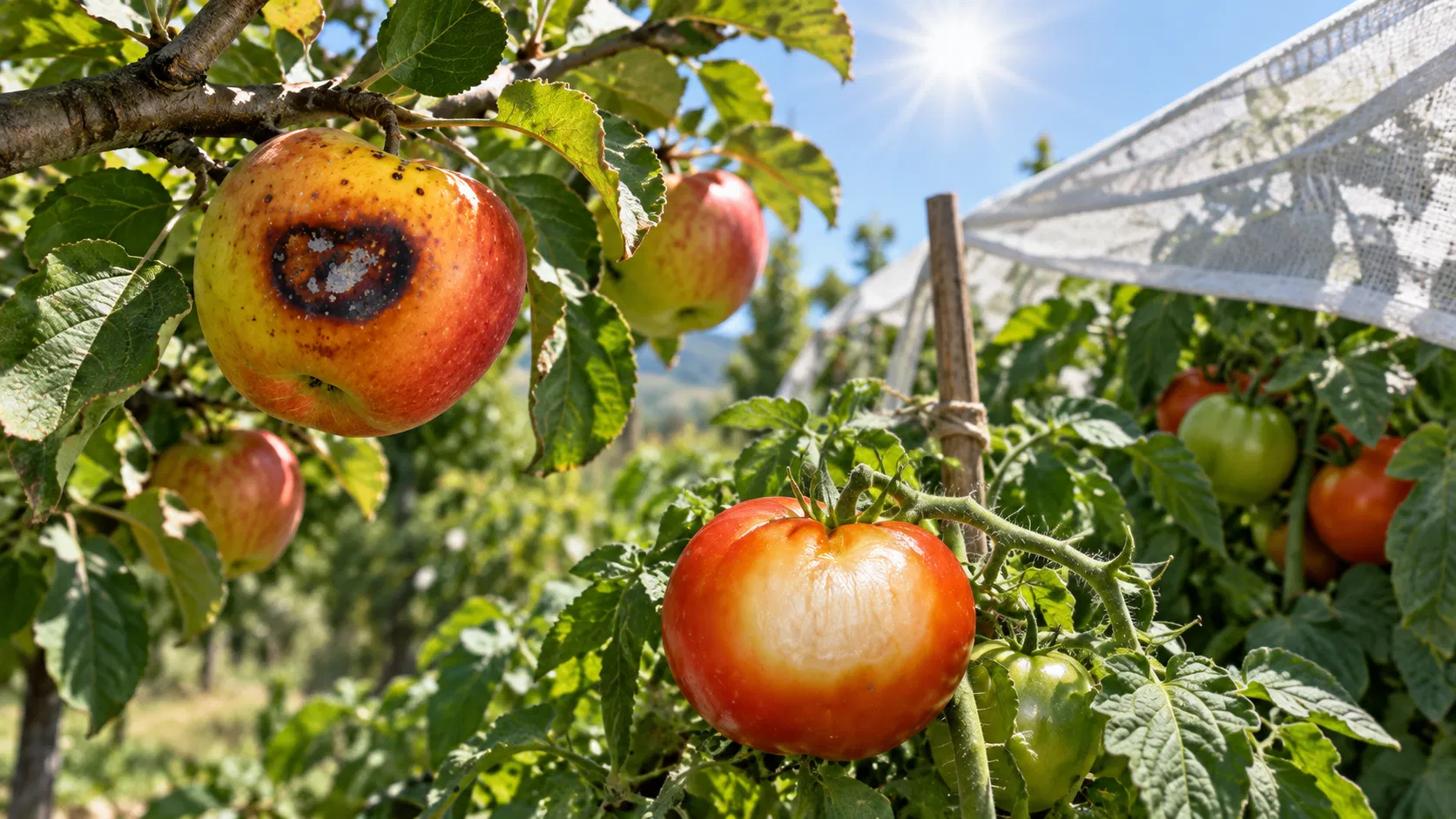
Sunburn is a physiological disorder, not a disease — it's tissue damage caused directly by excess heat and light exposure. In fruits like tomato, capsicum, chilli, apple, and pomegranate, it shows up as pale, bleached, or brown-black patches on the sun-facing side, and it's one of the leading causes of downgraded and unsellable produce during peak summer.
What Causes Sunburn
Sunburn develops when fruit or leaf surface temperature rises high enough to damage cell membranes and break down chlorophyll and pigments — this is a heat-tissue injury, distinct from UV-only damage. Contributing factors include:
- Sudden exposure: Fruit that was previously shaded by foliage gets exposed abruptly after pruning, leaf drop from disease, or defoliation from pests, and hasn't acclimated to direct sun.
- High ambient temperature combined with intense sunlight: Peak summer afternoons, especially above ~35°C, are the highest-risk window.
- Water stress: Plants under drought or inconsistent irrigation transpire less, so leaves and fruit can't cool themselves effectively, raising surface temperature further.
- Reflective or light-colored surfaces: Reflective mulches or bare, light soil can bounce additional heat and light onto lower fruit.
- Variety and canopy structure: Varieties with sparse foliage or upright growth habits expose more fruit directly to the sun.
How to Identify Sunburn
Symptoms vary slightly by crop, but common signs include a pale yellow or white patch on the exposed side of the fruit that later turns brown, leathery, or sunken; in some fruits like apple and pomegranate, the affected skin may crack, inviting secondary fungal infection. Unlike disease lesions, sunburn patches are typically confined to the side of the fruit that faced direct sun and don't spread as a ring or irregular blotch.
Prevention Strategies
1. Provide Shade Cover
Installing a shade net over vulnerable crops, especially during peak summer months, reduces direct light and heat intensity reaching fruit and canopy. A 30–50% shade net is generally sufficient for most vegetable crops without significantly reducing photosynthesis.
2. Maintain Consistent Irrigation
Keeping soil moisture even, rather than letting plants swing between drought and heavy watering, helps maintain transpirational cooling and reduces fruit surface temperature during heat spikes. Irrigate during cooler parts of the day where possible.
3. Manage the Canopy Carefully
Avoid heavy pruning right before or during a heatwave, since removing leaf cover exposes previously shaded fruit suddenly. Where pruning is necessary, do it gradually so fruit acclimates to increasing light levels.
4. Use Mulch to Moderate Soil and Root-Zone Heat
A mulching sheet reduces soil moisture loss and moderates root-zone temperature, which helps plants maintain steady transpiration and better withstand heat stress overall.
5. Strengthen Cell Walls with Calcium Nutrition
Fruit with stronger cell wall structure tends to tolerate heat stress better and shows less cracking after sunburn injury. A water-soluble calcium nitrate foliar spray during fruit development supports cell wall strength and can reduce associated disorders, though it should not be relied on as a substitute for shading in high-risk conditions.
Frequently Asked Questions
Is sunburn on fruit a disease?
No — it's a physiological (heat and light) injury, not caused by a pathogen, though sunburned areas can become entry points for secondary fungal infections.
Which crops are most prone to sunburn?
Tomato, capsicum, chilli, apple, pomegranate, and grapes are commonly affected, especially varieties with sparse canopy cover.
Can sunburned fruit still be sold?
Mild cases may pass for processing use, but visibly discolored or cracked fruit is usually downgraded or rejected in fresh markets.
Does overwatering cause sunburn?
Not directly — inconsistent watering (stress followed by excess) is more damaging than overwatering alone, since it disrupts the plant's ability to regulate temperature.
Disclaimer: General agronomic guidance; sunburn risk and appropriate shading level vary by crop, variety, and regional climate. Always follow product label instructions for any fertilizer application.