Aphids are tiny sap-sucking insects that can quietly weaken a groundnut crop before the damage becomes obvious. Here's everything you need to know about aphids in groundnut and the top solutions to treat and prevent them.
Symptoms of Aphids in Groundnut
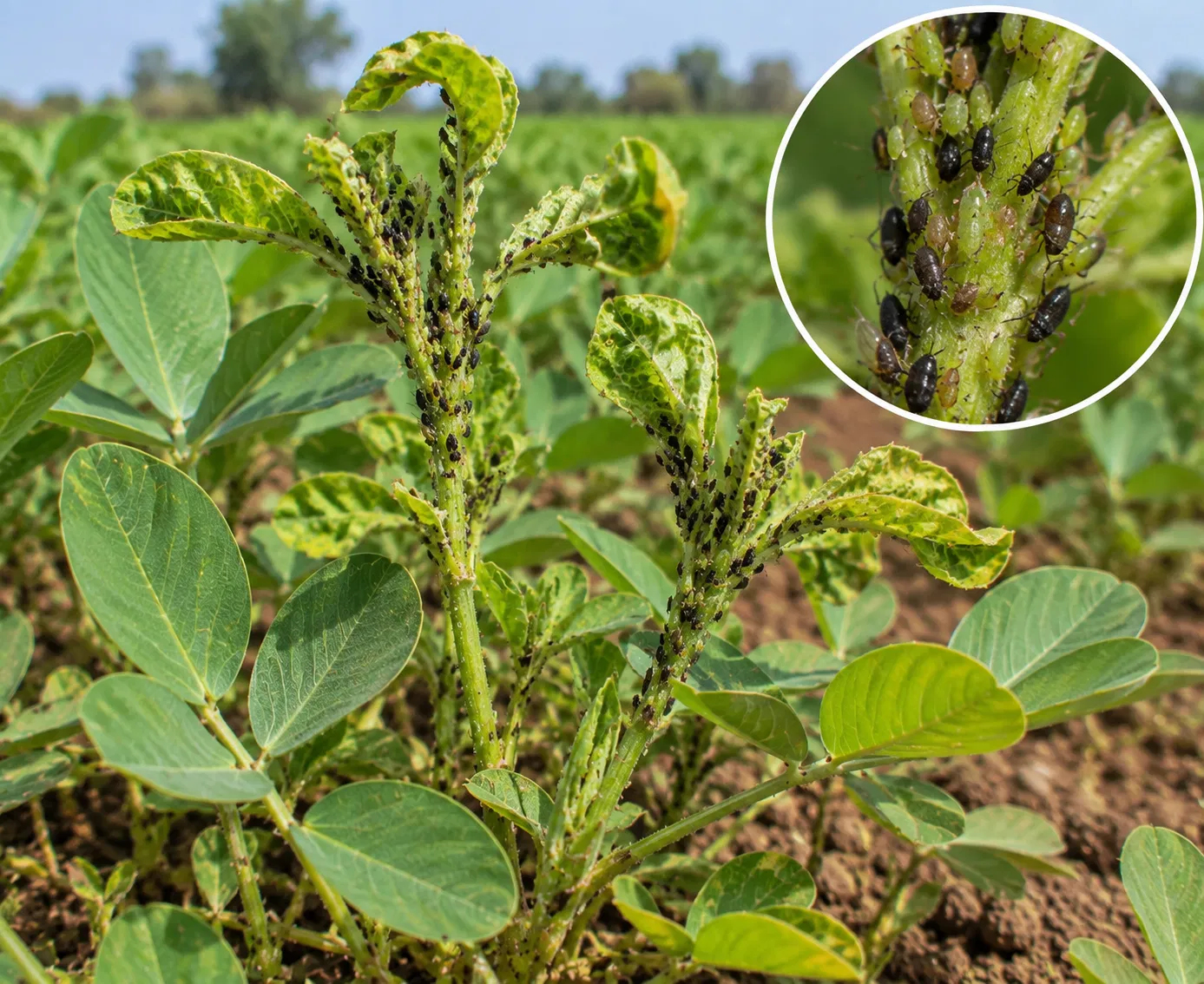
- Small, soft-bodied insects, green to black, clustering on the underside of leaves and young shoots
- Curling, crinkling, or yellowing of affected leaves
- Sticky honeydew on leaves, often followed by black sooty mould
- Stunted growth and poor pod development under heavy infestation
- Ants moving around infested plants, drawn by the honeydew
What Causes Aphid Infestations in Groundnut?
- Warm, dry weather that favours rapid aphid reproduction
- Excess nitrogen fertilisation, leading to soft, sap-rich new growth
- Dense planting with poor air circulation
- Nearby weeds or previous crops carrying an aphid population
- Loss of natural predators like ladybird beetles due to frequent broad-spectrum spraying
Prevention of Aphids in Groundnut
- Encourage natural predators like ladybird beetles and lacewings by avoiding unnecessary sprays
- Use yellow sticky traps to monitor and reduce flying aphid populations
- Follow a balanced fertilisation schedule and avoid excess nitrogen
- Keep field borders and bunds free of weeds that host aphids
- Monitor the crop regularly from the early vegetative stage onward
Ways to Control Aphids in Groundnut
1. Imidacloprid 17.8% SL
Imidacloprid is a systemic neonicotinoid insecticide that moves through the plant and is taken up by aphids as they feed. It gives long-lasting control and also works against jassids and thrips feeding alongside aphids.
2. Chlorpyrifos 20% EC
Chlorpyrifos is a broad-spectrum organophosphate that controls aphids through contact, stomach, and fumigant action. It also protects against soil pests like root grubs, making it a useful all-round option early in the season.
3. Thiamethoxam 30% FS
This is a seed treatment formulation that protects the young plant systemically from the moment it germinates, keeping early-season aphids and thrips away without needing an early foliar spray.
4. Pyraclostrobin 3.5% + Thiram 15% + Clothianidin 22.5% FS
This combination seed treatment brings together two fungicides with an insecticide, protecting germinating seed from soil-borne disease while clothianidin gives systemic protection against aphids, termites, and white grub right from the start.
5. Bifenthrin 8% + Clothianidin 10% SC
This combination pairs a fast-acting pyrethroid with a systemic neonicotinoid, giving groundnut protection against aphids above ground and white grub and termites in the soil at the same time.
6. Yellow Sticky Traps
Yellow sticky traps attract and catch winged aphids that spread within the field and from nearby crops, making them a useful non-chemical monitoring and control tool alongside sprays.
Note: Rotate between these insecticide groups through the season rather than repeating the same one, to avoid resistance development. Spray in the early morning or evening and avoid peak bee-foraging hours.
Disclaimer: Always confirm current label registration, approved dosage, water volume, and pre-harvest interval (PHI) for your state before using any product, since labels are periodically revised by regulatory authorities.
This guide is a general advisory. Do your own research and verification before using any product. Always confirm suitability for your crop stage, region, and field conditions before making any purchase, spray, or crop-management decision.