When farmers think of Single Super Phosphate (SSP), phosphorus is usually the first benefit that comes to mind. But SSP does far more than simply feed plants with one major nutrient. It can improve soil health, support stronger root development, and contribute key secondary nutrients that help crops perform better across the growing season. For growers looking to get more value from every fertilizer application, understanding the full role of SSP is essential.
What Is Single Super Phosphate (SSP)?
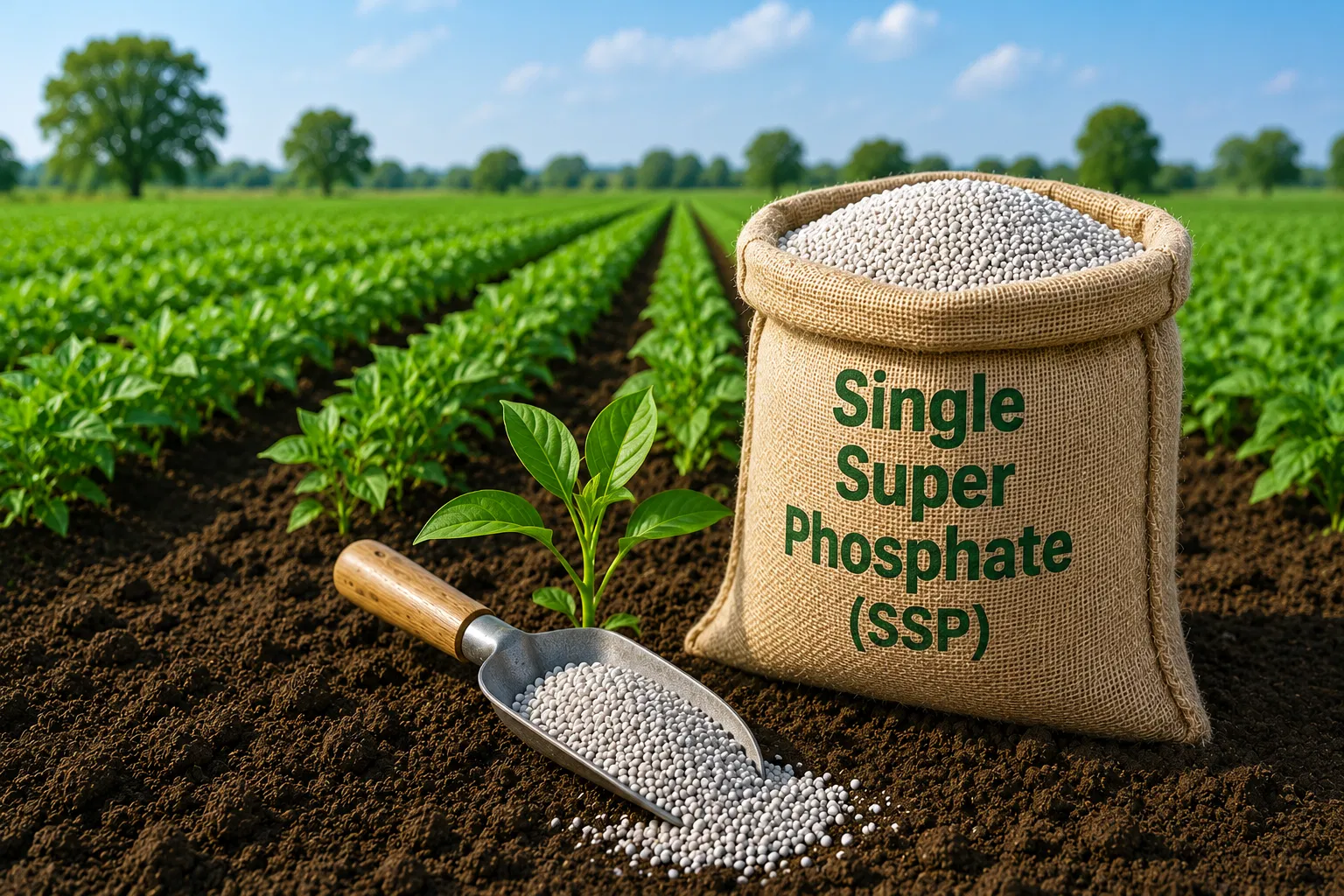
Single Super Phosphate is a granular or powdered fertilizer made by treating rock phosphate with sulfuric acid. It is widely used in agriculture because it supplies phosphorus in a plant-available form, along with calcium and sulfur. That combination makes SSP a practical and cost-effective choice for many crops and soil conditions.
While it is commonly used as a phosphorus fertilizer, SSP also contributes to balanced nutrition in ways that can improve crop vigor, yield quality, and soil performance.
Why SSP Matters Beyond Phosphorus
Phosphorus is vital for root growth, energy transfer, flowering, and early plant establishment. However, crops rarely thrive on phosphorus alone. They need a balanced supply of nutrients to build strong tissues, support enzyme activity, and maintain healthy metabolic functions.
That is where SSP stands out. In addition to phosphorus, it provides:
- Sulfur for protein formation and enzyme activation
- Calcium for cell wall strength and root development
- Improved nutrient availability in many soil types
These added benefits make SSP more than just a phosphorus source. It becomes part of a broader soil fertility strategy.
Key Benefits of Single Super Phosphate
1. Supports Strong Root Development
Phosphorus is essential for root growth, and SSP delivers it in a form that plants can use efficiently. Strong root systems allow crops to absorb more water and nutrients, especially during early growth stages or in challenging conditions.
Better rooting can lead to:
- Improved seedling establishment
- Greater tolerance to drought stress
- More efficient nutrient uptake
- Stronger early crop canopy development
2. Supplies Sulfur for Better Protein Formation
One of the most overlooked benefits of SSP is its sulfur content. Sulfur is crucial for the synthesis of amino acids and proteins, which directly affects crop quality and yield potential.
Crops such as oilseeds, pulses, cereals, and forage grasses often respond well to sulfur fertilization. In sulfur-deficient soils, SSP can help correct hidden hunger and improve overall plant performance.
Healthy crops need more than phosphorus. When phosphorus and sulfur work together, plants often grow more efficiently and develop better quality output.
3. Improves Cell Wall Strength with Calcium
SSP also contains calcium, a secondary nutrient that plays an important role in structural development. Calcium helps strengthen cell walls, supports root tip growth, and contributes to better plant integrity.
This can be especially helpful in soils with low calcium levels or in crops that need consistent structural support during active growth. A stronger plant structure often means improved resilience and better crop uniformity.
4. Enhances Early Plant Vigor
Early growth matters. Crops that establish quickly often have a better chance of competing with weeds, resisting stress, and reaching productive stages on time. SSP helps support this early vigor by delivering phosphorus, sulfur, and calcium in a single application.
For farmers, this can translate into:
- Faster crop establishment
- More uniform emergence and growth
- Improved stand quality
- Better use of moisture and nutrients
5. Can Improve Soil Fertility Strategy
SSP fits well into integrated fertility programs because it supplies multiple nutrients while remaining relatively simple to apply. In many farming systems, using SSP helps address more than one nutrient gap at a time.
This is particularly useful in soils where phosphorus and sulfur are both limiting. Instead of applying separate fertilizers, growers can use SSP as a practical solution that supports balanced nutrition.
6. Useful for a Wide Range of Crops
Single Super Phosphate is suitable for many agricultural crops, including cereals, oilseeds, legumes, root crops, and fodder crops. Its nutrient profile makes it especially valuable for crops with higher sulfur demand or soils that are low in available calcium.
It is often a strong choice for:
- Wheat and rice
- Mustard and other oilseeds
- Groundnut and soybean
- Pulses such as chickpea and lentil
- Fodder and forage crops
How SSP Helps in Different Soil Conditions
The effectiveness of SSP can vary depending on soil health, pH, and existing nutrient levels. In acidic or sulfur-deficient soils, the fertilizer can be especially valuable. In low-calcium soils, its added calcium provides an extra advantage.
Because SSP is not just a phosphorus source, it can play a bigger role in soils where multiple nutrient limitations are common. Farmers who test their soil regularly can use SSP more strategically and avoid nutrient imbalances.
Best Uses in the Field
SSP is often applied at sowing or planting time, allowing nutrients to be available early in the crop cycle. This timing is important because young plants need phosphorus and sulfur during establishment and root expansion.
For best results, SSP is commonly used as part of a broader fertility plan that may include organic matter, nitrogen, potassium, and micronutrients depending on crop needs.
SSP vs Other Phosphorus Fertilizers
Compared with some other phosphorus fertilizers, SSP offers the advantage of multi-nutrient supply. While fertilizers like DAP provide phosphorus and nitrogen, SSP provides phosphorus along with sulfur and calcium, which can be more beneficial in certain soils and crops.
The right choice depends on crop demand, soil test results, and overall nutrient management goals. In sulfur-deficient areas, SSP may deliver better value because it addresses both phosphorus and sulfur needs at once.
Practical Advantages for Farmers
Beyond agronomic benefits, SSP offers practical value in the field. It is widely available, relatively affordable, and easy to incorporate into fertilizer programs. For farmers managing large areas or working with limited input budgets, that combination matters.
Some of the practical benefits include:
- Simple application
- Good fit for basal fertilization
- Multiple nutrient supply in one product
- Potential to reduce separate sulfur applications
How to Get the Most from SSP
To maximize the benefits of Single Super Phosphate, farmers should focus on proper soil testing, balanced fertilization, and correct timing. Applying SSP based on crop demand and field conditions helps ensure nutrients are used efficiently.
- Test soil before planning fertilizer use
- Identify phosphorus, sulfur, and calcium needs
- Apply SSP at sowing or early planting
- Combine with other nutrients when required
- Monitor crop response and adjust future applications
Conclusion
Single Super Phosphate is much more than a phosphorus fertilizer. Its ability to supply sulfur and calcium, support root growth, improve early vigor, and contribute to balanced soil fertility makes it a valuable input in modern agriculture. For farmers seeking stronger crops and more efficient nutrient management, SSP deserves attention for the benefits it delivers beyond phosphorus.
Final insight: If your soil is low in sulfur or calcium, or if your crop needs a strong start, SSP can be a smart and efficient addition to your fertilizer plan. Start with a soil test, match the product to the crop, and use SSP as part of a balanced nutrition strategy for better results season after season.