Damping-off in brinjal is a nursery-stage disease that can wipe out a whole seed tray within days, which makes it especially painful since it strikes before the crop has even had a chance to get going. It's caused by soil-borne fungi like Pythium, Rhizoctonia, and Sclerotium, and shows up in two forms: pre-emergence damping-off, where seeds rot in the soil before they even sprout, and post-emergence damping-off, where young seedlings suddenly topple over with a thin, water-soaked stem right at the soil line. Warm, overwatered, poorly drained nursery beds are the perfect conditions for it to spread fast from one seedling to the next. Because there's little you can do once a seedling has collapsed, treating the seed and nursery soil before sowing, alongside good nursery practices, is the most reliable way to keep damping-off out of a brinjal crop.
How to Identify Damping-off in the Field
Damping-off shows up differently depending on whether it hits before or after the seedling breaks through the soil. Watch for these signs in the nursery bed or tray:
- Poor, patchy germination: in pre-emergence damping-off, seeds rot in the soil before they sprout, leaving noticeable gaps where seedlings should be.
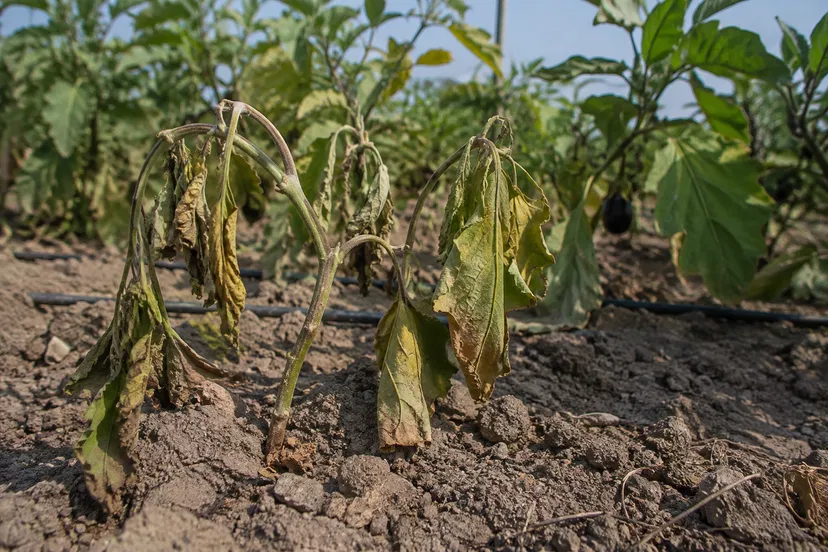
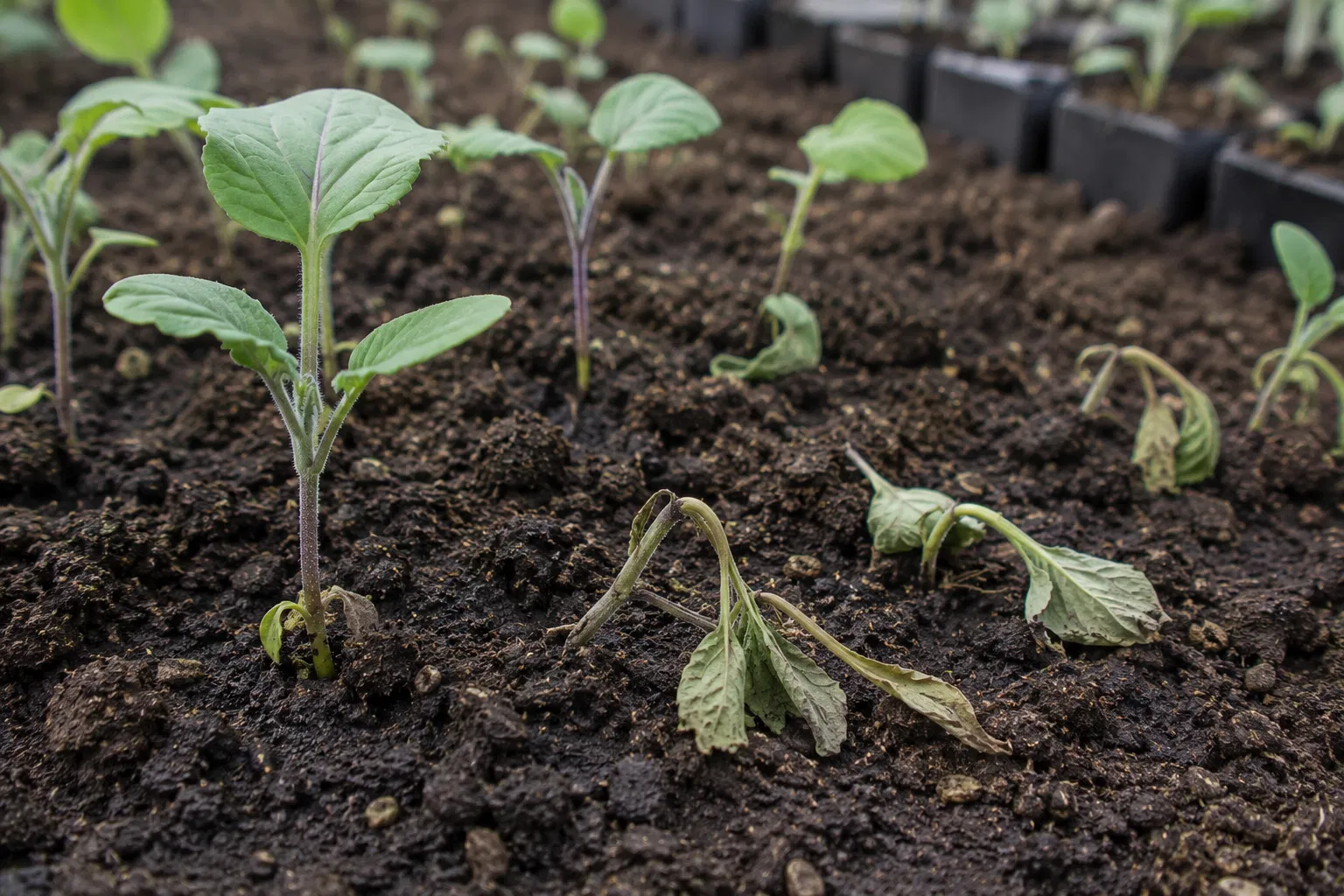
- Sudden collapse of young seedlings: in post-emergence damping-off, seedlings that looked fine the day before suddenly topple over and lie flat on the soil.
- A thin, water-soaked pinch at the stem base: often called "wire stem," this constriction right at the soil line is the clearest sign, and it's what causes the seedling to fall over even while the leaves above it are still green.
- Soft, brown, rotted roots: gently pull up an affected seedling and check the roots — healthy white roots turn soft and discoloured when damping-off has taken hold.
- Cottony white growth on the soil or seedlings: in humid conditions, a fine white fungal growth may be visible on the soil surface or on collapsed seedlings.
- Spread in patches, not evenly: the disease usually starts in the wettest, most crowded, or poorly drained part of the bed and spreads outward from there rather than affecting the whole tray at once.
Cultural and Mechanical Control Measures
Since a collapsed seedling can't be saved, most of the work in controlling damping-off happens through how the nursery is managed. These practices make the biggest difference:
- Avoid overwatering: keep the nursery bed moist but never waterlogged, since standing water is exactly what these fungi need to spread.
- Improve drainage: raised nursery beds drain far better than flat beds and are one of the simplest ways to cut down on damping-off.
- Avoid overcrowding: sow seeds with enough spacing, or thin out seedlings early, so air can move freely between them and the foliage dries out after watering.
- Use light, well-drained potting media: heavy, waterlogged soils in the nursery favour the fungi that cause damping-off; a light, well-aerated mix drains faster.
- Solarize the nursery soil before sowing: cover the bed with clear plastic sheeting for 4–6 weeks during peak summer heat to reduce the fungal load in the soil before the next sowing.
- Start with certified, disease-free seed: healthy seed from a trusted source reduces the chance of introducing the pathogen in the first place.
- Don't reuse the same nursery site repeatedly: rotate the nursery location, or use fresh, sterilized potting mix in trays, rather than sowing in the same soil season after season.
- Avoid excess nitrogen in the nursery: too much nitrogen produces soft, lush seedlings that are more vulnerable; a balanced feed gives sturdier growth.
- Remove collapsed seedlings promptly: pull out and discard affected seedlings as soon as they're spotted so the fungus doesn't spread to healthy ones nearby.
- Keep tools and trays clean: disinfect trays, pots, and tools between batches, and avoid working in wet beds right after watering or rain.
Trichoderma viride 1.0% WP
Trichoderma viride is a beneficial fungus that gets to the seed and root zone before the disease-causing pathogens do. It parasitizes the fungi responsible for damping-off, breaking down their cell walls, competing with them for space and nutrients, and releasing natural compounds that keep them from spreading. Because it works preventively, it's most effective as a seed treatment before sowing and as a nursery bed drench, forming a protective zone around the seed and root right from germination. It also strengthens the seedling's own resistance, which matters most in the first few fragile weeks when damping-off does the most damage.
Product Recommendations
- Tricho-Shield Combat Bio Fungicide
- Katyayani Trichoderma Viridae Bio Fungicide
- Ekotrump Triko Bio Fungicide
Disclaimer: Always confirm current label registration, approved dosage, water volume, and pre-harvest interval (PHI) for your state before using any product labels are periodically revised by regulatory authorities.
This guide is a general advisory. Do your own research and verification before using any product. Always confirm suitability for your crop stage, region, and field conditions before making any purchase, spray, or crop-management decision.