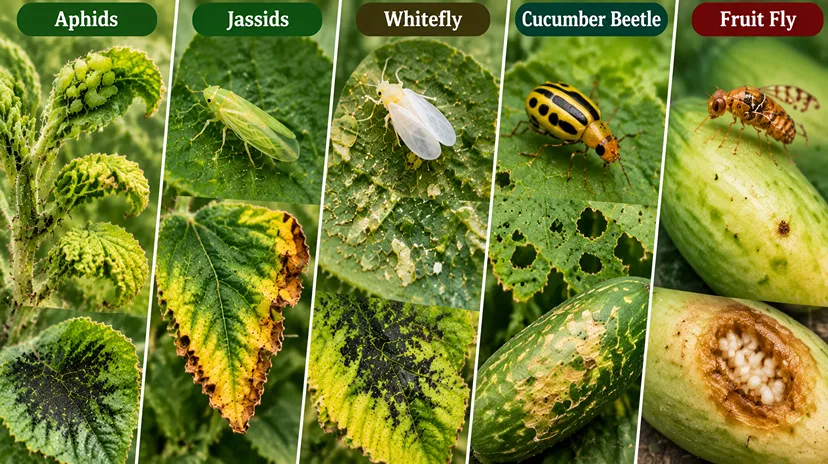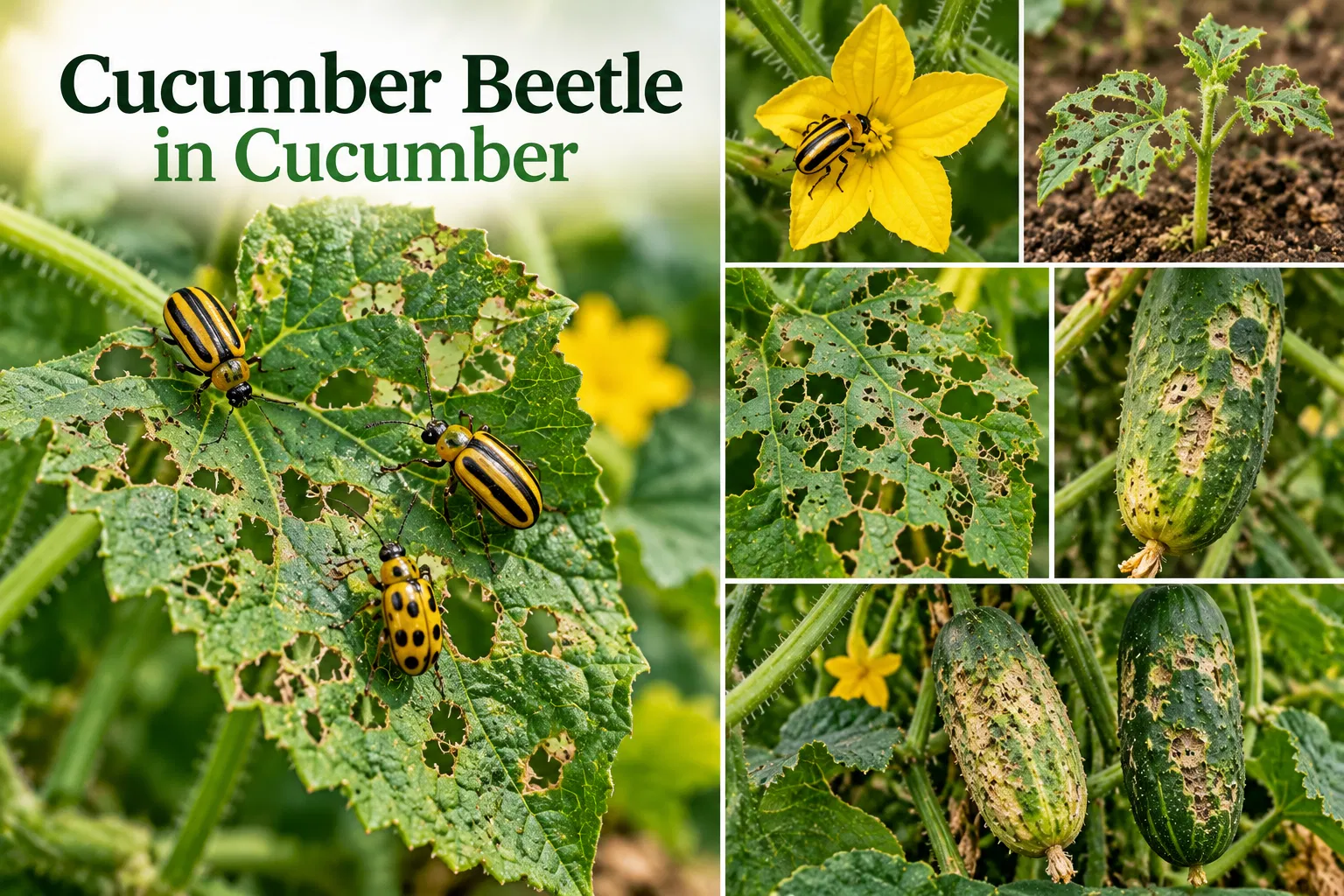
Cucumber beetles (striped or spotted, depending on the region) feed on leaves, flowers, and the fruit surface, scarring the rind and opening entry points that fruit flies and secondary rots move in through. Adults also transmit bacterial wilt on susceptible cucurbits, carrying the pathogen on their mouthparts from plant to plant as they feed, so beetle pressure can cost a crop far more than the direct feeding damage alone.
Symptoms of Cucumber Beetle in Cucumber
- Small, fast-moving beetles feeding on leaves, flowers, and young fruit
- Ragged holes and scarred patches on the leaf surface and fruit rind
- Seedlings and young vines stripped of leaf tissue, sometimes to the point of stunting or plant death
- Scarred or pitted fruit that is more prone to secondary rot after harvest
- Beetle damage often turning up alongside fruit fly entry points on the same fruit
Causes of Cucumber Beetle in Cucumber
- Beetles overwintering in old crop debris and moving into new plantings each season
- Cucurbit crops grown in the same field or nearby plots year after year
- Warm weather that speeds up beetle activity and reproduction
- Young, tender seedlings and vines that are especially attractive to feeding beetles
- Nearby wild cucurbits or volunteer plants acting as a source of fresh infestation
Solution for Cucumber Beetle in Cucumber
Flubendiamide 8.33% + Deltamethrin 5.56% w/w SC
This combination pairs a diamide with a pyrethroid, giving control that reaches the pest through both ingestion and contact. The diamide component disrupts the beetle's muscle function after feeding on treated foliage, while the pyrethroid adds fast knockdown on contact, making the mix effective against active infestations as well as beetles moving into the field. It's also registered for fruit fly on cucumber, which often shows up alongside beetle damage in the same crop.
Product Recommendations
Note: Along with a timely spray, remove and destroy crop debris after harvest and rotate cucurbit crops where possible, since beetles overwinter in field residue and reinfest the next planting.
Disclaimer: Always confirm current label registration, approved dosage, water volume, and pre-harvest interval (PHI) for your state before using any product - labels are periodically revised by regulatory authorities.
This guide is a general advisory. Do your own research and verification before using any product. Always confirm suitability for your crop stage, region, and field conditions before making any purchase, spray, or crop-management decision.