Bacterial leaf spot in cotton, caused by Xanthomonas citri pv. malvacearum, is also known as angular leaf spot or black arm, and it spreads through seed-borne infection as much as through the field itself, making both seed treatment and foliar spray part of managing it. Left unchecked, it moves from the leaves into the stem and boll, cutting into both fibre quality and yield.
Symptoms of Bacterial Leaf Spot in Cotton
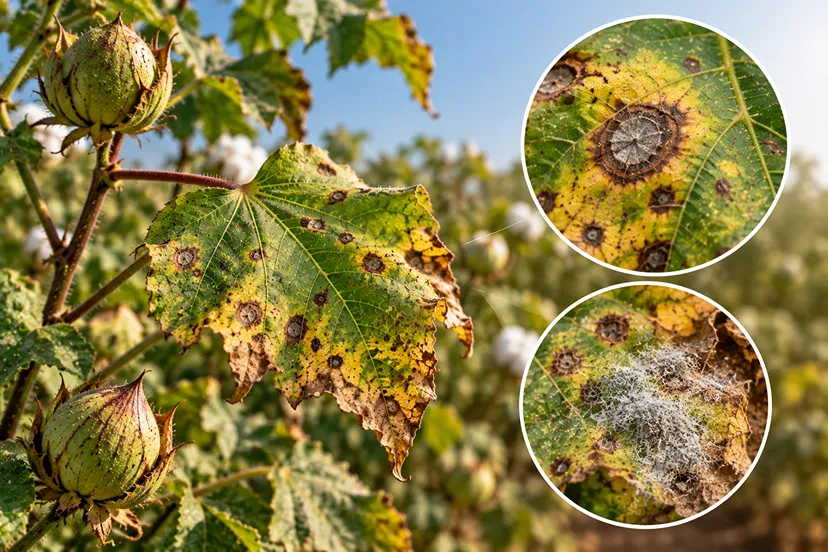
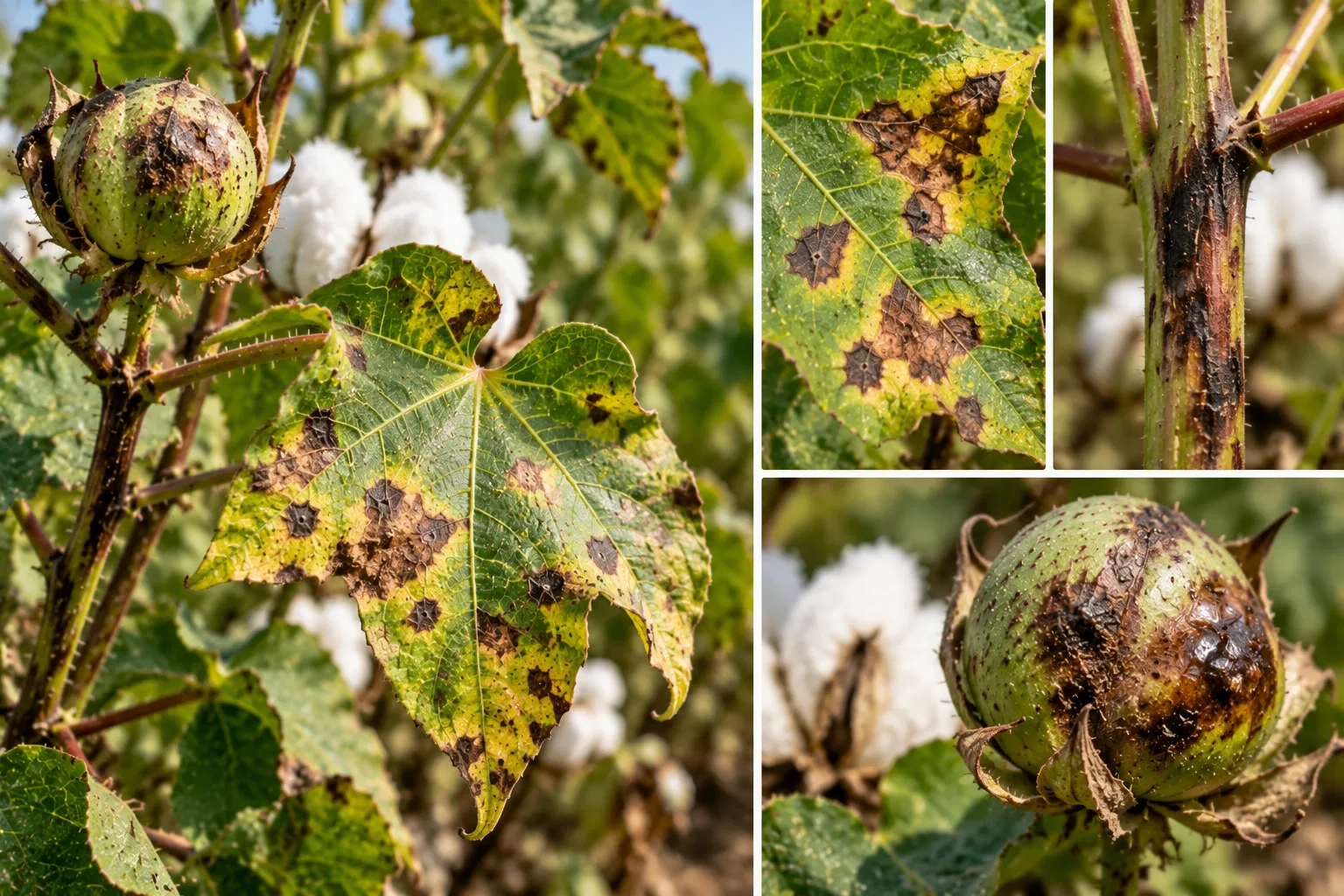
- Small, water-soaked, angular spots on the leaves that are bound by the leaf veins
- Spots that turn dark brown to black as the infection matures, often with a yellow halo
- Lesions on the veins and midrib that appear as elongated, reddish-black streaks
- Black, sunken lesions girdling the stem in advanced infection, giving the disease its "black arm" name
- Water-soaked, greasy-looking spots on the boll surface that can lead to boll rot
Causes of Bacterial Leaf Spot in Cotton
- Infected seed carrying the bacterium into an otherwise clean field
- Warm, humid weather with frequent rain or heavy dew that keeps the leaf surface wet
- Wind-driven rain and overhead irrigation that splash the bacterium from leaf to leaf
- Wounds from insect feeding or field operations that give the bacterium an entry point
- Infected crop debris left in the field, carrying the bacterium into the next season
Solutions to Control Bacterial Leaf Spot in Cotton
1. Streptomycin Sulphate 9% + Tetracycline Hydrochloride 1% SP
This antibiotic combination works systemically against the bacterium, with streptomycin disrupting bacterial protein synthesis and tetracycline adding a second mode of action that helps slow resistance build-up. On cotton, it's used both as a seed treatment to eliminate seed-borne infection before sowing and as a foliar spray timed around flowering, when the crop is most exposed to new infection. Since it targets bacteria and not fungi, it's often combined with a copper fungicide where fungal infections are also present in the field.
Product Recommendation
2. Carboxin 37.5% + Thiram 37.5% WS
A dual-action seed treatment that pairs a systemic fungicide with a broad-spectrum contact fungicide, applied directly to the seed before sowing. Carboxin moves into the germinating seedling and protects it from within, while thiram forms a protective layer on the seed coat itself. Together they guard against root rot and bacterial blight from the moment the seed goes into the soil, catching the infection at its seed-borne source rather than waiting for symptoms to appear in the field.
Product Recommendation
Note: Source certified, disease-free seed where possible, and clear infected crop debris from the field after harvest rather than leaving it behind, since it's one of the main ways the bacterium survives to infect the next planting.
Disclaimer: Always confirm current label registration, approved dosage, water volume, and pre-harvest interval (PHI) for your state before using any product - labels are periodically revised by regulatory authorities.
This guide is a general advisory. Do your own research and verification before using any product. Always confirm suitability for your crop stage, region, and field conditions before making any purchase, spray, or crop-management decision.