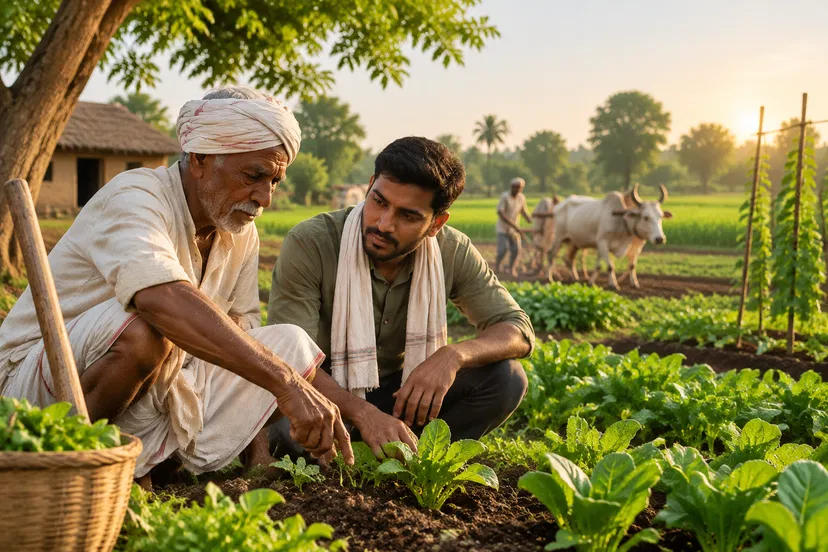
Few things are more frustrating than sowing seeds and waiting for nothing to happen. The soil looks right, the weather seems fine, and yet the field stays patchy, empty, or slow to emerge. When seeds fail to germinate after sowing, the problem is often not the seed itself, but a few avoidable mistakes made before or after planting.
Good germination depends on a precise balance of moisture, temperature, soil contact, seed depth, and seed quality. If even one of these factors goes wrong, germination can drop sharply. The good news is that most common germination failures can be prevented with better field preparation and careful sowing practices.
Common Reasons Seeds Fail to Germinate After Sowing
1. Poor Seed Quality
One of the most overlooked reasons seeds fail to germinate is poor seed quality. Old, damaged, improperly stored, or low-viability seeds may look fine on the outside but have weak or dead embryos inside.
Seeds lose vigor over time, especially when exposed to heat, moisture, or pests during storage. Buying from unreliable sources or using leftover seed from previous seasons can lead to poor emergence and uneven stands.
- Check the expiration or packing date before sowing.
- Store seeds in a cool, dry, pest-free location.
- Use certified or tested seed whenever possible.
2. Incorrect Sowing Depth
Sowing seed too deep or too shallow is a major cause of germination failure. When planted too deep, small seeds may not have enough energy to reach the surface. When planted too shallow, seeds may dry out before sprouting.
Different crops need different planting depths, and using a one-size-fits-all method often causes poor results. Seed packets, agronomy guides, and local extension recommendations should always be followed.
Tip: As a general rule, seeds should be planted at a depth about two to three times their diameter, unless crop-specific guidance says otherwise.
3. Inadequate Soil Moisture
Water is essential for germination. Seeds need to absorb enough moisture to activate enzymes and begin growth. If the soil is too dry, seeds remain dormant or die. If watering is inconsistent, germination may start and then stop.
Many farmers make the mistake of sowing just before a dry spell or relying on rainfall that never arrives. In other cases, the topsoil dries out too quickly because of heat, wind, or light soil texture.
- Ensure soil is evenly moist before sowing.
- Monitor moisture in the top layer where seeds are placed.
- Use mulching or light irrigation where suitable.
4. Overwatering or Waterlogging
While moisture is necessary, too much water can be just as harmful. Waterlogged soil limits oxygen around the seed, encouraging rot and fungal disease. Seeds need oxygen to germinate, and saturated soil suffocates them.
This mistake is common in heavy clay soils, poorly drained fields, or areas receiving excessive irrigation. Instead of sprouting, seeds may swell, decay, or get eaten by soil pathogens.
Good drainage and careful irrigation scheduling are essential to avoid this problem.
5. Poor Soil Seed Contact
Seeds cannot germinate properly if they are sitting loosely in clods, air pockets, or dry soil. Good seed-to-soil contact helps the seed absorb moisture evenly and anchor the emerging root.
Rough seedbeds, incomplete covering, or planting into crusted soil can all prevent proper contact. This often leads to irregular emergence and weak seedlings.
- Prepare a fine, level seedbed where appropriate.
- Cover seeds evenly with loose soil.
- Lightly firm the soil if needed, without compacting it.
6. Planting in Unsuitable Temperature Conditions
Every crop has an optimal temperature range for germination. If the soil is too cold, seeds may germinate slowly or not at all. If it is too hot, delicate seeds can lose viability or dry out quickly.
Farmers often sow too early in the season or during extreme heat, expecting normal emergence. But temperature stress can delay germination, increase disease risk, and reduce stand uniformity.
Always match sowing time to the crop’s temperature requirements and local climate conditions.
7. Soil Crusting After Rain or Irrigation
After heavy rain or overwatering, the soil surface can form a hard crust. This crust blocks tiny seedlings from breaking through, even if the seed germinated successfully below the surface.
This issue is especially common in fine-textured soils with low organic matter. Farmers may think the seed failed to germinate when, in reality, the seedling was trapped underground.
To reduce crusting, improve soil structure with organic matter, avoid over-tilling, and manage irrigation carefully.
8. Seed-Borne and Soil-Borne Diseases
Diseases are another major reason seeds fail after sowing. Fungal pathogens such as damping-off organisms can attack seeds before or just after germination. Infected seeds may rot in the soil or produce weak seedlings that collapse soon after emergence.
Planting untreated seed in contaminated soil increases the risk, especially under wet or cool conditions.
- Use disease-free seed.
- Treat seed when recommended for the crop.
- Avoid sowing in fields with a history of seedling disease problems.
9. Pest Damage in the Soil
Insects, rodents, birds, and other pests can destroy seeds before they germinate. Some pests feed directly on the seed, while others disturb the soil and displace the seed from its planting position.
Wireworms, termites, ants, and soil-dwelling larvae are common culprits in many farming systems. If gaps appear soon after sowing, pest activity should be considered.
Field inspection before and after planting helps identify pest pressure early.
10. Soil Compaction
Compacted soil restricts root penetration, reduces oxygen flow, and makes it harder for seedlings to emerge. It can also prevent moisture from reaching the seed evenly.
Compaction often results from repeated machinery movement, working wet land, or lack of soil structure improvement over time. Seeds in compacted zones may sprout weakly or not emerge at all.
Reducing traffic on wet soil and improving organic matter can help restore better germination conditions.
How to Improve Germination Success
Preventing germination failure is easier than correcting it after sowing. A few simple practices can greatly improve field emergence and crop uniformity.
- Test seed viability before planting large areas.
- Prepare the seedbed properly for even planting and moisture retention.
- Follow crop-specific depth and spacing recommendations.
- Check soil moisture and temperature before sowing.
- Avoid sowing in waterlogged or compacted conditions.
- Use seed treatment and pest control measures where necessary.
- Inspect emergence early so problems can be identified quickly.
It also helps to keep records of sowing dates, weather conditions, seed source, and emergence rates. Over time, this makes it easier to spot patterns and avoid repeating the same mistakes.
Final Thoughts
When seeds fail to germinate after sowing, the cause is usually one or more simple but costly errors: poor seed quality, wrong depth, bad moisture management, unsuitable temperature, soil crusting, disease, pests, or compaction. By understanding these common farmer mistakes, you can reduce losses and improve crop establishment from the start.
Strong germination begins long before the seed goes into the ground. With better planning, careful field preparation, and attention to detail, you can turn patchy emergence into healthy, uniform stands. If germination problems keep repeating, review each step of your sowing process and correct the weakest point before the next planting season.