Rhizome rot is one of the most destructive diseases in ginger, capable of wiping out a large share of the crop within weeks once conditions favor it. Because the damage happens underground, the disease is often noticed only after plants start collapsing above the soil, which makes early identification and prompt action critical to saving the crop.
Symptoms
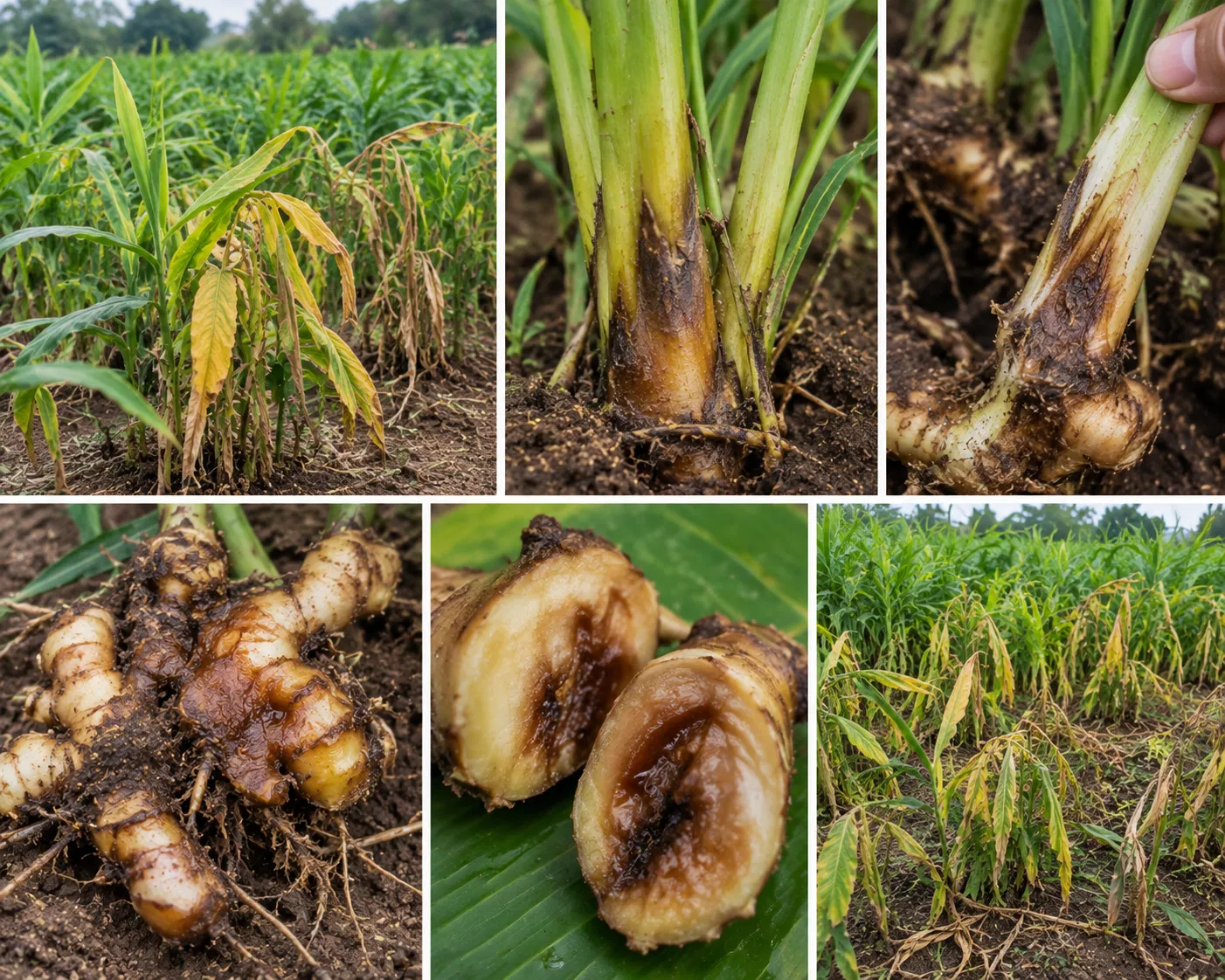
- Yellowing and drooping of leaves, starting from the lower leaves and spreading upward
- Water-soaked, discolored patches on the pseudostem near the base
- Rhizomes turning soft, watery, and discolored (yellowish-brown to dark brown) with a foul smell
- Affected pseudostems detach easily from the rhizome with a gentle pull
- Wilting of the entire plant in advanced stages, often in patches across the field
Causes
- Waterlogged or poorly drained soil, which favors the soilborne pathogens responsible for the rot
- Continuous ginger cultivation on the same land without rotation, allowing pathogen buildup in the soil
- Use of infected planting material
- Heavy, prolonged rainfall combined with warm temperatures during the growing season
- Poor field sanitation, with infected plant debris left in the field between seasons
How to Identify
Look for patches of yellowing, wilting plants in the field rather than isolated single plants, since the disease tends to spread outward from an initial infection point. Gently pulling on an affected plant's pseudostem is a reliable field test: if it separates easily from the rhizome and the rhizome underneath is soft, discolored, and has a foul odor, rhizome rot is the likely cause rather than simple nutrient stress or drought.
Control Methods
Chemical Control
Metalaxyl M 3.3% + Chlorothalonil 33.1% SC - Metalaxyl M is a systemic fungicide that is absorbed and moved within the plant to disrupt the pathogen's cell wall synthesis, while Chlorothalonil acts as a protective contact fungicide on the plant surface. Applied together as a soil drench, this combination targets the pathogen both inside the plant and in the surrounding soil.
Product Recommendation
- Syngenta Folio Gold Fungicide (Metalaxyl M 3.3% + Chlorothalonil 33.1% SC)
- Katyayani Dr Blight (Metalaxyl M 3.3% + Chlorothalonil 33.1% SC)
Cultural Control
- Select well-drained fields or raised beds for planting ginger, especially in high-rainfall areas
- Use only disease-free, healthy planting material sourced from a reliable supplier
- Rotate ginger with a non-host crop for at least two to three years where rhizome rot has occurred previously
- Remove and destroy infected plants and debris promptly to prevent the disease from spreading to healthy plants
- Avoid over-irrigation, particularly during periods of heavy rainfall
Conclusion
Rhizome rot spreads fast once it takes hold, so the priority for ginger growers is prevention through good drainage, clean planting material, and field sanitation, backed up by a timely soil drench with a systemic-plus-contact fungicide combination where the disease has already appeared. Acting at the first sign of yellowing or wilting, rather than waiting for the disease to spread across the field, makes the difference between a manageable setback and a lost crop.
Disclaimer: Always confirm current label registration, approved dosage, water volume, and pre-harvest interval (PHI) for your state before using any product, since labels are periodically revised by regulatory authorities.
This guide is a general advisory. Do your own research and verification before using any product. Always confirm suitability for your crop stage, region, and field conditions before making any purchase, spray, or crop-management decision.