Repotting is one of the most misunderstood parts of indoor gardening. Done at the right time, it revives a struggling plant; done carelessly, it can shock the roots and set growth back for months. Here's a practical, science-backed guide to doing it right.
Signs Your Plant Needs Repotting
Roots emerging from the drainage holes or circling the surface of the soil signal that the plant has become root-bound. Other cues include water running straight through the pot without being absorbed, slowed leaf growth despite good light and feeding, and the plant looking top-heavy for its container. Most houseplants — including popular ones like the Epipremnum aureum (money plant/pothos) and Monstera deliciosa — need repotting every 12–18 months; slow growers like the Sansevieria trifasciata (snake plant) can go 2–3 years.
When to Repot
Repot during active growth — spring through early monsoon in most of India — when roots recover fastest. Avoid repotting during dormancy (peak winter) or immediately after flowering, as root disturbance during low metabolic activity delays recovery. If a plant is wilting from disease or pest stress rather than a small pot, treat the underlying issue first.
Choosing the Right Pot
Move up only one size at a time — roughly 2–5 cm larger in diameter. An oversized pot holds excess moisture around unoccupied soil, increasing the risk of root rot from waterlogged, poorly aerated media. Drainage holes are non-negotiable; without them, water pools at the base and starves roots of oxygen. BigHaat's hand tools and garden accessories collection covers trowels and scoops that make clean, low-damage repotting easier.
Getting the Potting Mix Right
Indoor plants need a light, well-draining medium — not garden soil, which compacts in containers and suffocates roots. A good base mix is roughly 50% potting mix, 30% cocopeat for water retention and aeration, and 20% perlite or coarse sand for drainage. Cocopeat (coir pith) has a very high water-holding capacity and buffers pH well, making it a reliable amendment for containers. Succulents and cacti need a sharper-draining mix with less cocopeat and more sand or perlite.
Step-by-Step Repotting Process
- Water the plant a day before repotting — moist soil separates from roots more cleanly.
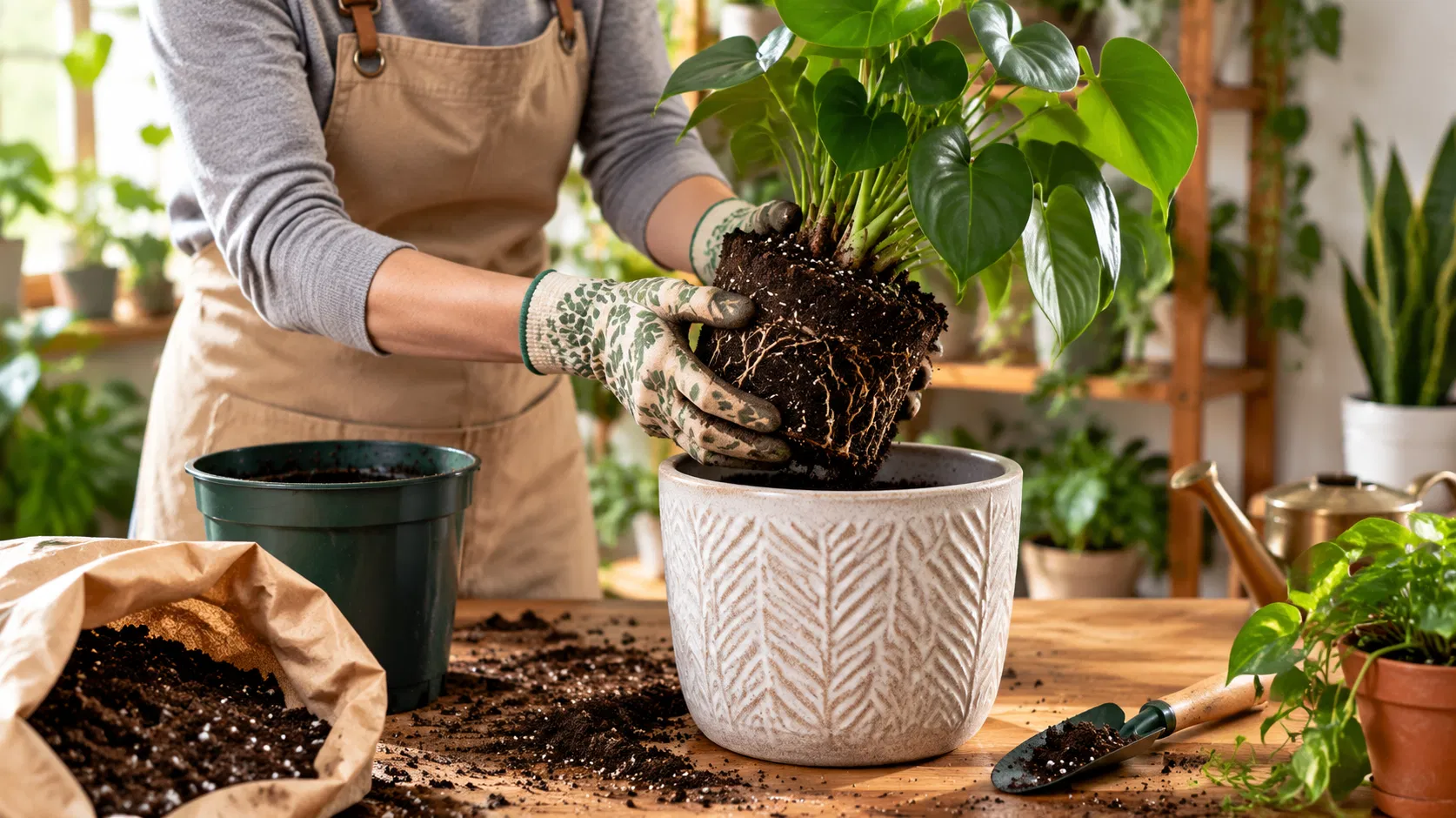
- Gently ease the plant out by tipping the pot sideways, never pulling on the stem.
- Loosen the root ball and trim any blackened, mushy, or clearly dead roots with a clean, sharp tool.
- Add a layer of fresh mix to the new pot, position the plant at the same depth it was growing before, and fill in around the sides.
- Water lightly to settle the soil and eliminate air pockets, then hold off on fertilizer for 2–3 weeks.
Aftercare and Avoiding Transplant Shock
Newly repotted plants often droop temporarily — this is normal root-adjustment stress, not a sign of failure. Keep the plant in bright, indirect light, away from direct sun and drafts, for the first week. Resist the urge to overwater "to help it recover"; overwatering right after repotting is the single biggest cause of post-repot root rot. Once new growth appears, a mild organic conditioner such as neem cake mixed lightly into the topsoil (no more than 1% by weight in containers) supports the microbial activity roots need to re-establish, without the nitrogen spike that can burn tender new roots.
Frequently Asked Questions
How often should indoor plants be repotted?
Every 12–24 months on average, depending on species and growth rate — check roots rather than going strictly by the calendar.
Can I repot a plant that isn't root-bound?
Yes, if the soil has broken down and lost structure, or if you're refreshing nutrients, but avoid unnecessary root disturbance.
Should I fertilize immediately after repotting?
No — wait 2–3 weeks to let damaged roots heal before introducing fertilizer, which can stress fresh root tips.
Is a bigger pot always better?
No — oversized pots hold excess unused moisture and raise the risk of root rot.
Disclaimer: General guidance for common indoor houseplants; requirements vary by species. Test any new soil amendment on a small area first.