How to Reduce Poultry Feed Cost Without Hurting Growth: Practical Strategies That Work
Poultry feed cost is one of the biggest expenses in any bird production operation, and it can quickly eat into profit margins if left unchecked. The good news is that reducing poultry feed cost does not have to mean slower growth, weaker birds, or lower performance. With the right feeding strategy, better ingredient management, and smarter flock monitoring, you can lower expenses while still supporting healthy weight gain and strong production results.
The key is to focus on efficiency, not just cheap feed. In poultry farming, the cheapest option is not always the most profitable one. What matters most is feed conversion, nutrient balance, and how well birds use what they eat. When those factors are optimized, you can reduce poultry feed cost without hurting growth.
Why Poultry Feed Cost Matters So Much
Feed typically represents the largest share of total poultry production cost. Whether you raise broilers or layers, every extra gram of feed affects your bottom line. Even small improvements in feed efficiency can create major savings over time.
High feed cost can come from several sources:
- Expensive grain and protein ingredients
- Poor feed conversion ratio
- Feed waste from spillage or improper storage
- Overfeeding or underbalanced rations
- Birds under stress, illness, or poor housing conditions
If birds are not converting feed efficiently, you are paying more for less growth. That is why smart cost reduction starts with understanding the full picture, not just cutting ingredient prices.
1. Improve Feed Formulation for Better Efficiency
One of the best ways to reduce poultry feed cost is to improve the ration itself. A balanced feed formula helps birds grow faster on less feed by meeting their nutritional needs without excess.
Work with a poultry nutritionist or use trusted formulation software to make sure the diet includes the right levels of:
- Protein
- Energy
- Amino acids
- Vitamins and minerals
- Fiber and digestibility support
Overfeeding protein can be especially costly. Birds need the right amino acid balance, not just more raw protein. Precise formulation often allows you to lower cost while keeping growth strong.
2. Use Alternative Feed Ingredients Wisely
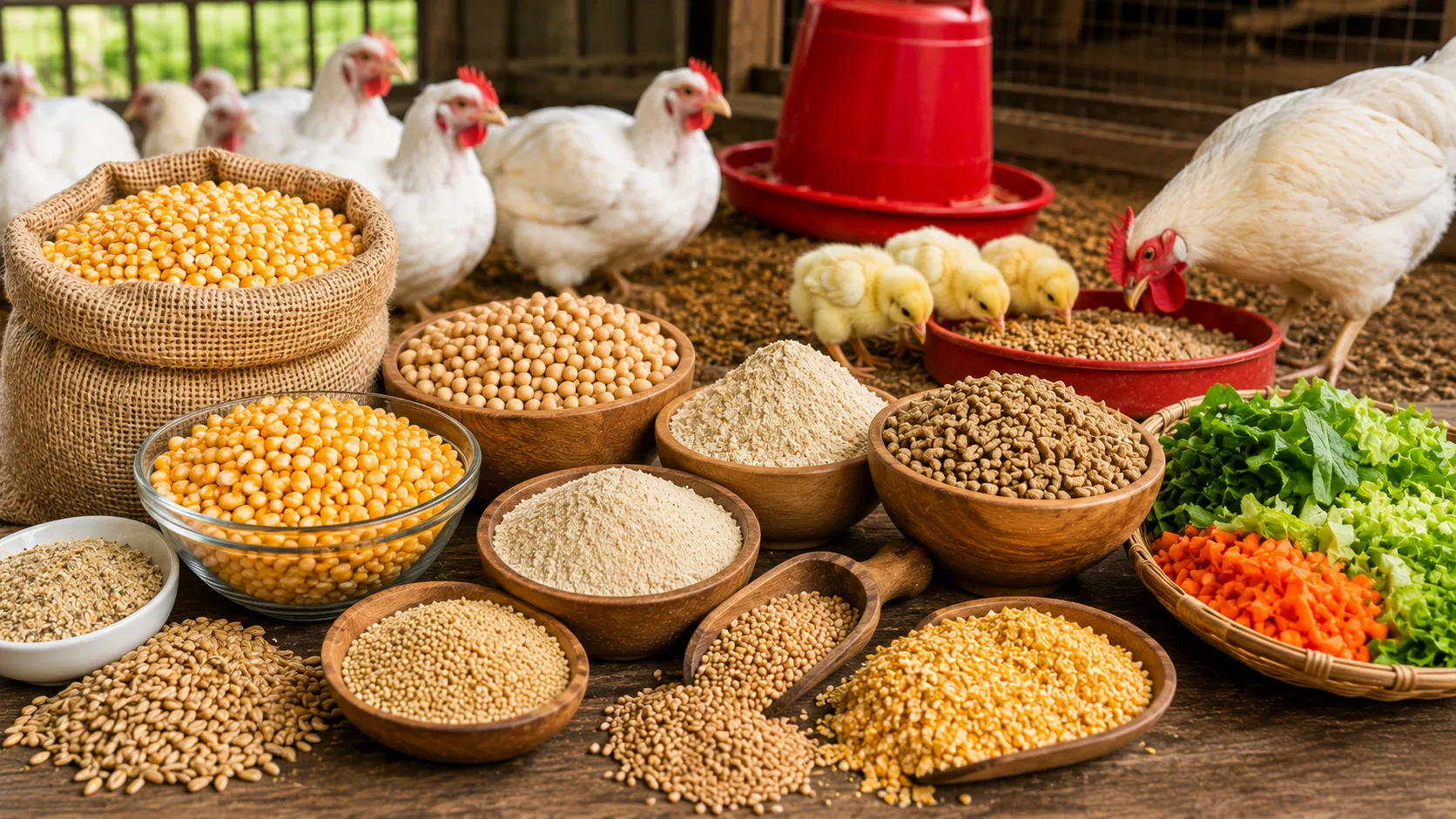
When conventional ingredients like corn and soybean meal become expensive, alternative ingredients can help reduce poultry feed cost. These may include sunflower meal, canola meal, wheat by-products, rice bran, cassava, or other locally available materials.
However, cheaper ingredients are only a win if birds can digest them well and still maintain performance. Always evaluate:
- Energy value
- Protein quality
- Anti-nutritional factors
- Storage stability
- Consistency from batch to batch
Introducing alternatives gradually is often the safest approach. Sudden changes can reduce feed intake or slow growth. A good rule is to test new ingredients in small batches before scaling up.
Smart feed savings come from ingredient value, not ingredient price alone.
3. Reduce Feed Waste at Every Stage
Feed waste is one of the most overlooked causes of high poultry feed cost. Birds cannot grow from feed that ends up on the floor, in the litter, or spoiled in storage.
To reduce waste, make sure you:
- Use properly adjusted feeders
- Prevent overfilling feeder pans
- Keep feeders at the correct height
- Store feed in a dry, ventilated area
- Protect feed from rodents, insects, and moisture
- Clean feed bins and lines regularly
Even a small amount of spillage repeated every day can become a major loss over a production cycle. Efficient feeding equipment and good housekeeping protect both feed quality and profit.
4. Focus on Feed Conversion Ratio
Feed conversion ratio, or FCR, shows how much feed birds need to gain one unit of body weight. A better FCR means better efficiency and lower cost per kilogram of growth.
To improve FCR, pay attention to:
- Bird genetics
- Feed quality
- Water access
- Temperature and ventilation
- Lighting program
- Health management
When birds are comfortable and healthy, they use nutrients more effectively. That means less feed is needed to achieve the same growth. Tracking FCR regularly helps you identify problems early and make quick corrections.
5. Match Feed to Bird Age and Production Stage
Feeding the right ration at the right time is essential. Chicks, growers, finishers, and layers all have different nutrient requirements. Using one formula for every stage often leads to unnecessary cost or poor performance.
For broilers, a phased feeding program usually works best:
- Starter feed supports early growth and development
- Grower feed maintains steady weight gain
- Finisher feed improves final body weight efficiently
For layers, nutrient density must support egg production without excess energy that leads to wasted input. Stage-specific feeding reduces overuse of costly nutrients and helps birds grow or produce more efficiently.
6. Keep Birds Healthy to Protect Feed Efficiency
Ill birds eat poorly and convert feed inefficiently. That makes disease control a direct feed cost issue, not just a health issue. If your flock is under stress from parasites, coccidiosis, respiratory disease, or poor sanitation, feed conversion suffers.
Protect flock health through:
- Vaccination programs
- Clean water supply
- Biosecurity measures
- Litter management
- Regular monitoring for early disease signs
Healthy birds grow faster and more consistently. That means fewer resources are wasted on poor performance and recovery.
7. Manage Water Quality and Access
Water is often ignored in feed cost discussions, but it has a major impact on growth. Birds need clean, fresh water to digest feed properly and maintain appetite. Poor water intake can reduce feed intake, slow growth, and increase feed cost per bird.
Make sure:
- Drinkers are clean and working properly
- Water lines are flushed regularly
- Water is free from contamination
- Birds can reach water easily at all times
When water access is excellent, birds are more likely to eat well and convert feed efficiently. This simple step can improve productivity without increasing feed volume.
8. Buy Feed Ingredients Strategically
Smart purchasing can significantly reduce poultry feed cost. Instead of buying reactively, plan ingredient purchases around market trends, storage capacity, and expected production needs.
Consider these practices:
- Buy in bulk when prices are favorable
- Compare suppliers for quality and consistency
- Monitor ingredient market trends
- Avoid buying poor-quality feed just because it is cheap
- Use contracts or forward buying if appropriate
The goal is to secure good-value ingredients that support performance. Low-quality feed may seem cheaper upfront but can increase total cost through poor growth and higher mortality.
9. Use Feed Additives Only When They Add Value
Enzymes, probiotics, acids, and other additives can improve digestion and nutrient use in some situations. Used correctly, they may help reduce poultry feed cost by improving feed efficiency or allowing partial replacement of expensive ingredients.
But not every additive is cost-effective in every flock. Evaluate them based on measurable outcomes such as:
- Improved weight gain
- Better FCR
- Lower mortality
- Improved gut health
If an additive does not produce a clear return, it should not be part of the base ration. Cost control means investing only where the benefit is proven.
10. Track Performance and Adjust Quickly
The fastest way to lose money is to keep feeding a poor-performing program without reviewing results. Regular monitoring helps you identify where feed cost is rising and what changes are working.
Track key metrics such as:
- Feed intake
- Average daily gain
- Feed conversion ratio
- Mortality rate
- Uniformity of the flock
When data shows a problem, act quickly. Maybe the ration needs adjustment, maybe feeder space is insufficient, or maybe birds are stressed by temperature changes. Early action protects both growth and profit.
Final Thoughts
Reducing poultry feed cost without hurting growth is absolutely possible, but it requires a strategic approach. Focus on feed efficiency, not just lower ingredient prices. Improve formulation, reduce waste, protect flock health, and monitor performance closely. These steps help birds grow well while keeping production costs under control.
If you want better results, start by reviewing your current feed program and identifying the biggest source of loss. Even one improvement, such as better feed storage or more precise formulation, can make a noticeable difference. In poultry production, small efficiencies add up fast.
Lower feed cost. Protect growth. Improve profit. That is the formula for a stronger, more sustainable poultry operation.