Farmers are under more pressure than ever to protect crops, control costs, and meet growing demands for sustainable production. The good news is that reducing chemical sprays does not have to mean sacrificing yield. With the right strategies, you can cut back on applications, improve spray efficiency, and keep crops productive and healthy.
The key is to move from routine spraying to precision crop protection. By combining better scouting, smarter timing, targeted treatments, and integrated pest management, you can reduce chemical spray use while maintaining strong results in the field. Here’s how to do it effectively.
Start With Better Scouting and Monitoring
One of the biggest reasons for unnecessary spraying is treating problems before they actually reach a damaging level. Regular scouting helps you identify pests, diseases, and weeds early, so you can make decisions based on real field conditions instead of guesswork.
What to monitor
- Pest populations and life stages
- Disease symptoms and spread patterns
- Weed pressure and growth stage
- Weather conditions that increase risk
- Crop stress that may make plants more vulnerable
Use field records, traps, and digital monitoring tools to track changes over time. The more data you collect, the easier it becomes to spray only when necessary.
Use Integrated Pest Management to Cut Spray Volume
Integrated Pest Management (IPM) is one of the most effective ways to reduce chemical sprays without losing yield. IPM combines biological, cultural, mechanical, and chemical methods to manage pests in a balanced way.
Instead of relying on chemicals as the first response, IPM encourages you to use them only when other methods are not enough. This can significantly lower input costs and reduce resistance pressure.
Core IPM practices
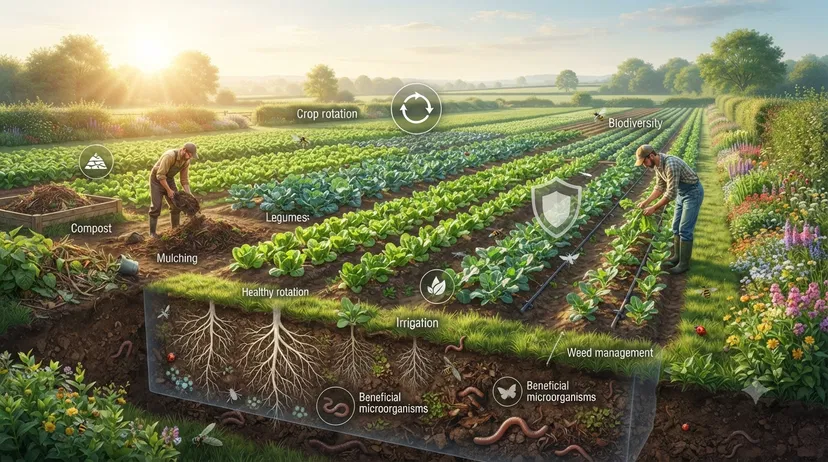
- Rotate crops to disrupt pest and disease cycles.
- Choose resistant varieties when available.
- Encourage beneficial insects that help control pests naturally.
- Use mechanical controls such as cultivation or hand removal when practical.
- Apply chemicals only when thresholds are reached.
“The goal is not to eliminate every pest. The goal is to keep pest pressure below the level where yield is affected.”
Spray Only When Thresholds Are Met
Spraying on a fixed schedule often leads to overuse. A better approach is to use economic thresholds and action thresholds. These are decision points that tell you when pest pressure is likely to cause real losses.
By using thresholds, you avoid spraying when pest populations are still too low to justify treatment. This saves money, lowers chemical exposure, and helps preserve beneficial organisms.
Why thresholds matter
- They reduce unnecessary applications
- They improve return on investment
- They support resistance management
- They help protect crop yield more efficiently
Always base threshold decisions on local recommendations, crop type, pest type, and market conditions. What works in one field may not apply to another.
Improve Spray Timing for Better Results
Even when a spray is necessary, timing makes a huge difference. Applying at the wrong growth stage, under poor weather conditions, or after damage has already spread can reduce effectiveness and lead to repeat applications.
Best timing practices
- Apply early in pest or disease development
- Target the most vulnerable life stage
- Avoid spraying during high wind or extreme heat
- Consider humidity and rainfall forecasts
- Spray when crop canopy conditions improve coverage
For many pests and diseases, a well-timed application is more effective than multiple poorly timed sprays. That means fewer passes through the field and less chemical used overall.
Use Precision Application Technology
Modern sprayer technology can dramatically reduce chemical waste. Precision application tools help place the product where it is needed, rather than spreading it across the entire field.
Helpful technologies include
- GPS-guided sprayers
- Section control systems
- Variable-rate application
- Spot spraying systems
- Drift-reduction nozzles
These tools improve accuracy and reduce overlap, which often leads to overapplication. They also support more consistent coverage, which can improve performance even when total spray volume is lower.
Choose the Right Product and Use the Correct Rate
Not all crop protection products work the same way. Some are highly targeted and require only small amounts, while others may be less efficient. Choosing the right product for the job can lower the number of sprays needed during the season.
Always follow label directions and recommended rates. Applying too little can lead to poor control, while applying too much increases costs and may increase resistance risk. The goal is not to use less care, but to use chemicals more strategically.
Product selection tips
- Select products with a strong fit for your target pest or disease.
- Rotate modes of action to reduce resistance development.
- Use tank mixes only when they provide a clear agronomic benefit.
- Consider formulations that improve coverage or rainfastness.
Support Crop Health So Plants Can Handle More Pressure
Healthy crops are naturally better at tolerating pest stress. When plants have strong root systems, balanced nutrition, and good soil structure, they are more resilient and may require fewer chemical interventions.
Ways to strengthen crop resilience
- Maintain balanced fertility based on soil tests
- Improve drainage and reduce water stress
- Protect soil health with cover crops or reduced compaction
- Use proper planting density for airflow and light penetration
- Avoid overwatering or excess nitrogen that can encourage disease
By building a healthier growing environment, you reduce the likelihood of severe outbreaks and improve the crop’s ability to maintain yield under pressure.
Track Results and Adjust Your Strategy
Reducing sprays without losing yield is not a one-time decision. It requires ongoing observation and adjustment. After each season, review what worked, what didn’t, and where sprays could have been reduced further.
Review these key questions
- Did reduced spraying affect yield or quality?
- Which fields had the highest pest pressure?
- Were sprays applied at the right time?
- Did precision tools reduce overlap and waste?
- Which non-chemical practices gave the best results?
Keeping detailed records makes it easier to refine your approach over time. Over multiple seasons, these improvements can lead to major savings and stronger crop performance.
The Bottom Line
Reducing chemical sprays without losing yield is absolutely possible when you use a smarter, more targeted approach. Scouting regularly, using IPM, spraying only at threshold levels, improving timing, and adopting precision technology can all help you cut input costs while protecting productivity.
Instead of asking, “How can I spray less?” ask, “How can I protect yield more efficiently?” That shift in thinking leads to better decisions, healthier crops, and a more resilient farm operation.
If you want lower spray costs and stronger yields, start with one change this season—then build from there.