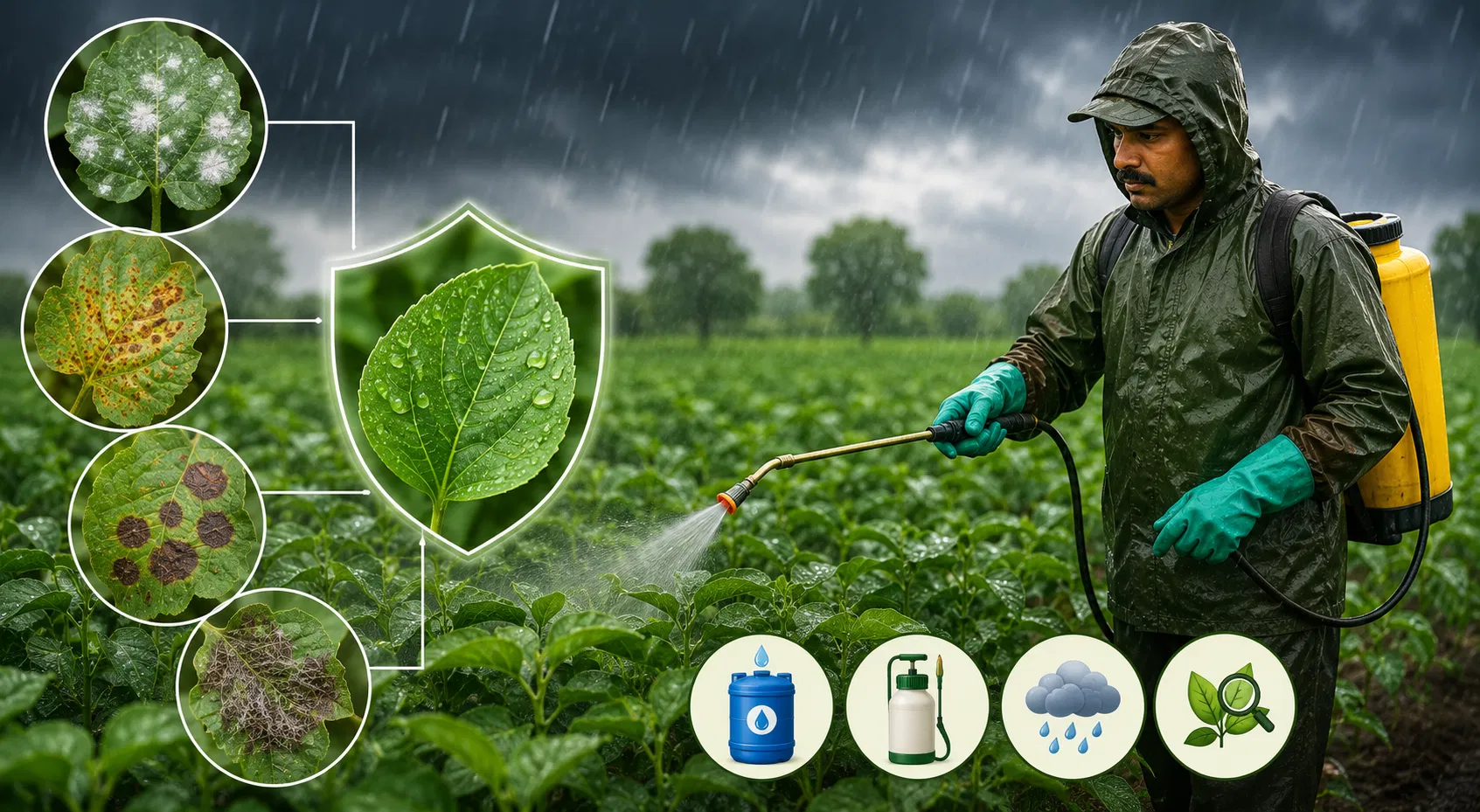
When the rainy season arrives, crops grow fast—but so do fungal diseases. High humidity, frequent showers, and poor airflow create the perfect environment for leaf spots, blights, mildews, rusts, and fruit rots. If you wait until symptoms spread, yield loss can happen quickly. The good news is that with the right spray schedule and smart field management, you can control fungal problems before they take over.
Why Fungal Diseases Spread Faster in the Rainy Season
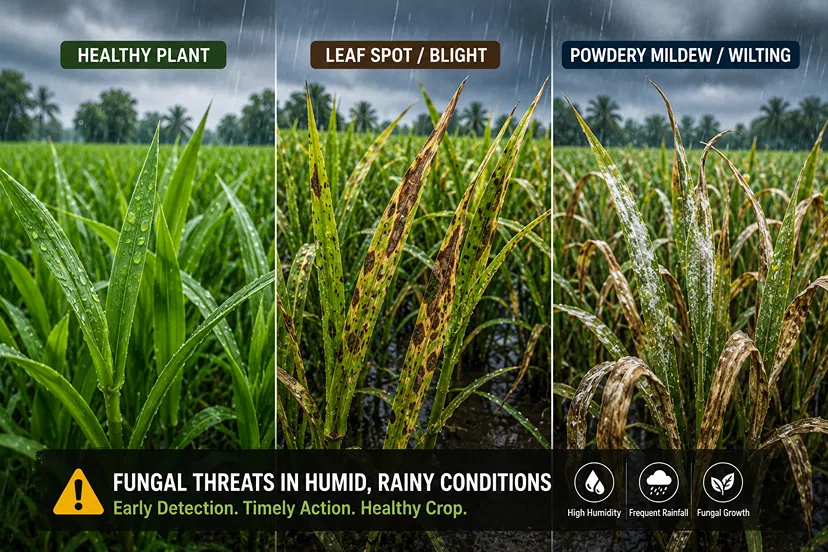
Fungi thrive in damp, warm conditions. Rain splash carries spores from one plant to another, wet leaves stay infected longer, and dense crop canopies trap moisture. This is why rainy season crop disease control must focus on prevention as much as treatment.
Common triggers include:
- Long periods of leaf wetness
- Poor drainage and standing water
- Overcrowded plants with limited air movement
- Repeated rain after spraying, which washes chemicals off leaves
- Infected crop residue left in the field
Common Fungal Diseases Farmers Should Watch For
Different crops face different fungal threats, but these are some of the most common during wet weather:
- Powdery mildew – White powder-like patches on leaves and stems
- Downy mildew – Yellow spots on top of leaves with fuzzy growth underneath
- Leaf spot – Brown, black, or circular lesions that expand over time
- Rust – Orange, yellow, or reddish pustules on leaves
- Blight – Rapid leaf or stem death, often spreading quickly in wet weather
- Anthracnose – Dark sunken lesions on fruits, leaves, and stems
- Fruit rot – Softening and decay of fruits during continuous rains
Best Spray Strategy for Rainy Season Fungal Control
A successful spray program is not just about using fungicides. It is about timing, coverage, rotation, and early action. The goal is to protect healthy tissue before infection becomes severe.
1. Start Spraying Before Disease Appears
Preventive spraying works better than waiting for visible symptoms. In high-risk weather, begin protection when the crop is young or when the first signs of wet-season pressure appear.
Use a preventive spray approach if:
- Rainfall has become frequent
- Humidity stays high for many days
- Your area has a history of fungal outbreaks
- The crop is at a vulnerable growth stage
2. Choose the Right Fungicide Type
Farmers usually use two broad types of fungicides:
- Protectant fungicides – Form a barrier on plant surfaces and help prevent infection
- Systemic fungicides – Enter plant tissue and help stop early infections from spreading
For rainy season crop spraying, many growers use a rotation of contact and systemic products to reduce resistance and improve control. Always follow label instructions and local agricultural recommendations.
3. Spray at the Right Time of Day
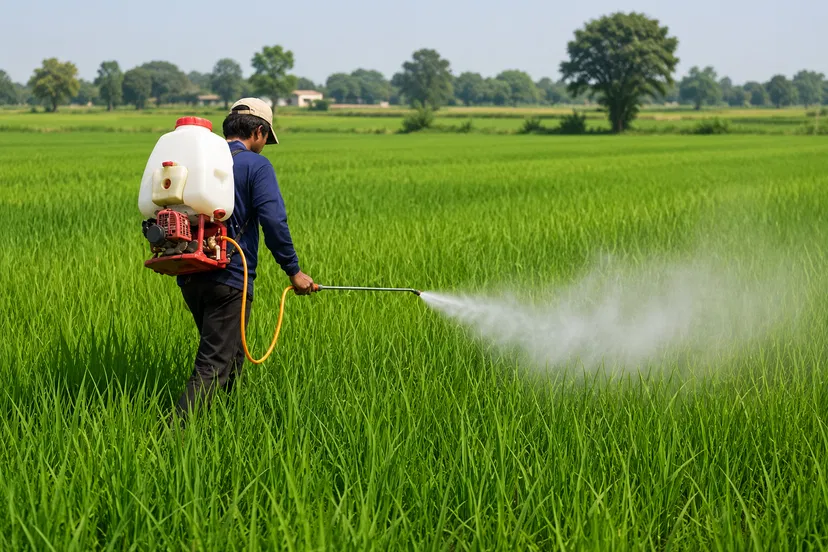
The best time to spray is usually early morning after dew dries or late afternoon when temperatures are cooler and rain is less likely for several hours. Avoid spraying just before expected rainfall, because the product may wash off before it can work.
Ideal spray conditions:
- Dry leaves
- Low wind
- No rain forecast for several hours
- Even temperature without intense heat
4. Ensure Full and Even Coverage
Fungal spores often hide on the underside of leaves, in dense foliage, and near stems. Light spraying does not give enough protection. Use enough water volume to coat all plant surfaces thoroughly.
Focus on:
- Upper and lower leaf surfaces
- Stem joints and branch unions
- Fruit clusters and shaded areas
- New growth points
5. Reapply After Heavy Rain if Needed
Continuous rainfall can reduce spray effectiveness. If a strong shower occurs soon after application, the protective layer may be weakened. Check the product label for rainfastness guidance and reapply when recommended.
Simple rule: If rain comes too soon after spraying, your crop may need another round of protection.
Farmer’s Spray Guide: Practical Rainy Season Schedule
A simple spray plan can make disease management easier during wet months. Adjust the schedule based on crop type, disease pressure, and weather conditions.
- Inspect the crop weekly for spots, mildew, rust, or blight.
- Remove badly infected leaves where practical to slow spread.
- Apply preventive fungicide when disease risk increases.
- Rotate fungicide groups to avoid resistance buildup.
- Recheck fields after rain for new symptoms or wash-off.
- Continue spraying at recommended intervals until wet weather reduces.
Important Farming Practices That Support Spray Control
Sprays work best when paired with good field hygiene and crop management. If the environment stays too wet and crowded, disease will keep returning.
Improve Airflow
Spacing plants properly helps leaves dry faster after rain. Prune excess foliage where appropriate and avoid dense, tangled growth.
Drain Standing Water
Fields with poor drainage encourage root diseases and leaf infections. Make sure water moves away from crop rows quickly.
Use Clean Seeds and Healthy Seedlings
Many fungal problems begin with infected planting material. Start with disease-free seeds, transplants, and cuttings whenever possible.
Remove Crop Debris
Old infected leaves, stems, and fruits can hold fungal spores. Cleaning the field lowers the chance of repeat outbreaks.
Avoid Overhead Irrigation
If irrigation is needed, reduce leaf wetness. Drip irrigation is often better than spraying water from above during disease-prone periods.
Safety Tips for Farmers Using Fungicide Sprays
Every spray program should include safety. Fungicides are useful tools, but only when handled correctly.
- Read and follow the label carefully
- Wear gloves, mask, long sleeves, and boots
- Do not exceed the recommended dosage
- Keep children and animals away from sprayed areas
- Store chemicals in a cool, locked place
- Wash equipment after use
- Observe the pre-harvest interval before harvesting
Signs Your Spray Program Is Working
Effective fungal disease control should reduce the spread of symptoms and protect new growth. Look for these positive signs:
- Fewer new leaf spots or lesions
- Slower spread of disease across the field
- Healthier green growth after rainfall
- Reduced fruit rot and premature leaf drop
- Better crop uniformity and yield potential
When to Seek Expert Help
If disease keeps spreading even after spraying, the problem may be misidentification, resistance, poor coverage, or severe environmental pressure. In that case, work with an agronomist, extension officer, or crop protection specialist to confirm the disease and refine the control program.
Conclusion
Rainy season fungal disease control is all about acting early, spraying smart, and supporting your crop with good field management. A well-timed fungicide program, combined with drainage, spacing, sanitation, and careful monitoring, can protect yield and reduce losses during wet weather.
Stay ahead of the rain, inspect your crop regularly, and spray before fungi spread. With the right plan, you can keep your field healthier, cleaner, and more productive throughout the season.