

Introduction
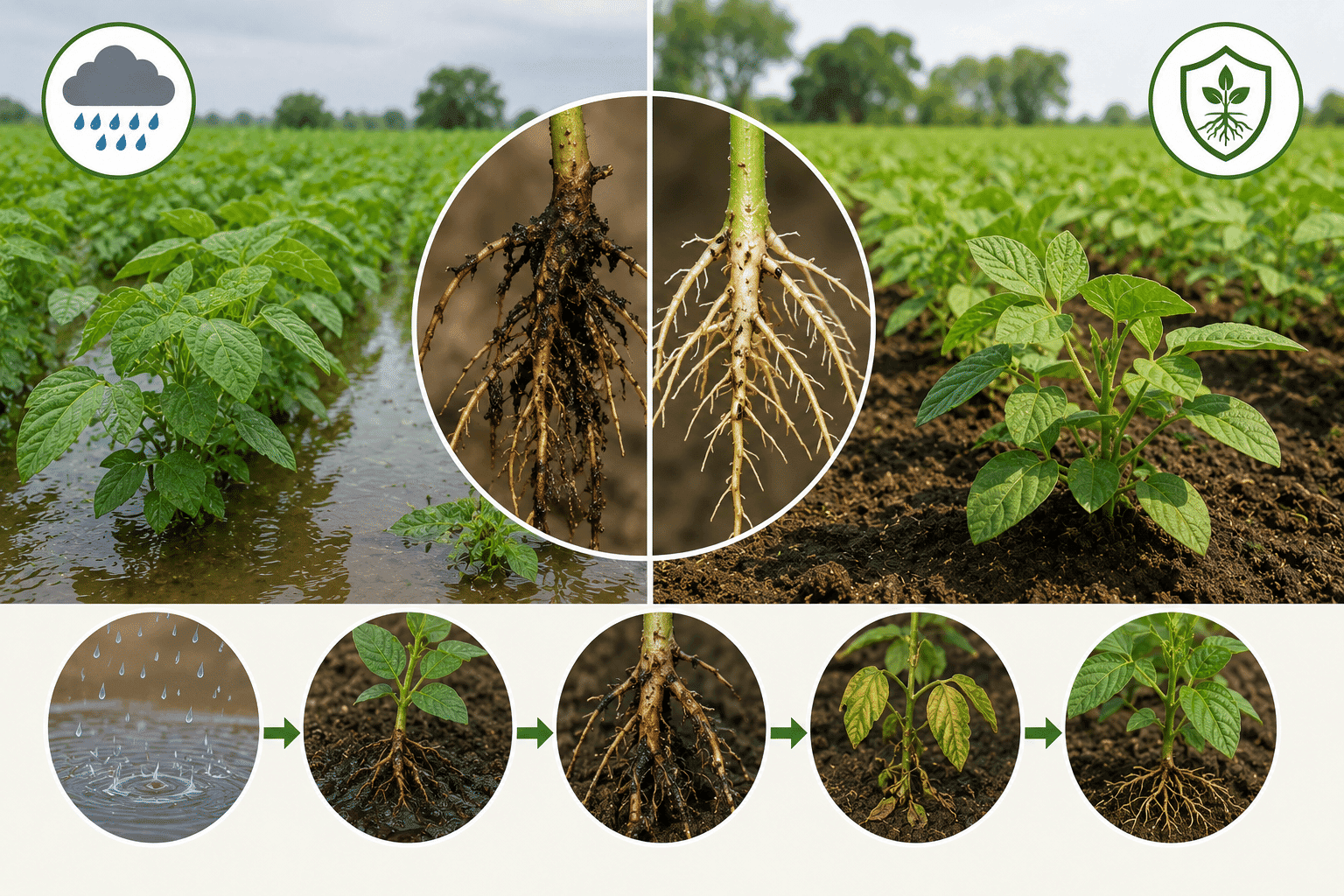
Root rot is a common problem in soybean after heavy rainfall and waterlogging. The disease affects the root system, reduces nutrient uptake, and can cause yellowing, wilting, poor growth, and plant death.
Soybean is sensitive to standing water. When water remains in the field for a long time, roots do not get enough air. This weakens the plant and creates favourable conditions for soil-borne fungi.
Root rot management after rainfall depends mainly on quick drainage, early identification, removal of severely infected plants, balanced nutrition, and preventive seed treatment for the next sowing season.
What is Root Rot in Soybean?
Root rot is a soil-borne disease that damages soybean roots. It may be caused by different pathogens such as Fusarium, Rhizoctonia, Pythium, Phytophthora, Sclerotium, and Macrophomina, depending on soil moisture, temperature, field history, and crop stage.
After heavy rainfall, waterlogging favours many root diseases because the soil remains wet and poorly aerated. Weak roots become more prone to infection.
Infected plants may dry suddenly or show slow yellowing. When pulled out, the root system appears brown, black, soft, rotten, or poorly developed.
Why Root Rot Increases After Heavy Rainfall
Heavy rainfall increases root rot risk in soybean due to the following reasons:
- Water remains around the root zone
- Roots do not get enough oxygen
- Soil-borne fungi become active
- Young seedlings become weak
- Nutrients may leach from the soil
- Soil compaction reduces drainage
- Plant roots become soft and prone to infection
Phytophthora root and stem rot research notes that cultural practices improving soil drainage and reducing compaction are important for disease management.
Symptoms of Root Rot in Soybean
Root rot symptoms may appear in patches, especially in low-lying areas of the field.
Common above-ground symptoms
- Yellowing of lower leaves
- Sudden wilting of plants
- Poor plant growth
- Drying of leaves
- Patchy plant death in the field
- Stunted plants after waterlogging
- Reduced branching and weak crop stand
Root and stem symptoms
- Brown or black roots
- Rotten or soft root tissue
- Poor development of side roots
- Dark lesions near the collar region
- Stem girdling near soil level
- Plants easily pulled from soil
- Reduced nodules on roots
Fusarium root rot in soybean can show root decay, browning of internal root tissue, reddish-brown to black discoloration on the taproot and hypocotyl, poor secondary root development, and reduced nodulation.
Difference Between Waterlogging Stress and Root Rot
After heavy rain, soybean plants may turn yellow due to waterlogging stress. This does not always mean root rot.
|
Field Symptom |
Likely Reason |
What to Check |
|
Yellowing after 1–2 days of standing water |
Waterlogging stress |
Check if roots are still white and firm |
|
Wilting even after water drains |
Possible root rot |
Pull plant and check root colour |
|
Plants drying in patches |
Root rot or collar rot |
Check collar region and roots |
|
Soft, rotten roots |
Root rot |
Disease is active |
|
Weak growth but roots healthy |
Nutrient stress after rain |
Check soil and crop condition |
Crop Stage Most Affected
Root rot can affect soybean at different stages, but risk is higher during:
- Germination stage
- Seedling stage
- Early vegetative stage
- Flowering stage if waterlogging is severe
- Fields with repeated soybean cultivation
Young seedlings are more sensitive because their root system is still developing. Poor drainage at this stage can cause seedling rot, damping-off, and plant gaps.
A report from ICAR-Indian Institute of Soybean Research noted root rot and seedling rot symptoms during the rainy season, where infected seedlings showed water-soaked lesions, brown lesions, soft rot, and easy pulling from soil.
Step-by-Step Management After Heavy Rainfall
1. Remove Standing Water Immediately
Drainage is the first and most important step after heavy rainfall.
Open small channels to remove excess water from the field. Give special attention to low-lying patches where water remains for a longer time.
Recommended actions:
- Open field drains
- Clear blocked outlets
- Break small bunds where water is trapped
- Remove water from low patches
- Avoid walking or using machinery in very wet soil
Soybean roots need air. If water remains for a long time, roots weaken and disease risk increases.
2. Inspect the Field After Water Drains
Check the crop once the field becomes accessible. Do not judge only from leaf colour.
Select plants from different areas:
- Low-lying patches
- Waterlogged portions
- Healthy-looking areas
- Field borders
- Previous disease-prone patches
Pull out a few plants gently and observe the roots. Healthy roots are firm and light coloured. Diseased roots may look brown, black, soft, or rotten.
3. Remove Severely Infected Plants
If only a few plants are badly infected, remove them from the field and destroy them.
This helps reduce disease spread in nearby plants, especially when collar rot or stem rot symptoms are seen.
Remove plants showing:
- Complete wilting
- Rotten roots
- Stem girdling at soil level
- Fungal growth near collar region
- Dead patches in early stage
Do not leave infected plant debris in the field.
4. Improve Soil Aeration
After water drains, soil may remain tight and compact. Compacted soil holds more moisture and reduces root breathing.
Where possible, gently open the soil between rows after it reaches workable condition. Avoid deep disturbance near soybean roots.
Field aeration helps:
- Reduce excess moisture
- Improve root breathing
- Support new root growth
- Reduce disease pressure
Do not operate heavy machinery when the soil is wet. It can increase compaction.
5. Avoid Immediate Heavy Fertilizer Application
After heavy rainfall, plants may look yellow. Many farmers apply extra urea immediately. This is not always useful.
First drain the water and allow the crop to recover. Apply nutrients only after checking crop condition and local recommendation.
Excess nitrogen can lead to soft growth and may not solve root damage. Balanced nutrition is safer than sudden heavy fertilizer use.
Use soil test-based fertilizer planning wherever possible.
6. Use Need-Based Fungicide Advisory
Once root rot is visible in standing crop, complete recovery is difficult in severely infected plants. Fungicides work better as preventive or early-stage support, not as a full cure.
Use fungicide drenching or spray only if recommended by the local agriculture department, KVK, or state agriculture university for your area.
Avoid:
- Random fungicide mixing
- High dose use
- Repeated use without diagnosis
- Treating the whole field when only small patches are affected
- Using unlabelled chemicals
7. Support Crop Recovery
After waterlogging and root stress, soybean needs time to recover.
Helpful recovery steps include:
- Remove standing water quickly
- Maintain field drainage
- Avoid unnecessary interculture in wet soil
- Monitor new root and leaf growth
- Manage weeds after soil becomes workable
- Protect plants from insect and disease stress
- Follow balanced nutrient management
If plants show new green growth after water drains, the crop may recover. If plants continue wilting and roots are rotten, recovery is poor.
Preventive Steps Before and During Sowing
Root rot management is more effective when prevention starts before sowing.
1. Choose Well-Drained Fields
Avoid sowing soybean in fields where water stands for many days. Soybean performs better in well-drained soil.
If the field is low-lying, make drainage channels before sowing.
2. Use Healthy and Certified Seed
Use clean, healthy, certified seed. Diseased or damaged seed can increase seedling disease risk.
Avoid using seed from heavily diseased fields.
TNAU guidance for soybean disease management recommends use of healthy or certified seeds and removal of crop residues as part of disease management.
3. Treat Seed Before Sowing
Seed treatment helps protect soybean during germination and early seedling stage. It is especially useful in fields with previous root rot, collar rot, or damping-off history.
Use only locally recommended fungicide or bioagent seed treatment. Follow the label dose and local agriculture university guidance.
Research published in Indian Phytopathology on soybean root rot/collar rot reported that seed treatment and soil application of fungicides, bioagents, and their combinations helped increase seed germination and reduce pre- and post-emergence mortality.
4. Follow Crop Rotation
Avoid growing soybean again and again in the same field without rotation. Continuous soybean can increase soil-borne disease pressure.
Rotate soybean with suitable cereal crops as per local farming system. Crop rotation helps reduce pathogen build-up in soil.
5. Remove Crop Residues After Harvest
Many root rot pathogens survive in soil and infected crop residues. After harvest, remove or properly decompose diseased residues.
Clean ploughing after harvest helps reduce survival of disease-causing organisms in crop debris.
6. Maintain Proper Plant Population
Dense crop growth keeps the soil surface moist for longer. It also reduces air movement and makes disease monitoring difficult.
Use recommended spacing for your region and variety. Avoid very thick sowing.
7. Avoid Soil Compaction
Compacted soil holds water and reduces root growth. This increases root disease risk.
To reduce compaction:
- Avoid tractor movement in wet soil
- Maintain drainage channels
- Add organic matter where suitable
- Use proper land preparation
- Avoid repeated shallow hardpan formation
Field Drainage Plan for Soybean After Rain
A simple drainage plan can reduce crop loss during heavy rainfall.
|
Field Situation |
Action Required |
|
Water standing in patches |
Open small channels toward outlet |
|
Outlet blocked |
Clear the drainage outlet immediately |
|
Low-lying field |
Keep permanent drainage path ready |
|
Water near field bund |
Cut small safe opening where needed |
|
Soil fully saturated |
Avoid machinery until soil becomes workable |
|
Plants yellowing after water drains |
Check roots before nutrient application |
Common Mistakes to Avoid
- Allowing water to stand for many days
- Applying urea before draining the field
- Spraying fungicide without checking roots
- Using high chemical dose without recommendation
- Ignoring low-lying patches
- Leaving infected plant debris in the field
- Sowing soybean in poorly drained fields repeatedly
- Using untreated seed in disease-prone fields
- Operating tractor in wet soil and increasing compaction
Root rot prevention depends more on drainage and seed protection than on late chemical use.
Can Soybean Recover After Root Rot?
Soybean recovery depends on the level of root damage.
The crop may recover if:
- Water is drained quickly
- Roots are still firm
- Only mild yellowing is seen
- New leaves start emerging
- Plant stand is mostly healthy
Recovery is poor if:
- Roots are rotten
- Plants are drying in patches
- Collar region is girdled
- Plants pull out easily
- Main taproot is black and damaged
Severely infected plants usually do not recover fully. Focus should be on saving healthy and mildly affected plants.
When to Take Expert Help
Contact the local agriculture officer, KVK, or state agriculture university if:
- Large patches are drying
- Plants continue wilting after water drains
- Roots are black or rotten
- Seedlings are dying after germination
- Similar problem occurs every year
- You need exact fungicide or seed treatment recommendation
Root rot symptoms can look similar across different diseases. Local diagnosis helps in selecting the right management step.
Conclusion
Root rot in soybean after heavy rainfall is mainly linked with poor drainage, weak roots, and soil-borne disease pressure. The most urgent step is to remove standing water and inspect the root condition.
For long-term prevention, use healthy seed, recommended seed treatment, crop rotation, proper drainage, balanced nutrition, and residue management. Avoid depending only on fungicide after the disease becomes severe.