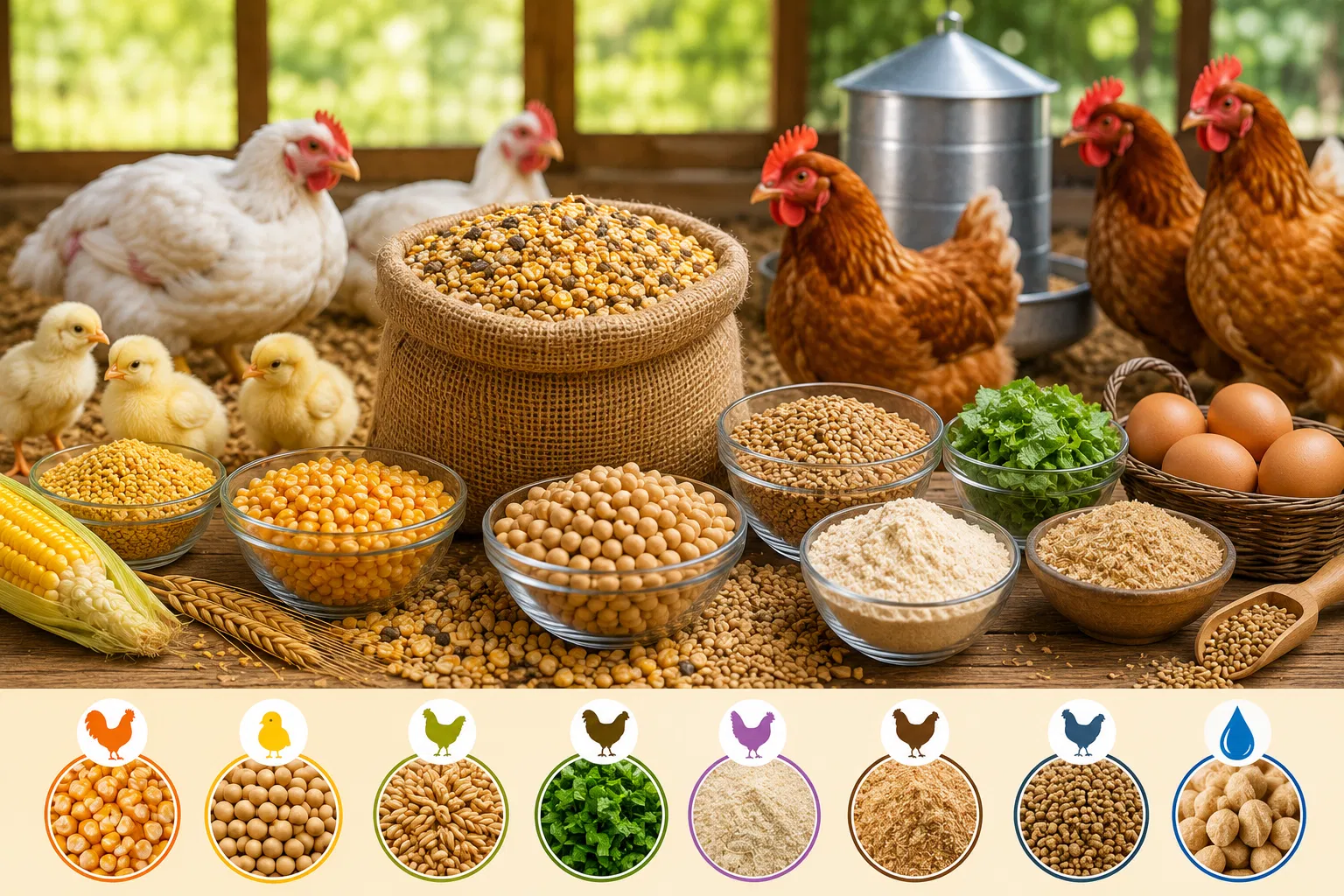
Feeding chickens the right way is one of the fastest paths to better growth, stronger immunity, and higher egg production. Yet many poultry keepers struggle to understand when to use starter feed, grower feed, and layer feed. Each feed type serves a specific purpose, and using the right one at the right stage can make a big difference in flock performance.
Whether you are raising backyard chickens or managing a larger poultry operation, this poultry feed guide will help you choose the best feed for each stage of development. From chicks to laying hens, here is everything you need to know about starter, grower, and layer feeds.
What Is Poultry Feed?
Poultry feed is a specially formulated diet designed to meet the nutritional needs of chickens at different stages of life. Unlike general grains or kitchen scraps, commercial poultry feed contains balanced levels of protein, energy, vitamins, minerals, and sometimes amino acids that support growth, feathering, bone development, and egg production.
The three main categories are:
- Starter feed for chicks
- Grower feed for growing birds
- Layer feed for egg-producing hens
Each feed is formulated differently because a chick does not need the same nutrition as a mature hen laying eggs every day.
Starter Feed: Nutrition for Chicks
Starter feed is the first feed chicks should eat after hatching. It is designed to support rapid growth, strong immune function, and healthy bone development during the most vulnerable stage of life.
Key Features of Starter Feed
- Higher protein content, usually around 18% to 20%
- Small crumble texture for easy eating
- Enriched with vitamins and minerals
- Supports feather growth and early development
Why Starter Feed Matters
Chicks grow quickly in their first few weeks, and they need a nutrient-dense diet to keep up with that pace. Starter feed helps build muscle, strengthen the immune system, and reduce the risk of developmental problems.
Feeding chicks the right starter feed early on sets the foundation for a healthy, productive flock later in life.
When to Feed Starter Feed
Starter feed is typically given from hatch until about 6 to 8 weeks of age, depending on the breed and growth rate. Broiler chicks may require starter feed for a shorter period, while some slower-growing birds may stay on it slightly longer.
Grower Feed: Supporting Steady Development
Once chicks move past the early growth stage, they transition to grower feed. This feed is formulated to support steady development without providing excess protein that could stress the body or encourage unnecessary weight gain.
Key Features of Grower Feed
- Moderate protein content, usually around 16% to 18%
- Balanced energy for ongoing growth
- Supports muscle and skeletal development
- Often available as pellets or crumbles
Why Grower Feed Is Important
Grower feed bridges the gap between chick development and adult maintenance. It helps young birds build a strong frame, maintain healthy feathers, and prepare their bodies for maturity. For breeders and layers, this stage is especially important because proper growth supports future productivity.
When to Feed Grower Feed
Grower feed is commonly given from around 6 to 8 weeks of age until the birds are close to laying age, usually around 16 to 18 weeks. The exact timing can vary by breed, sex, and purpose of the flock.
For example:
- Meat birds may be moved through feed stages faster
- Future layers often remain on grower feed until they are nearly ready to lay
- Breeders may need a carefully managed feeding plan to prevent overconditioning
Layer Feed: Designed for Egg Production
Layer feed is formulated for hens that have started laying eggs. At this stage, nutrition must support egg production, strong shells, and the hen's overall health. Layer feed contains more calcium than starter or grower feed because hens need calcium to form hard eggshells.
Key Features of Layer Feed
- Usually around 16% protein
- Higher calcium content, often 3% to 4%
- Contains vitamins and minerals for egg quality
- Supports daily egg production and bone health
Why Calcium Matters in Layer Feed
Calcium is essential for strong eggshells. Without enough calcium, hens may produce thin-shelled or broken eggs, or their body may begin pulling calcium from bones, leading to long-term health issues.
Layer feed gives hens the nutritional support they need to produce consistent, high-quality eggs while staying healthy and active.
When to Switch to Layer Feed
Hens should be switched to layer feed only when they begin laying eggs, usually around 18 to 20 weeks of age. Starting layer feed too early can create problems, especially because young birds may receive too much calcium before they need it.
Do not feed layer feed to chicks or growing pullets too early, as excess calcium can harm developing kidneys and bones.
How to Choose the Right Poultry Feed
Choosing the right feed depends on the bird's age, breed, and purpose. A good feeding program follows the natural growth cycle of the flock and avoids mixing feed stages too soon.
Simple Feed Selection Guide
- 0 to 6/8 weeks: Starter feed
- 6/8 to 16/18 weeks: Grower feed
- 18 weeks and older, once laying begins: Layer feed
If you are unsure, always check the manufacturer's feeding instructions and consider the breed's development rate. Heavy breeds, bantams, and commercial layers may all have different nutritional timelines.
Common Feeding Mistakes to Avoid
Even experienced poultry keepers make feeding mistakes that affect growth and egg production. Avoiding these problems can improve flock health and reduce feed waste.
- Switching to layer feed too early before hens begin laying
- Keeping chicks on starter feed too long and delaying proper development stages
- Using layer feed for non-laying birds such as roosters or growing pullets
- Feeding scraps as a substitute for balanced poultry nutrition
- Ignoring clean water, which is just as important as feed
Remember that feed quality and consistency matter. Sudden changes in diet can stress birds and reduce performance.
Starter, Grower, and Layer Feeds Compared
Understanding the differences between these feeds makes it easier to manage your flock efficiently.
- Starter feed: High protein for rapid chick growth
- Grower feed: Balanced nutrition for steady development
- Layer feed: Higher calcium for egg production and shell strength
Each feed has a specific role, and using the correct one at the correct time helps birds reach their full potential.
Final Thoughts on Poultry Feed Guide: Starter, Grower and Layer Feeds
A successful poultry feeding program is built on timing, balance, and consistency. Starter feed gives chicks the strong beginning they need. Grower feed supports healthy development as they mature. Layer feed ensures hens have the nutrients required for reliable egg production and strong shells.
If you want healthier chickens, better growth, and improved egg output, start by matching feed to the bird's life stage. Choose quality poultry feed, follow a sensible feeding schedule, and monitor your flock closely as they grow.
Feed the right stage, and your birds will reward you with better performance, stronger health, and more productive laying cycles.