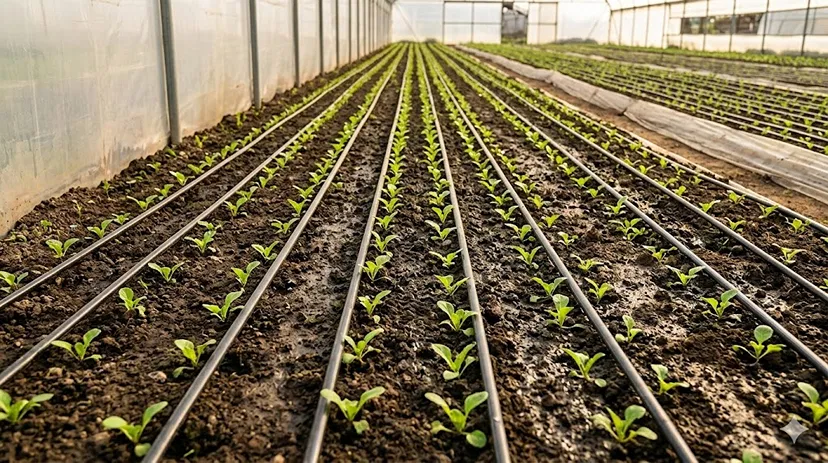
Per Drop More Crop (PDMC) is the micro-irrigation component of the Pradhan Mantri Krishi Sinchayee Yojana (PMKSY), launched by the Ministry of Agriculture and Farmers Welfare on 1 July 2015. It was introduced because traditional flood irrigation wastes a large share of India's already-scarce freshwater, while erratic rainfall and falling groundwater levels keep pushing up the cost and risk of farming. PDMC tackles this by subsidising drip and sprinkler irrigation systems, which deliver water directly to the plant's root zone, so farmers get more crop per drop of water used. Since 2022, PDMC has functioned as a standalone scheme with its own dedicated administrative structure, even as it continues to operate under the broader PMKSY umbrella and its "Har Khet Ko Pani" vision.
Per Drop More Crop Scheme Overview
- Scheme Name – Per Drop More Crop (PDMC), the micro-irrigation component of Pradhan Mantri Krishi Sinchayee Yojana (PMKSY)
- Scheme Modification Date – Operates as a separate, standalone scheme since 2022; National Stewardship Council of PDMC constituted 23 October 2023
- Scheme Fund Allocated – Centrally Sponsored Scheme, jointly funded by Centre and states, commonly in a 60:40 split for most states and a higher central share for hill and North-Eastern states; exact yearly outlay is set through Annual Action Plans approved at the state level
- Type of Scheme – Central Government (Centrally Sponsored Scheme), implemented by State Agriculture/Horticulture Departments under Ministry of Agriculture & Farmers Welfare guidelines
- Helpline No – Kisan Call Centre, 1800-180-1551; farmers can also contact their District Agriculture/Horticulture Office or check state-specific PDMC portals
- States Covered – All-India, implemented through respective State Agriculture and Horticulture Departments
Objectives of the Scheme
- Improve water-use efficiency at the farm level through drip and sprinkler micro-irrigation
- Reduce water wastage compared to traditional flood irrigation methods
- Increase crop productivity per unit of water used ("more crop per drop")
- Support water conservation, water management, and micro-level water storage alongside irrigation
- Help farmers cope with droughts, erratic monsoons, and declining groundwater levels
Key Features of the Per Drop More Crop Scheme
- Covers two core micro-irrigation technologies: drip irrigation (suited to orchard, plantation, and row crops like sugarcane, cotton, and vegetables) and sprinkler irrigation (suited to a wider range of field crops)
- Subsidy is calculated as a percentage of the standard per-acre/per-hectare installation cost notified by the respective state, subject to a maximum area cap
- Scheme is largely crop-neutral, though some states set higher priority or slightly different cost norms for horticulture and orchard crops
- Farmers can install the system themselves or through government-empanelled vendors and companies
- Also supports micro-level water harvesting and secondary storage structures to supplement micro irrigation sources
- Linked with the Soil Health Card Scheme, Rashtriya Krishi Vikas Yojana (RKVY), and the National Mission for Sustainable Agriculture
- A National Stewardship Council oversees the scheme's implementation and quality standards
- Some states provide additional top-up subsidy on top of the base PDMC support, often channelled through the Micro Irrigation Fund (MIF)
PDMC Subsidy Structure
- Small and marginal farmers are eligible for a subsidy of up to 55% of the notified installation cost
- Other farmers are eligible for a subsidy of up to 45% of the notified installation cost
- Funding is shared between Centre and state, commonly in a 60:40 ratio for general states, with a higher central share for hill and North-Eastern states
- Some states offer additional financial assistance on top of the central subsidy, further reducing the farmer's out-of-pocket cost
- Subsidy amount is subject to a maximum cost cap per acre/hectare as notified by the respective state, so higher-cost installations may not be fully covered beyond this limit
Per Drop More Crop Scheme Benefits to Farmers
- Significant reduction in installation cost of drip and sprinkler systems through the 45-55% subsidy
- Water savings of up to 40% compared to traditional irrigation methods
- Higher and more consistent crop yields through precise, controlled water delivery to the root zone
- Reduced soil erosion, improved soil health, and lower risk of salinity buildup compared to flood irrigation
- Lower dependence on erratic monsoon rainfall, improving resilience against drought
- Reported productivity gains of around 25% in areas with strong PDMC adoption, according to scheme-linked case studies
Limitations of the Scheme
- Subsidy percentage and per-acre cost norms vary by state, so actual benefit can differ depending on where the farmer is located
- Subsidy is capped at the notified installation cost per unit area; costs beyond this cap are borne entirely by the farmer
- Some states restrict repeat subsidy on the same land parcel if a similar micro-irrigation benefit was already availed in a prior period
- Only BIS-certified equipment and government-empanelled vendors typically qualify for subsidy, which can limit vendor choice
- Tenant or lease farmers may be eligible only in certain states and only with valid lease documentation, so coverage isn't uniform nationwide
Documents Required
- Aadhaar Card
- Land ownership records or valid lease/tenancy documentation, where applicable
- Bank account passbook (linked to Aadhaar for DBT)
- Passport-size photograph
- Mobile number for registration and OTP verification
How to Apply for the Per Drop More Crop Scheme
- Visit your State Agriculture or Horticulture Department's official website, or the PMKSY micro-irrigation portal, to check current subsidy norms for your state.
- Register using your Aadhaar number, mobile number, and bank account details.
- Upload the required documents — land records, Aadhaar, bank passbook, and photograph — and submit the application form.
- Field staff will typically visit your farm to verify land, water source, and the proposed irrigation system before approval.
- Once approved, proceed with installation through a government-empanelled vendor using BIS-certified equipment.
- After installation and inspection are complete, the subsidy amount is transferred directly to your bank account through Direct Benefit Transfer (DBT).
Conclusion
Per Drop More Crop has become one of the most impactful tools for making Indian farming more water-efficient, cutting water use by as much as 40% while helping farmers get better yields from every drop applied. With subsidies of up to 55% for small and marginal farmers and continued state-level top-ups in many regions, the scheme brings modern irrigation technology within reach of farmers who would otherwise struggle with its upfront cost. Checking with the local Agriculture or Horticulture Department and working through the right empanelled vendor remains the surest way to make the most of this scheme.
Disclaimer: This article is for informational purposes only. Scheme details, interest rates, and subvention amounts are subject to periodic revision by the Government of India, RBI, and NABARD. Farmers are advised to verify the latest terms and eligibility criteria with their bank, NABARD, or official government sources before applying.