Painted bug is one of the few cauliflower pests that can finish a crop before it properly starts. Nymphs and adults both suck sap from tender leaves and growing points, and because they attack hardest at the seedling and early vegetative stage, a heavy infestation in the first three weeks after transplanting can kill plants outright or leave them blind and headless. The bugs also shelter in soil cracks and under debris during the hot part of the day, so a field can look clean at noon and be covered in bugs by evening. Timing the scouting correctly is half the battle with this pest.
Symptoms
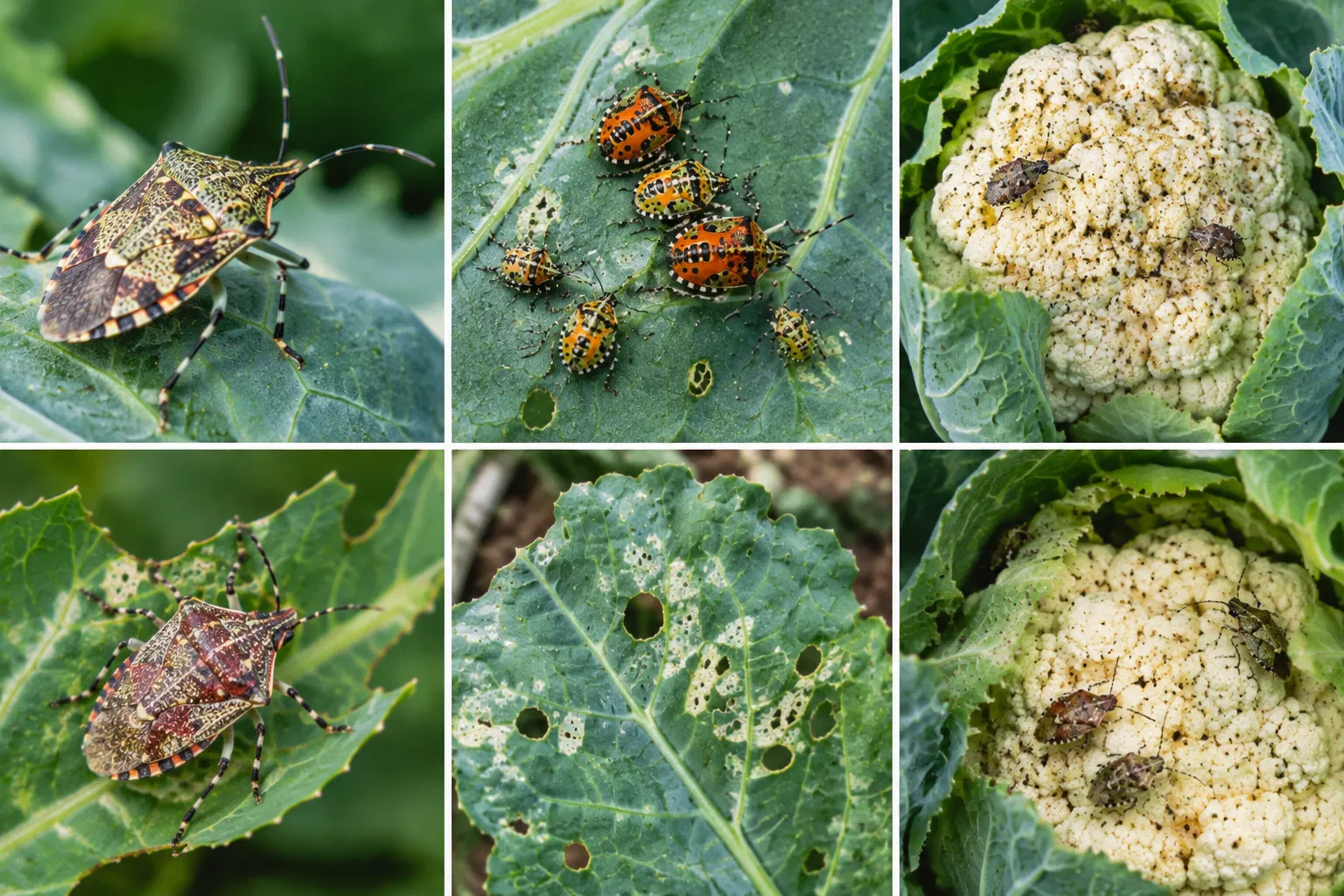
- Clusters of small, brightly marked shield-shaped bugs on tender leaves, stems and growing points, often several on a single seedling
- Pale yellow or whitish stippled spots around each feeding puncture, which spread and merge into dried, scorched-looking patches
- Wilting and drooping of tender leaves during the day, progressing to drying and death of seedlings under heavy attack
- Damage to the growing point that leaves the plant blind or forces multiple weak side shoots instead of a single central head
- Stunted, hardened plants that recover slowly and go on to form small, poorly filled curds
- Damage starting along field borders and near weedy patches before moving inward
Causes
- Hot, dry weather, which suits Bagrada hilaris perfectly; populations build fastest in warm dry spells and drop sharply once regular rain or irrigation begins
- Transplanting into the warm, dry window when bug numbers are already peaking, so the crop meets the pest at its most vulnerable stage
- An adjacent mustard, radish or cabbage crop reaching harvest, which pushes adult bugs into the new cauliflower field as their old host dries down
- Cruciferous weeds, volunteer plants and unploughed crop residue carrying the pest between seasons
- Cloddy, cracked and debris-covered soil surfaces, which give bugs daytime shelter and the female easy egg-laying sites near the plant base
- Water-stressed fields and long gaps between irrigations, both of which favour the pest and weaken the crop's ability to outgrow the damage
How to Identify
The adult is a shield-shaped bug about 5 to 7 mm long, black with bright orange-red and white markings arranged in the painted pattern the pest takes its name from. Nymphs are wingless, rounder and a vivid orange-red with dark patches, and they are usually found packed together on the same shoot. Eggs are barrel-shaped and laid in the soil near the plant base or on the underside of leaves, turning from white to orange as they mature.
Scout in the early morning or late afternoon. During the hottest hours the bugs drop to the soil surface and hide under clods, mulch and crop debris, so a midday inspection badly underestimates the population. Start at the field borders and near weedy patches, since that is where infestations establish first, and check the soil around the base of damaged seedlings as well as the plant itself. Walk the crop every two to three days through the first month after transplanting, because at that stage the gap between a few bugs and a dead seedling is only a matter of days.
Control Methods
Chemical Control
1. Dimethoate 30% EC
Dimethoate is an organophosphate that inhibits acetylcholinesterase, the enzyme the insect nervous system depends on, causing paralysis and death. It works by contact and by ingestion, and it is absorbed and translocated through the plant sap, which matters against a pest that feeds directly on tender growing tissue. Spray in the early morning or late afternoon when the bugs are up on the plants rather than sheltering at soil level, and direct the spray to cover the plant base and the surrounding soil surface as well as the foliage. It belongs to IRAC Group 1B.
Product Recommendation
- Tafgor Insecticide
- Rogor Insecticide
- Katyayani Dimethoate 30% EC - DEMAT
- Rogorin Insecticide
- Agriventure Dimete
Dimethoate is toxic to bees and to natural enemies, so keep to the cooler hours when pollinator activity is low and follow the pre-harvest interval strictly, since cauliflower is harvested only a short while after the last spray. Where the infestation is confined to the field borders, treating the affected strip rather than the whole field controls the pest with far less chemical and far less disruption to beneficial insects.
Cultural Control
- Plough deeply after the previous crop to expose eggs, nymphs and sheltering adults in the soil to heat and predators
- Clear cruciferous weeds, volunteer plants and leftover residue from the field and bunds, since these are where the pest survives between seasons
- Avoid transplanting immediately beside a mustard, radish or cabbage crop that is about to be harvested, as the departing bugs move straight into the new field
- Keep the soil surface firm and free of clods, loose debris and heavy mulch near the plant base, which removes both daytime shelter and preferred egg-laying sites
- Irrigate on time; light irrigation during an active infestation dislodges bugs, raises humidity against them and helps seedlings outgrow the feeding damage
- Shift the transplanting date where possible so the crop's first three weeks do not coincide with the hottest, driest stretch when bug pressure peaks
- Sow a border strip of mustard, which painted bug strongly prefers, then treat or destroy that strip once the bugs have concentrated in it
Mechanical Control
In the early morning the bugs are sluggish and sit exposed on the plants, which makes hand collection genuinely effective on smaller holdings; shake them into a container of soapy water and destroy them. Pull out and destroy seedlings that are already dead or heavily colonised instead of leaving them as a breeding base in the field. Raise seedlings under insect-proof net so transplants go in clean, and keep a clean-cultivated, weed-free buffer around the field to slow bugs migrating in from neighbouring crops and field margins.
Conclusion
Painted bug does its worst damage in a narrow window, so the whole management plan rests on catching it early in the crop's life. Scout every two to three days for the first month after transplanting, check in the morning or evening rather than at midday, and start at the field borders where the pest arrives first. A well-timed Dimethoate spray directed at both the plant and the soil surface will bring an active infestation down, and deep ploughing, clean borders, timely irrigation and a mustard trap strip keep the pressure off the crop in the first place.
Disclaimer: Always confirm current label registration, approved dosage, water volume, and pre-harvest interval (PHI) for your state before using any product, since labels are periodically revised by regulatory authorities.
This guide is a general advisory. Do your own research and verification before using any product. Always confirm suitability for your crop stage, region, and field conditions before making any purchase, spray, or crop-management decision.