

Introduction
Paddy is one of the most important food crops grown by farmers, and healthy crop growth is essential for better tillering, panicle development, grain filling, and final yield. However, paddy is affected by many diseases during the crop season, and brown spot is one of the common diseases that can reduce both grain yield and grain quality if not managed at the right time.
Brown spot disease mainly affects leaves, seedlings, leaf sheaths, panicles, and grains. The disease is more common in weak crops grown under poor soil fertility, nutrient deficiency, water stress, and unfavorable field conditions. If farmers identify the disease early and follow proper management practices, crop loss can be reduced effectively.
What is Paddy Brown Spot Disease?
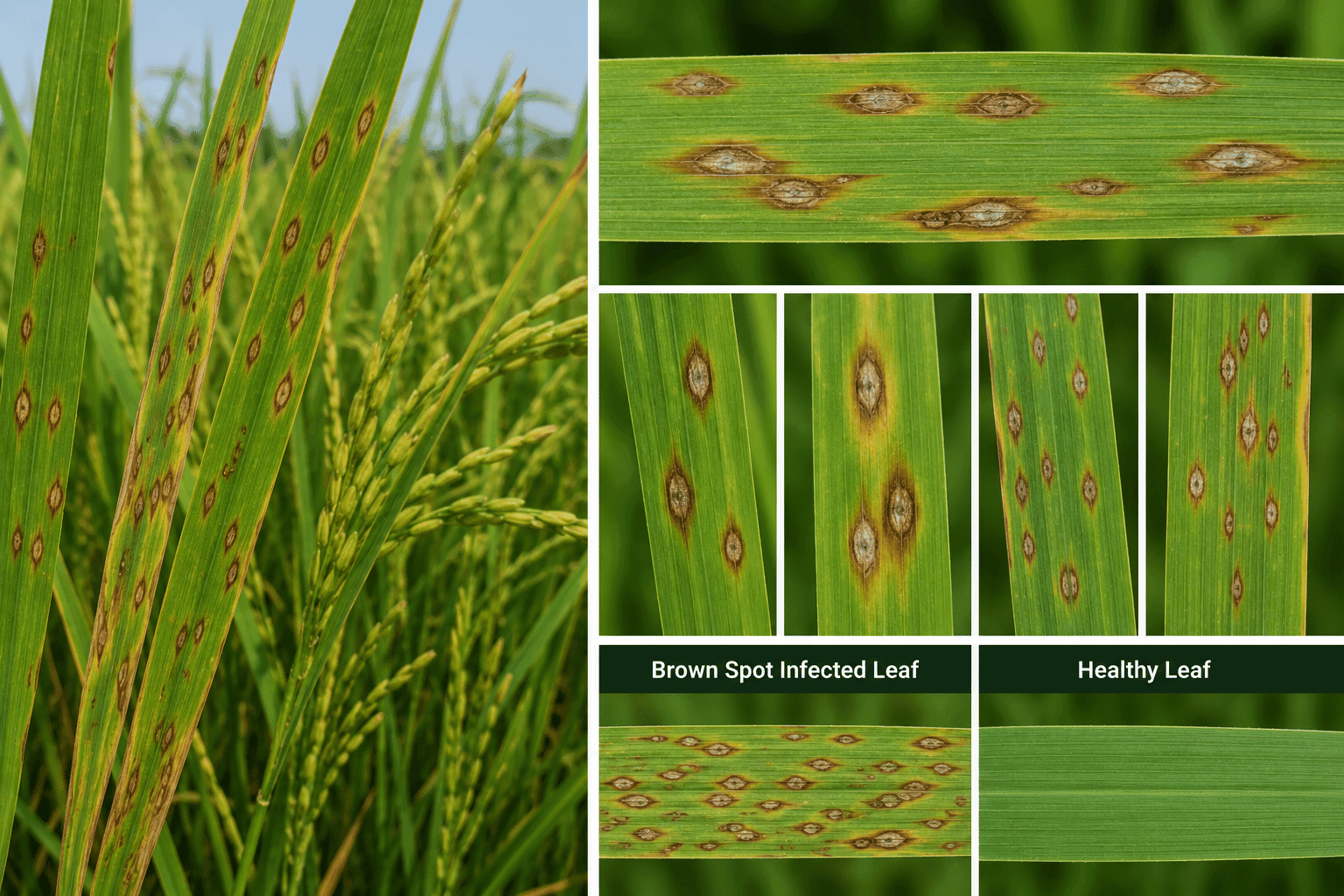
Paddy brown spot is a fungal disease that affects rice plants at different growth stages. The disease is commonly seen as brown spots on leaves, but it can also attack seedlings, panicles, and grains. It reduces the green leaf area and weakens the plant, which affects food preparation and grain development.
The disease becomes more serious when the crop is under stress due to poor nutrition, drought, poor water management, or low soil fertility. Brown spot is also known to affect grain appearance and quality, which can reduce market value.
Symptoms of Brown Spot Disease in Paddy
Farmers should regularly observe the paddy crop from the nursery stage to grain formation stage. Early symptoms usually appear on leaves as small brown spots.
Common symptoms include:
- Small brown spots on leaves
- Oval or round spots with dark brown margins
- Grey or light-colored center inside older spots
- Spots scattered all over the leaf surface
- Yellowing around infected spots
- Drying of leaves in severe infection
- Weak and stunted seedlings in nursery
- Brown spots on leaf sheath and panicles
- Discolored or spotted grains
- Poor grain filling in severe cases
- Reduced crop vigor and weak plant growth
In the early stage, spots are small and dark brown. Later, they become oval or circular with a greyish center and brown border. When many spots join together, large portions of the leaf dry up. In severe cases, the crop may look weak and unhealthy from a distance.
Damage Caused by Brown Spot Disease
Brown spot disease damages the crop by reducing the green leaf area. When leaves are covered with spots, photosynthesis is reduced and the plant cannot prepare enough food for healthy growth and grain filling.
Major losses caused by brown spot include:
- Reduced seedling vigor
- Poor tillering
- Weak plant growth
- Reduced photosynthesis
- Drying of infected leaves
- Poor panicle development
- Poor grain filling
- Discolored grains
- Reduced grain weight
- Lower market quality and yield
If the disease attacks during the grain filling stage, farmers may notice poor-quality grains with brown discoloration. Such grains may fetch a lower price in the market.
Causes and Spread of Brown Spot Disease
Brown spot spreads mainly through infected seeds, crop residues, wind, and rain splash. The fungus can survive on infected straw, stubble, and seeds. When favorable conditions occur, the disease spreads to healthy plants.
Major sources of spread include:
- Use of infected seed
- Infected crop residues left in the field
- Wind-borne fungal spores
- Rain splash
- Poor field sanitation
- Weak crop due to nutrient deficiency
- Water stress or drought conditions
- Continuous paddy cultivation in the same field
Seed-borne infection is an important source of disease in the nursery. If infected seed is used, seedlings may become weak from the beginning.
Favorable Conditions for Disease Development
Brown spot disease becomes severe when the crop is weak or under stress. Farmers should be more careful during the following conditions:
- Poor soil fertility
- Deficiency of potassium, silicon, or other nutrients
- Drought or water stress
- Poor water management
- High humidity
- Cloudy weather
- Frequent rainfall
- Use of infected seed
- Poor field sanitation
- Continuous rice cultivation
Nutrient-deficient crops are more prone to brown spot disease. Fields with poor fertility and poor crop management often show more disease severity.
Monitoring and Field Scouting
Regular field scouting helps farmers identify brown spot disease early. Farmers should inspect the crop every week, especially during nursery, tillering, and grain filling stages.
During field inspection:
- Check leaves for small brown spots
- Observe whether spots are increasing or joining together
- Inspect lower and older leaves first
- Check nursery seedlings for weak growth and leaf spots
- Observe panicles and grains during grain filling stage
- Identify areas with poor crop growth or nutrient stress
Early detection helps farmers take timely action before the disease spreads widely.
Best Control Practices for Paddy Brown Spot
Integrated disease management gives better results. Farmers should combine seed treatment, balanced nutrition, water management, field sanitation, and need-based chemical control.
Cultural Control Methods
- Use healthy and disease-free seed for sowing.
- Avoid using seed collected from infected fields.
- Remove infected crop residues after harvest.
- Keep the field clean and free from weeds.
- Follow proper spacing for better air circulation.
- Avoid continuous paddy cultivation in the same field.
- Maintain good soil fertility through organic manure and balanced fertilizers.
- Follow proper water management to avoid crop stress.
Good crop health is very important because brown spot is more severe in weak and nutrient-deficient plants.
Seed Treatment and Nursery Management
Seed treatment is one of the most important practices for preventing brown spot disease.
Farmers should:
- Use certified or healthy seed.
- Treat seed with recommended fungicide or bio-agent before sowing.
- Prepare nursery in a clean and well-drained area.
- Avoid overcrowding in the nursery.
- Remove weak and heavily infected seedlings.
- Do not transplant diseased seedlings into the main field.
Healthy seedlings help establish a strong crop and reduce disease spread in the main field.
Nutrient and Water Management
Balanced nutrition helps the paddy crop tolerate disease better. Farmers should avoid both nutrient deficiency and unbalanced fertilizer use.
Important practices include:
- Apply fertilizers based on soil test recommendations.
- Use balanced nitrogen, phosphorus, and potassium.
- Avoid excessive nitrogen application.
- Apply potassium properly to improve plant strength.
- Add organic manure to improve soil health.
- Correct micronutrient deficiencies if noticed.
- Maintain proper water level in the field.
- Avoid drought stress during important crop stages.
A strong and well-nourished crop is less likely to suffer heavy damage from brown spot disease.
Biological Management
Biological methods can be included as part of integrated disease management. Beneficial microbes help improve soil health and reduce disease pressure.
Useful practices include:
- Use of recommended bio-fungicides
- Application of Trichoderma formulations
- Use of well-decomposed compost
- Application of biofertilizers to improve root health
Biological methods work better when used regularly along with good cultural practices.
Chemical Control Measures
When disease incidence becomes severe, farmers can use recommended fungicides. Spraying should be done at the early stage of infection for better control.
Farmers should follow these points:
- Use only recommended fungicides for paddy brown spot.
- Follow label dosage and instructions carefully.
- Spray when early symptoms are noticed.
- Rotate fungicides with different modes of action.
- Avoid repeated use of the same fungicide.
- Ensure proper spray coverage on leaves.
- Combine chemical control with nutrition and field sanitation practices.
Chemical control alone may not give good results if the crop is weak due to poor nutrition or water stress.
Precautions During Spraying
- Spray during morning or evening hours.
- Avoid spraying during strong winds or rainfall.
- Use clean water for spray preparation.
- Ensure proper coverage of leaves.
- Follow recommended dosage only.
- Wear gloves, mask, and protective clothing.
- Keep children and animals away from the sprayed field.
- Wash hands and spraying equipment after use.
Preventive Measures for Farmers
Farmers can reduce brown spot disease by following these preventive steps:
- Use healthy and treated seed.
- Maintain proper nursery management.
- Apply balanced fertilizers based on crop need.
- Avoid nutrient deficiency and water stress.
- Remove infected crop residues after harvest.
- Monitor the crop regularly.
- Maintain proper field sanitation.
- Take timely action when early symptoms appear.
Preventive management is more effective and economical than controlling severe disease later.
Conclusion
Paddy brown spot is a common fungal disease that can affect seedlings, leaves, panicles, and grains. It causes brown spots on leaves, weak crop growth, poor grain filling, and reduced grain quality. The disease becomes more serious in nutrient-deficient and stressed crops.
Early identification, use of healthy seed, seed treatment, balanced fertilizer application, proper water management, field sanitation, and timely fungicide spraying are important for effective control. Farmers should follow integrated disease management practices to protect the crop, improve grain quality, reduce yield loss, and increase overall farm profit.