When bollworms attack crops, they can cause serious damage fast—feeding on leaves, buds, flowers, and bolls before farmers even realize the full extent of the problem. For growers looking for a smarter, more sustainable way to protect their fields, NPV (Nuclear Polyhedrosis Virus) for bollworm control offers a powerful biological alternative to chemical insecticides.
This naturally occurring virus targets bollworm larvae with precision, helping farmers reduce crop losses while supporting safer, eco-friendly pest management. In an era where resistance to pesticides is rising and demand for residue-free produce is increasing, NPV has become an important tool in integrated pest management (IPM).
What Is NPV and How Does It Work?
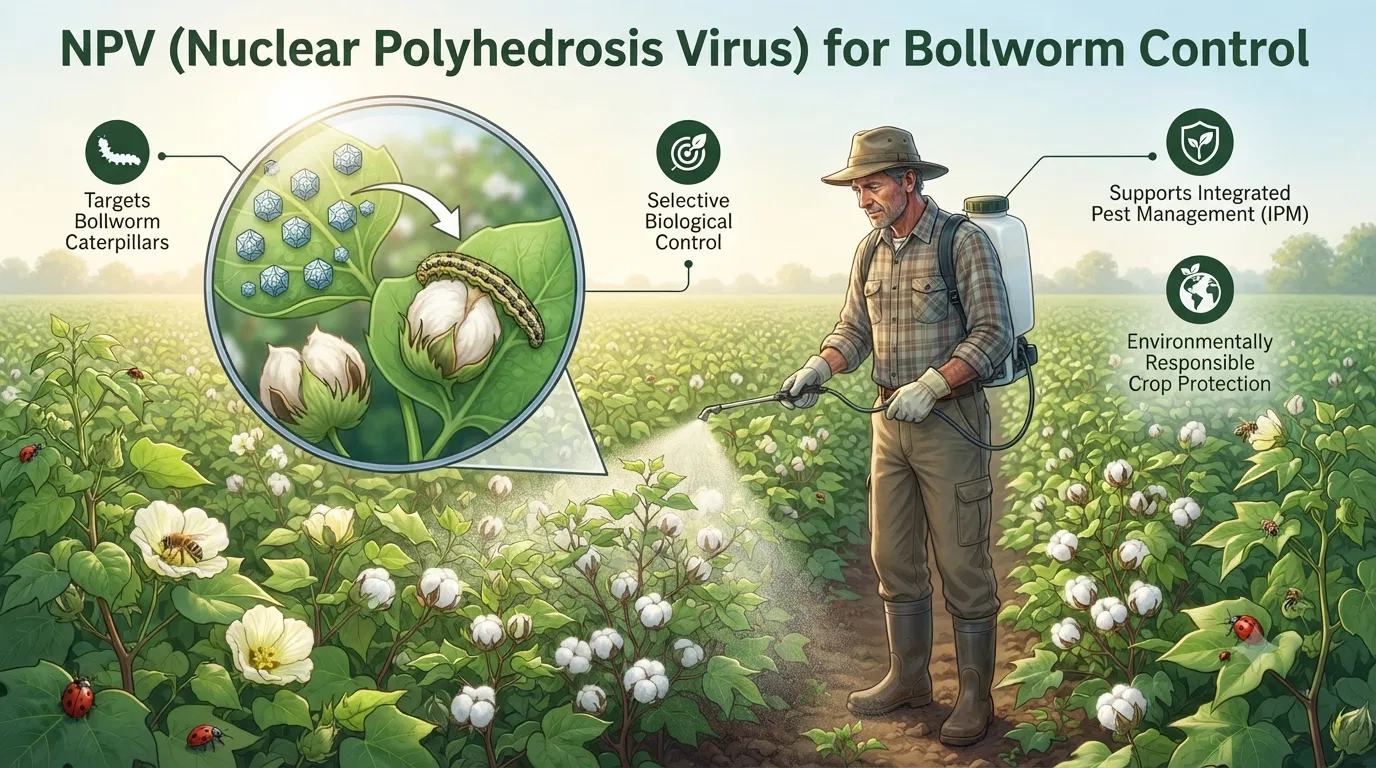
NPV stands for Nuclear Polyhedrosis Virus, a type of insect-specific virus that infects and kills caterpillar pests, especially bollworms. It does not harm humans, beneficial insects, animals, or plants. Instead, it works by being ingested by the target larva.
Once inside the bollworm's body, the virus breaks down in the alkaline environment of the insect gut, enters the cells, and multiplies rapidly. The infected larva stops feeding, becomes weak, and eventually dies. After death, the insect body releases more viral particles, helping spread the virus to nearby pest populations.
NPV is highly selective: it targets bollworms and related caterpillar pests while preserving the natural balance of the crop ecosystem.
Why Use NPV for Bollworm Control?
Bollworms are among the most damaging pests in crops such as cotton, tomato, okra, chickpea, and corn. Traditional chemical control methods can work, but they often bring challenges like resistance, residue concerns, and harm to beneficial insects. NPV provides a more sustainable approach.
Key Benefits of NPV
- Highly specific action against bollworm larvae
- No harmful residues on harvested produce
- Safe for pollinators and natural predators
- Suitable for organic and IPM programs
- Reduces the risk of pesticide resistance
- Environmentally friendly and biodegradable
Because NPV targets only the pest species, it helps maintain beneficial insects such as lady beetles, lacewings, and parasitoid wasps. This is especially important in long-season crops where natural enemies play a major role in keeping pest numbers down.
How Effective Is NPV Against Bollworms?
NPV can be very effective when used correctly and at the right time. Its performance is strongest when applied to early instar larvae, which are younger and more susceptible to infection. Since the virus must be eaten, timing and coverage matter a great deal.
Unlike fast-acting chemical insecticides, NPV may take a few days to show full results. Infected bollworms typically stop feeding soon after ingestion, which reduces further crop damage even before death occurs. This feeding suppression is a major advantage in protecting tender plant parts.
To maximize effectiveness, farmers should monitor fields regularly and apply NPV when bollworm eggs hatch and young larvae begin feeding. Early intervention is crucial for success.
Best Practices for Using NPV in the Field
Using NPV for bollworm control requires good timing, proper application, and field monitoring. Since it is a biological control agent, it works best as part of an integrated management strategy rather than as a standalone cure-all.
Application Guidelines
- Scout the crop regularly for eggs and young larvae.
- Apply NPV early when first- and second-instar larvae are present.
- Use sufficient spray volume to ensure thorough coverage of the crop canopy.
- Apply during cooler hours such as late afternoon or evening to reduce UV degradation.
- Reapply if needed, especially after heavy rainfall or severe pest pressure.
- Combine with other IPM tools such as pheromone traps, crop monitoring, and natural enemy conservation.
Since sunlight can reduce the virus's activity over time, many farmers prefer evening applications. Some formulations may also include additives that improve adherence and protection from UV light.
NPV and Integrated Pest Management
NPV fits perfectly into an integrated pest management system. IPM focuses on combining biological, cultural, mechanical, and chemical methods in a way that minimizes environmental harm and keeps pests below damaging levels.
By using NPV alongside other practices, growers can reduce dependence on broad-spectrum pesticides. This balanced approach supports healthier crops, better soil and ecosystem health, and more sustainable long-term production.
NPV Works Well With:
- Pheromone traps for pest monitoring
- Release of natural enemies
- Bt crops or Bt-based sprays where appropriate
- Crop rotation and field sanitation
- Removal of damaged plant parts or infested bolls
This combination approach helps prevent outbreaks while reducing the pressure that often leads to resistance problems. It also gives farmers more flexibility in managing pests across the season.
Limitations to Keep in Mind
While NPV is an excellent biological option, it is not a quick fix. Its slower action compared with chemical insecticides can be a limitation in severe infestations. It also requires proper timing and good spray coverage to work effectively.
Other important considerations include:
- It works best on young larvae, not large or mature caterpillars
- Environmental factors like UV exposure and rain can reduce persistence
- It may need repeat applications under heavy pest pressure
- Success depends on regular field scouting
Even with these limitations, NPV remains one of the most valuable tools for growers seeking safer bollworm control options. When used strategically, it can significantly reduce damage and support long-term pest management goals.
Is NPV Safe for Farmers and Consumers?
Yes. One of the major advantages of NPV is its safety profile. Because it is highly host-specific, it does not infect humans, livestock, birds, or beneficial insects. This makes it a strong choice for farming systems that prioritize worker safety, environmental protection, and consumer confidence.
For consumers, NPV helps support produce with lower chemical residues. For farmers, it reduces exposure to toxic sprays and can lower the risk of health and handling issues associated with synthetic pesticides.
The Future of Bollworm Control
As agriculture moves toward more sustainable practices, biological control agents like NPV are becoming increasingly important. Rising pesticide resistance and stricter residue standards are pushing growers to adopt smarter solutions that protect both yield and the environment.
NPV is not just a pest control product—it is part of a broader shift toward resilient, science-based crop protection. When combined with monitoring, timing, and integrated management, it can help farmers stay ahead of bollworm outbreaks while preserving the health of their fields.
Conclusion
NPV for bollworm control offers a practical, eco-friendly, and highly targeted way to manage one of agriculture's most persistent pests. It reduces crop damage, protects beneficial insects, and supports sustainable farming without the downsides of heavy chemical dependence.
If you want a bollworm management strategy that aligns with modern IPM principles and long-term agricultural sustainability, NPV is a solution worth serious consideration. Start with field scouting, apply at the right larval stage, and use it as part of a broader crop protection plan for the best results.
For healthier crops and smarter pest control, NPV is a natural ally in the fight against bollworms.