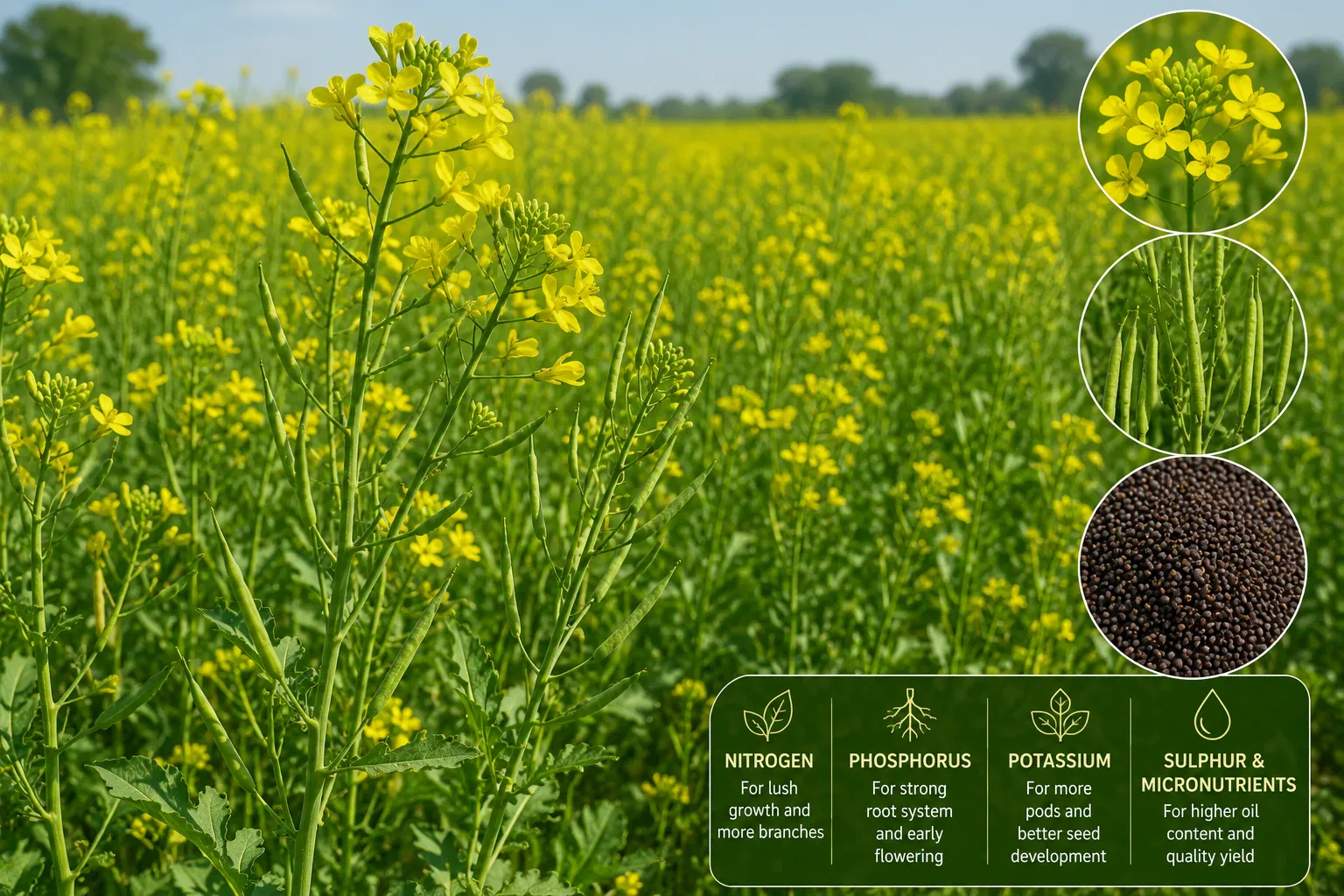
When mustard enters the flowering and pod-setting stage, every nutrient decision starts to matter. This is the phase where plants shift from building leaves to forming flowers, pods, and seeds—the part that directly determines yield. If nutrition is weak now, even a healthy crop can underperform. If feeding is balanced, mustard can produce more flowers, better pod retention, and fuller seeds.
This guide explains the best nutrition strategy for mustard flowering and pod setting, including key nutrients, application timing, and practical tips to improve yield.
Why Nutrition Matters During Mustard Flowering and Pod Setting
Mustard plants have different nutrient needs as they move from vegetative growth to reproductive growth. During flowering, the crop needs enough energy and balanced nutrition to support bloom formation. During pod setting, it needs nutrients that help flowers stay attached, pods fill properly, and seeds develop evenly.
Common problems during this stage include flower drop, poor pod formation, empty pods, and low seed weight. These issues often happen when plants lack nitrogen, sulfur, boron, phosphorus, or potassium at the right time.
Key idea: A mustard crop does not need excessive fertilizer at flowering, but it does need the right nutrients in the right balance.
Key Nutrients for Better Flowering and Pod Setting
1. Nitrogen
Nitrogen supports overall plant vigor and helps maintain healthy growth during early flowering. However, too much nitrogen at this stage can cause excessive vegetative growth and reduce flowering efficiency.
Best use: Apply nitrogen carefully and avoid heavy late doses. A moderate, balanced supply helps the crop remain active without becoming too leafy.
2. Phosphorus
Phosphorus plays a major role in root health, energy transfer, and flowering. It supports strong reproductive development and helps the plant move nutrients efficiently.
Best use: Ensure phosphorus is available before and during flowering, especially in phosphorus-deficient soils.
3. Potassium
Potassium is one of the most important nutrients for pod setting and seed filling. It improves flower retention, strengthens stems, and helps regulate water movement in the plant. It also supports better disease tolerance.
Best use: Maintain adequate potassium during flowering and pod development to reduce flower drop and improve pod quality.
4. Sulfur
Mustard is a sulfur-loving crop. Sulfur is essential for oil synthesis, protein formation, and overall yield quality. A sulfur shortage often results in pale leaves, weak flowering, and poor seed formation.
Best use: Apply sulfur before flowering or early in the reproductive stage for best results.
5. Boron
Boron is critical for flower development, pollen viability, and pod setting. Even a small deficiency can lead to poor pollination, flower shedding, and fewer pods.
Best use: Boron is often most effective as a foliar spray during pre-flowering or early flowering.
6. Zinc
Zinc supports enzyme activity, growth regulation, and reproductive development. It helps the plant maintain healthy flowering and better seed formation.
Best use: Correct zinc deficiency early so the crop can enter flowering with strong nutrient support.
Best Nutrition Strategy for Mustard Flowering Stage
At flowering, the goal is to support reproductive growth without forcing too much leafy expansion. Nutrient management should focus on maintaining plant strength and promoting flower retention.
Recommended approach
- Keep nitrogen balanced and avoid overuse.
- Ensure phosphorus and potassium are available in the root zone.
- Provide sulfur to support oilseed development.
- Use foliar boron if flower drop or poor blooming is observed.
- Monitor for micronutrient deficiencies, especially zinc and boron.
Foliar feeding can be especially useful during flowering when root uptake may not meet demand quickly enough. A light, well-timed spray can improve nutrient availability at a critical moment.
Best Nutrition Strategy for Pod Setting Stage
Once flowers begin turning into pods, the crop's demand for potassium, sulfur, and micronutrients becomes even more important. This stage determines how many pods survive and how well seeds develop inside them.
Focus areas during pod setting
- Prevent flower and pod drop: Maintain potassium and boron levels.
- Support seed development: Ensure sulfur and phosphorus remain available.
- Improve stress tolerance: Potassium helps the plant handle heat or moisture stress.
- Strengthen pod filling: Balanced nutrition leads to more uniform seed development.
Water stress, nutrient deficiency, and poor canopy health can all reduce pod setting. A well-fed mustard plant is better equipped to hold pods and fill seeds efficiently.
Ideal Fertilizer Management Tips
Before flowering
Prepare the crop with enough phosphorus, potassium, sulfur, and micronutrients before it enters the reproductive phase. Early nutrition often decides how strong flowering will be later.
At early flowering
Use a balanced foliar nutrient spray if needed, especially when symptoms of boron or zinc deficiency appear. Avoid excessive nitrogen top-dressing at this point.
During pod formation
Continue supporting potassium and sulfur. If the crop shows signs of poor pod retention, check for boron shortage or moisture stress.
During seed filling
Keep the crop healthy and avoid severe nutrient gaps. At this stage, the plant converts resources into seed weight and oil content.
Signs of Nutrient Deficiency in Mustard During Flowering
Recognizing deficiency early can help prevent yield loss. Watch for these common symptoms:
- Nitrogen deficiency: Pale green or yellowing lower leaves, weak plant growth
- Phosphorus deficiency: Stunted growth, delayed flowering
- Potassium deficiency: Leaf edge scorching, weak pod formation
- Sulfur deficiency: Uniform yellowing of young leaves, poor vigor
- Boron deficiency: Flower drop, poor pod setting, distorted growth tips
- Zinc deficiency: Reduced growth, weak flowering performance
If symptoms appear, act quickly. A timely correction during flowering can still protect yield.
Foliar Sprays for Better Flowering and Pod Setting
Foliar sprays are useful because they deliver nutrients directly to the leaves when the crop needs fast support. They are especially helpful for boron, zinc, and sometimes potassium during reproductive stages.
Common foliar targets:
- Boron for flower retention and pod formation
- Zinc for reproductive growth support
- Potassium for stress management and pod filling
- Balanced micronutrient mixes where deficiencies are present
Always apply sprays according to local recommendations and crop stage. Spraying during cooler parts of the day helps reduce leaf burn and improves absorption.
Other Factors That Affect Yield Along with Nutrition
Nutrition is essential, but it works best when combined with good crop management. Flowering and pod setting can also be affected by weather, moisture, pests, and disease.
- Moisture: Irrigation or timely rainfall supports pod retention
- Pest control: Aphids and other insects can reduce flowering success
- Disease management: Healthy plants set more pods
- Weed control: Weeds compete for nutrients and water
When these factors are managed well, nutrient use becomes more effective and yield improves.
Practical Nutrition Checklist for Mustard Growers
- Test the soil before planting
- Apply phosphorus and potassium based on soil needs
- Ensure sulfur is included in the fertility plan
- Correct boron and zinc deficiencies early
- Avoid excess nitrogen at flowering
- Use foliar nutrition when rapid correction is needed
- Protect the crop from moisture stress, pests, and disease
Conclusion
Mustard flowering and pod setting are the most yield-sensitive stages of the crop. The right nutrition at this time can mean more flowers, better pod retention, and higher seed production. Focus on balanced nitrogen, strong phosphorus and potassium supply, enough sulfur, and timely micronutrient support, especially boron and zinc. With smart nutrient management and good field care, you can significantly improve mustard yield and crop quality.
For the best results, monitor your crop closely, correct deficiencies early, and give special attention to nutrition just before and during flowering.