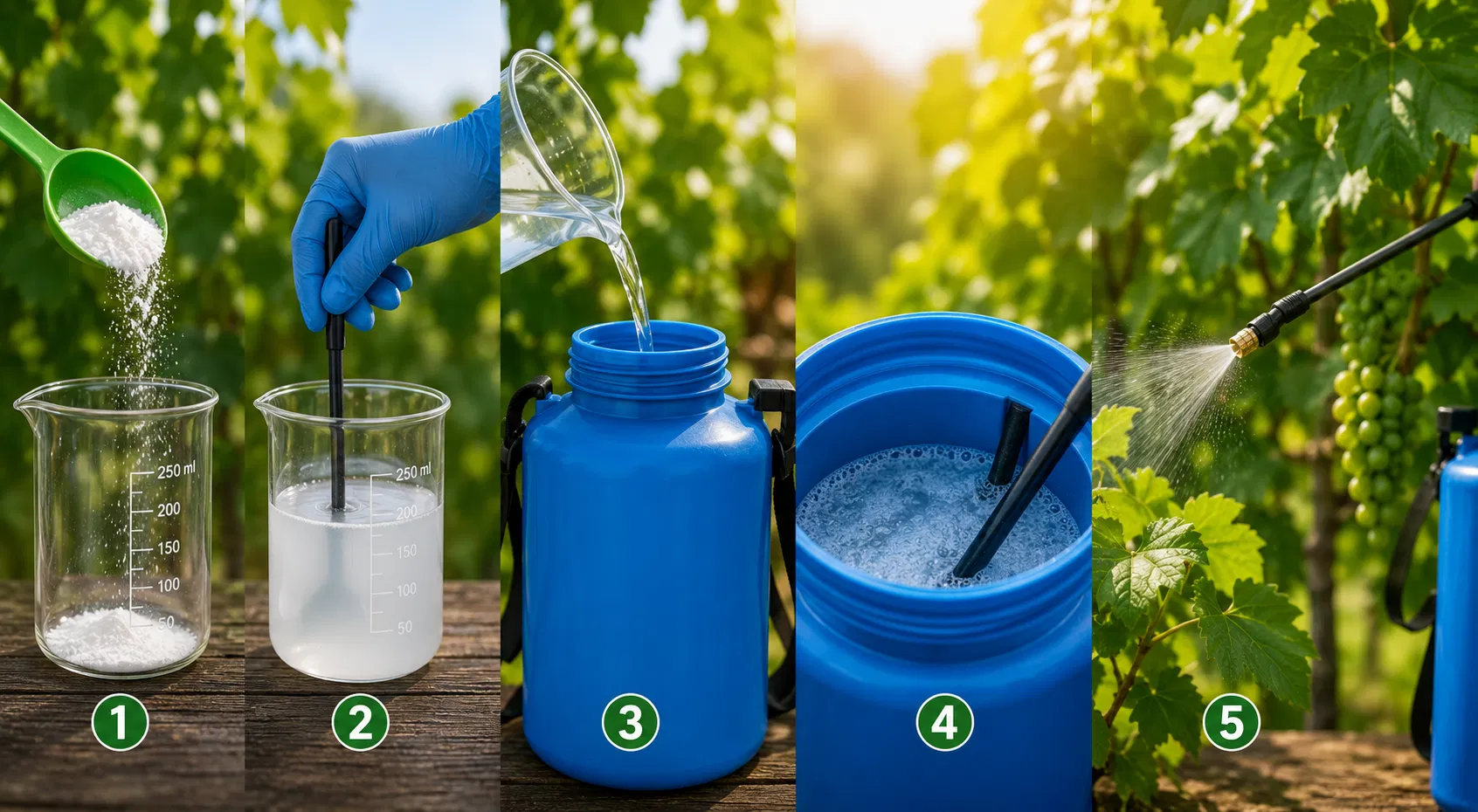
If you want to improve fruit size, boost germination, or encourage stronger plant growth, gibberellic acid can be a powerful tool. But it only works well when it is mixed and sprayed correctly. A small measuring mistake, poor dilution, or bad spray timing can reduce results or even stress your plants.
In this guide, you'll learn how to mix and spray gibberellic acid correctly, step by step, so you can apply it safely and get the best possible outcome.
What Is Gibberellic Acid?
Gibberellic acid, often called GA3, is a plant growth regulator that helps stimulate key growth processes. It is commonly used to improve seed germination, increase fruit set, enlarge fruits, break dormancy, and encourage stem elongation in some crops.
Because it is highly concentrated, gibberellic acid must be handled with care. Using too much can cause unwanted stretching, poor flowering, or weak plant structure. Using too little may not deliver any noticeable benefit.
When to Use Gibberellic Acid
Gibberellic acid is not a one-size-fits-all solution. It is best used when you have a specific goal in mind, such as:
- Improving seed germination
- Breaking seed or bud dormancy
- Increasing fruit size
- Enhancing flowering in certain crops
- Promoting uniform crop development
Always check whether your crop responds well to gibberellic acid before applying it. Different plants and varieties react differently, and the right concentration depends on the crop, growth stage, and intended result.
What You Need Before Mixing
Before preparing a spray solution, gather the right tools and materials. Accuracy matters with gibberellic acid.
- Gibberellic acid powder or formulated product
- Clean water
- A measuring scale or scoop
- A clean mixing container
- A sprayer with a fine nozzle
- Stirring stick or spoon
- Gloves and eye protection
Important: Always read the product label first. The label may provide specific mixing instructions, recommended concentrations, and crop-specific application rates.
How to Mix Gibberellic Acid Correctly
Gibberellic acid does not dissolve well in plain water alone. To mix it properly, you need to make a concentrated stock solution first, then dilute it to the desired spraying strength.
Step 1: Measure the correct amount
Start by measuring the amount needed for your target concentration. Never guess. Even small errors can make a big difference.
Step 2: Dissolve in a small amount of alcohol or warm water
GA3 dissolves more easily in a small amount of alcohol, such as ethanol, or in warm water. Some growers use a tiny amount of alcohol first, then add water to reach the final volume.
Tip: Do not pour gibberellic acid powder directly into a large tank of water and expect it to dissolve evenly.
Step 3: Mix thoroughly
Stir the solution until the powder is fully dissolved. If needed, let it sit briefly and stir again. The goal is a clear, well-mixed solution without visible particles.
Step 4: Dilute to the final spray volume
Once dissolved, add clean water to reach the correct final concentration. Mix again before filling the sprayer.
Step 5: Use fresh solution
For best results, prepare only the amount you need for immediate use. Freshly mixed gibberellic acid solution is usually more reliable than stored spray.
How to Spray Gibberellic Acid Properly
Spraying technique matters almost as much as the mixture itself. Even coverage helps the plant absorb the solution evenly and respond properly.
Choose the right time
Spray in the early morning or late afternoon when temperatures are cooler and sunlight is less intense. This helps reduce evaporation and improves absorption.
Spray on the correct plant stage
The best timing depends on the crop and objective. For example, seed treatment, flowering-stage application, and fruit enlargement sprays are used at different times. Follow crop-specific guidance whenever possible.
Apply evenly
Use a fine mist and coat the target area uniformly. Do not drench the plant. A light, even spray is usually more effective than a heavy application.
Avoid windy conditions
Wind can cause drift, wasted product, and uneven coverage. Spray when conditions are calm.
Do not mix with unknown products
Unless the label specifically allows it, avoid tank-mixing gibberellic acid with other pesticides or fertilizers. Compatibility issues can reduce effectiveness or damage crops.
Recommended Safety Practices
Although gibberellic acid is widely used, it should still be handled carefully. Protect yourself and your plants by following these basic safety steps:
- Wear gloves and eye protection
- Avoid inhaling powder during mixing
- Wash hands after handling
- Keep product away from children and pets
- Store in a cool, dry place in the original container
If any solution spills, clean it up immediately and dispose of it according to product label directions.
Common Mistakes to Avoid
Many application problems come from simple errors. Avoid these common mistakes when working with gibberellic acid:
- Using the wrong concentration
- Failing to dissolve the powder fully
- Spraying at the wrong growth stage
- Applying too much product
- Spraying during hot, windy weather
- Ignoring crop-specific instructions
Overapplication is one of the biggest risks. More is not better with gibberellic acid. In many cases, a lower, properly timed dose performs better than a stronger one.
How to Get Better Results
To improve results, focus on consistency and observation. Start with the recommended dose, test on a small area if possible, and watch how your crop responds.
Keep notes on:
- Mixing rate
- Spray timing
- Weather conditions
- Plant stage
- Visible crop response
These records can help you refine your approach and improve future applications.
Final Thoughts
Learning how to mix and spray gibberellic acid correctly can make a real difference in plant performance, but precision is essential. Measure carefully, dissolve fully, spray evenly, and apply at the right growth stage for your crop.
Bottom line: when used correctly, gibberellic acid can be a valuable growth tool. When used carelessly, it can do more harm than good. Follow label directions, stay accurate, and treat every application with care for the best results.