Healthy plants need more than nitrogen, phosphorus, and potassium. When crops start showing pale leaves, weak growth, poor flowering, or low yields, the missing piece is often a micronutrient. These essential elements are required in small amounts, but they have a major impact on plant health and productivity. That is why understanding micronutrient fertilizers and how to apply them correctly can make a big difference in gardens, farms, and landscapes.
In this guide, we’ll cover the main types of micronutrient fertilizers, what each one does, and the best ways to apply them for strong, balanced plant growth.
What Are Micronutrient Fertilizers?
Micronutrient fertilizers are nutrient products that supply trace elements plants need in very small quantities. Even though these nutrients are not required in large amounts, a deficiency can quickly limit growth and reduce crop quality.
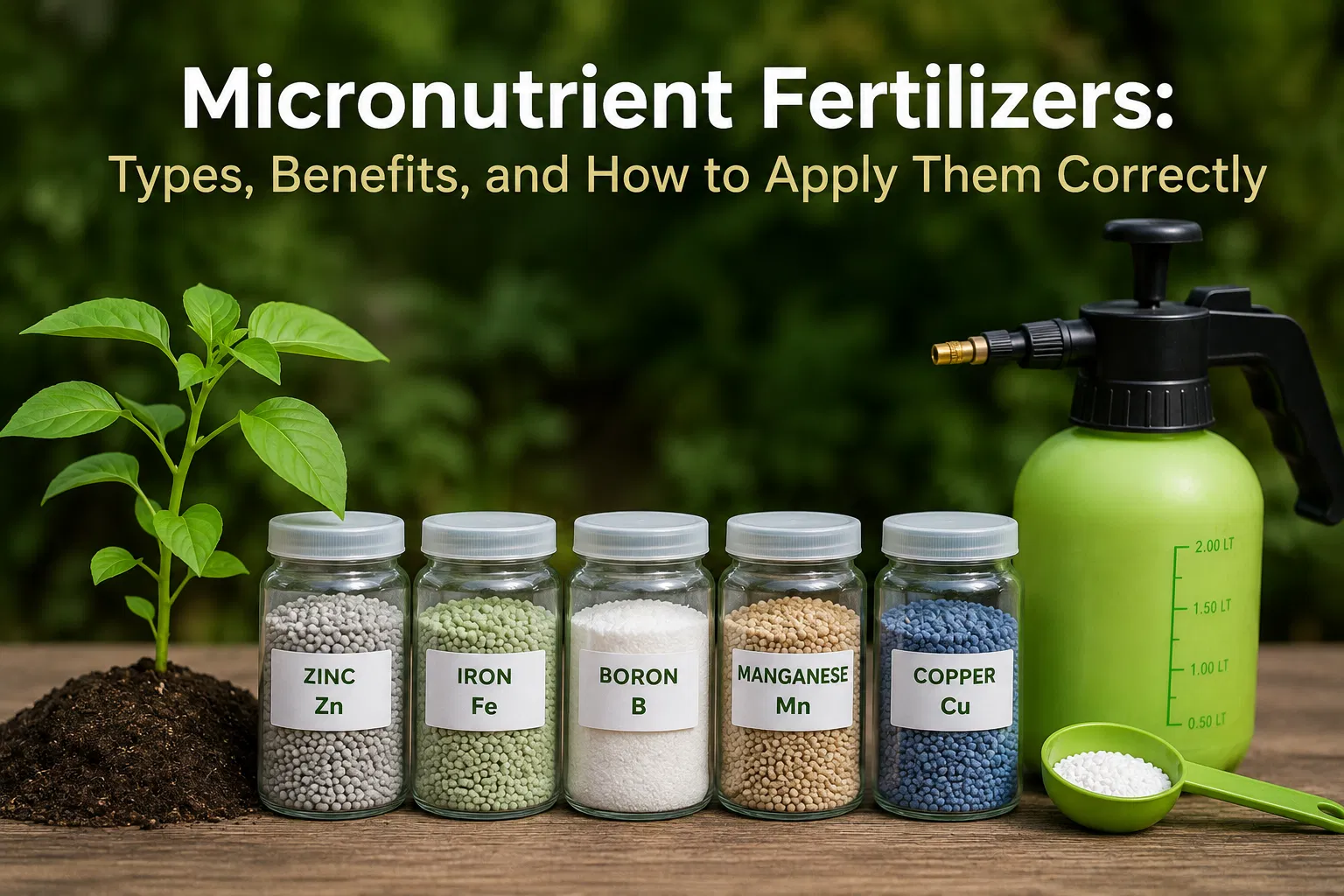
The most common micronutrients include:
- Iron (Fe)
- Zinc (Zn)
- Manganese (Mn)
- Boron (B)
- Copper (Cu)
- Molybdenum (Mo)
- Chlorine (Cl)
- Nickel (Ni)
These nutrients support important plant functions such as chlorophyll production, enzyme activity, flowering, fruit set, and nutrient absorption.
Why Micronutrients Matter
Plants may only need trace amounts of micronutrients, but without them, key growth processes slow down or stop. A deficiency in one micronutrient can affect overall plant performance, even if all major nutrients are present.
Common signs of micronutrient deficiency include:
- Yellowing leaves, especially between veins
- Stunted or slow growth
- Weak stems
- Poor flowering or fruiting
- Leaf distortion or spotting
- Reduced resistance to stress
Micronutrient management is not about feeding plants more. It is about feeding them precisely.
Types of Micronutrient Fertilizers
1. Single-Element Micronutrient Fertilizers
These fertilizers contain one micronutrient only, such as zinc sulfate, ferrous sulfate, or borax. They are ideal when a specific deficiency has been identified.
Best for:
- Correcting one nutrient deficiency
- Targeted soil treatment
- Precision farming programs
2. Mixed Micronutrient Fertilizers
Mixed micronutrient fertilizers combine several trace elements in one formulation. They are commonly used when multiple deficiencies are likely or when growers want a broad nutritional boost.
Best for:
- General maintenance feeding
- Crops grown in nutrient-poor soils
- Preventive nutrition programs
3. Chelated Micronutrient Fertilizers
Chelated fertilizers contain micronutrients bound to organic molecules that help keep them available to plants. They are especially useful in soils where nutrients get tied up by pH or other soil conditions.
Common chelated forms include:
- Fe-EDTA
- Zn-EDTA
- Mn-EDTA
- Fe-DTPA
- Fe-EDDHA
Best for:
- High-pH soils
- Sensitive crops
- Rapid nutrient correction
4. Liquid Micronutrient Fertilizers
Liquid formulas are easy to apply and are often used in foliar sprays or fertigation systems. They provide quick nutrient uptake, making them useful when plants need a fast response.
Best for:
- Foliar feeding
- Greenhouse crops
- Drip irrigation systems
5. Granular Micronutrient Fertilizers
Granular products are applied to the soil and release nutrients over time. They are practical for large fields and long-term nutrient management.
Best for:
- Broadcast application
- Pre-plant soil preparation
- Slow, steady nutrient supply
How to Apply Micronutrient Fertilizers
Choosing the right fertilizer is only half the job. Proper application is essential to avoid waste, improve absorption, and prevent toxicity.
1. Start with Soil and Tissue Testing
Before applying micronutrient fertilizers, test the soil or plant tissue. This helps identify which nutrient is lacking and how severe the deficiency is. Applying the wrong micronutrient can waste money and may even harm plants.
2. Match the Product to the Deficiency
Use a fertilizer that targets the specific problem. For example, zinc sulfate may help crops suffering from zinc deficiency, while iron chelate is often better for iron chlorosis in alkaline soils.
3. Apply at the Right Rate
Micronutrients are powerful at low rates. Overapplication can lead to toxicity, especially with boron, copper, and manganese. Always follow label instructions and local agronomic recommendations.
4. Use the Right Application Method
There are several ways to apply micronutrient fertilizers, depending on the crop and soil conditions:
- Soil application: Works well for long-term nutrient correction
- Foliar spraying: Delivers nutrients quickly through the leaves
- Seed treatment: Supports early root and seedling development
- Fertigation: Adds nutrients through irrigation systems for even distribution
5. Apply at the Right Time
Timing matters. Foliar sprays are often most effective during active growth, early deficiency symptoms, or before flowering and fruit set. Soil applications are usually best before planting or at the start of the growing season.
6. Consider Soil pH
Soil pH strongly affects micronutrient availability. In alkaline soils, iron, zinc, and manganese may become less available. Chelated forms are often a better choice in these conditions.
Best Practices for Micronutrient Use
To get the best results from micronutrient fertilizers, follow a few simple best practices:
- Use only what the crop actually needs
- Do not assume every yellow leaf means iron deficiency
- Combine soil health practices with fertilizer use
- Monitor plants after application for improvement
- Store fertilizers in a cool, dry place
- Mix products carefully to avoid incompatibility
Micronutrients work best when they are part of a complete fertility program that includes proper macronutrient balance, healthy soil structure, and adequate irrigation.
Common Mistakes to Avoid
Even experienced growers can misuse micronutrient fertilizers. Avoid these common errors:
- Applying without a test result
- Using the wrong micronutrient for the problem
- Overdosing in an effort to speed up results
- Spraying during hot, stressful conditions
- Ignoring soil pH and nutrient interactions
A careful, data-driven approach usually delivers better results than a heavy-handed one.
Conclusion
Micronutrient fertilizers are a small part of plant nutrition, but their impact is huge. Whether you are managing a home garden or a commercial crop, the right micronutrient strategy can improve growth, prevent deficiencies, and support stronger yields.
The key is to choose the correct type, apply it at the right rate, and use the most effective method for your crop and soil conditions. If you want healthier plants and better performance, start by testing first, then feed with precision.
Take action now: review your soil health, identify potential deficiencies, and choose the right micronutrient fertilizer to keep your plants growing at their best.