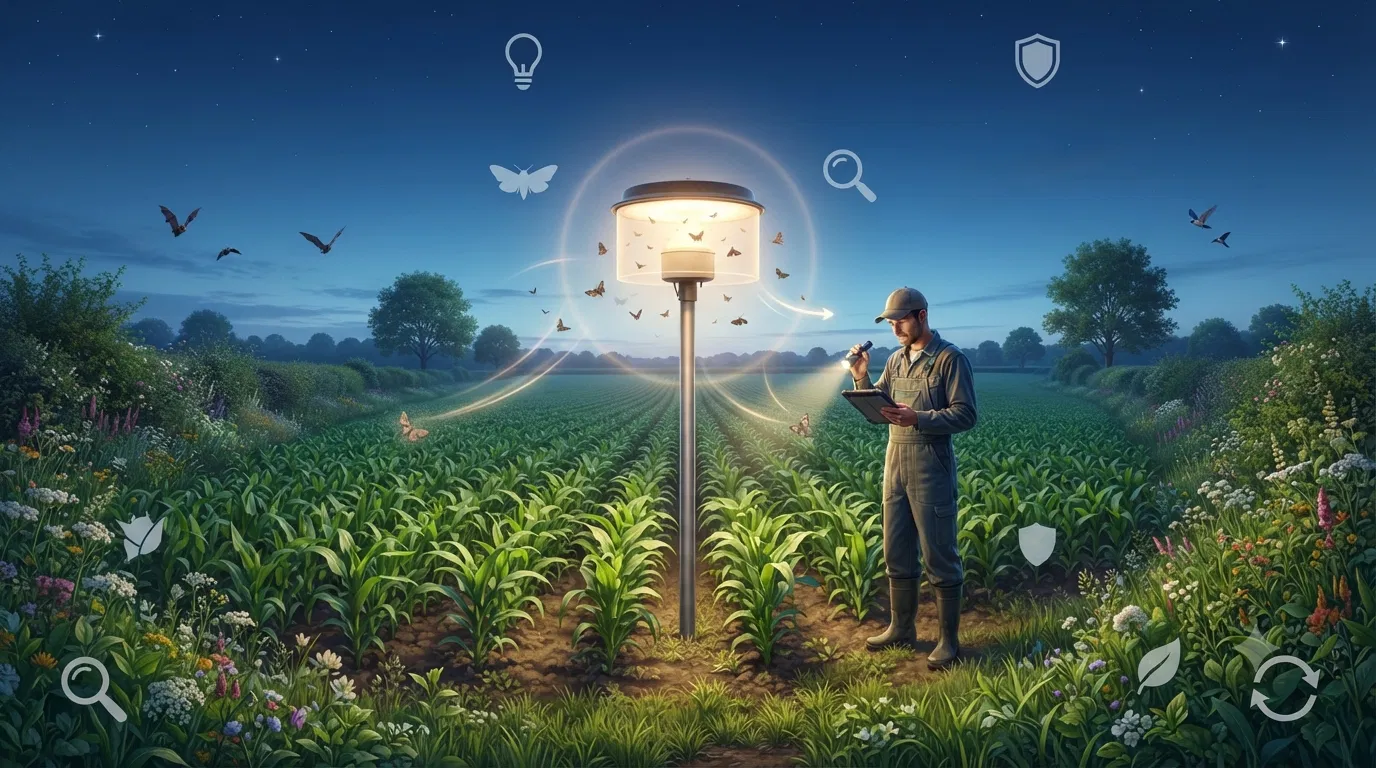
When insect activity starts affecting crop health, stored products, or indoor environments, the first challenge is often not control, but detection. That is where light traps play a vital role. These simple yet highly effective tools help monitor pest populations by attracting flying insects with light, making it easier to identify species, track trends, and act before an infestation grows.
In pest management, timing is everything. Light traps give growers, facility managers, and pest control professionals a practical way to see what is happening before damage becomes widespread. Whether used in agriculture, greenhouses, warehouses, or public health programs, light traps remain one of the most useful tools in pest monitoring.
What Are Light Traps?
Light traps are devices designed to attract and capture insects using a light source. Many flying pests are drawn to specific wavelengths of light, especially ultraviolet or blue light. Once insects approach the trap, they are captured by sticky surfaces, electric grids, vacuum systems, or collection chambers.
These traps are not always used to eliminate pests directly. In most cases, their primary purpose is monitoring. By counting and identifying the insects caught, users can determine pest pressure, spot seasonal patterns, and make informed decisions about treatment.
How Light Traps Support Pest Monitoring
Light traps are valuable because they provide ongoing, passive surveillance. Rather than relying only on visual inspections, which can miss early infestations, light traps continuously collect data about insect activity.
This information helps answer important questions:
- Are pest populations increasing or decreasing?
- Which insect species are present?
- What times of year or night are most active?
- Is treatment working as expected?
By answering these questions, light traps become an essential part of integrated pest management, or IPM. They help reduce unnecessary pesticide use and support targeted, evidence-based decisions.
Why Light Traps Are Effective
Many insects are naturally attracted to light, particularly nocturnal flying species. This behavior makes light traps especially effective for monitoring moths, beetles, flies, and other pests that move after dark.
There are several reasons light traps work so well:
- They operate continuously: Light traps can monitor pests overnight without manual observation.
- They capture early warning signs: Small pest increases can be detected before visible damage appears.
- They help with species identification: Trapped insects can often be identified by trained professionals.
- They reveal pest activity patterns: Monitoring over time shows whether pressure is rising, falling, or stable.
For growers and pest managers, that kind of insight is extremely valuable. It helps replace guesswork with real data.
Common Types of Light Traps
Different light traps are used depending on the setting and monitoring goals. Each type has its own strengths.
UV Light Traps
Ultraviolet light traps are among the most commonly used. They attract a wide range of flying insects and are frequently found in agricultural and commercial environments. Their strong attraction makes them useful for general monitoring.
Sticky Light Traps
These traps use a light source combined with an adhesive surface. Insects are drawn in and stuck to the board or panel. Sticky traps are popular because they are clean, easy to inspect, and simple to maintain.
Electric Grid Traps
Electric traps use light to attract insects, then kill them with an electric grid. While more often associated with control, they can still support monitoring by showing what species are active in the area.
Portable Battery-Powered Traps
These are useful in field settings where power access is limited. They allow pest monitoring in remote locations, making them ideal for crop fields, orchards, and outdoor surveys.
Where Light Traps Are Used
Light traps have broad applications across many industries. Their flexibility is one of the reasons they remain so important in pest monitoring.
- Agriculture: Farmers use light traps to monitor crop pests and time interventions more accurately.
- Greenhouses: Controlled environments benefit from early detection of flying insects before outbreaks spread.
- Warehouses and food storage: Light traps help detect insects that may damage products or contaminate inventory.
- Residential and commercial buildings: Pest professionals use them to monitor indoor flying insect activity.
- Public health and research: Light traps are used in surveys and insect population studies.
Because different environments face different pest pressures, light traps can be adapted to specific monitoring needs.
How to Use Light Traps for Better Monitoring
To get accurate results, light traps must be placed and managed correctly. Poor placement can lead to misleading data, while proper setup improves reliability.
Here are a few best practices:
- Place traps strategically: Position them near entry points, crop edges, or known pest activity areas.
- Avoid competing light sources: Nearby lighting can reduce trap effectiveness.
- Check traps regularly: Routine inspection ensures data is recorded and traps remain functional.
- Keep records: Track trap counts over time to identify trends and seasonal changes.
- Match trap type to target pest: Different insects respond differently to light wavelengths and trap designs.
Consistency is key. The more regularly traps are monitored, the more useful the data becomes.
Benefits of Light Traps in Integrated Pest Management
Integrated pest management focuses on using multiple strategies to control pests efficiently and responsibly. Light traps fit perfectly into this approach because they support decision-making without automatically relying on chemical treatments.
Some of the biggest benefits include:
- Early detection of infestations
- Reduced need for broad-spectrum pesticide use
- Better timing for control measures
- Improved understanding of pest life cycles
- More accurate evaluation of management success
In pest monitoring, what you discover early is often far easier and less expensive to manage than what you find too late.
Limitations of Light Traps
Although light traps are highly useful, they are not perfect. They work best as part of a broader monitoring plan rather than as a standalone solution.
Some limitations include:
- They mainly attract flying insects, not crawling pests.
- They may capture non-target insects, including beneficial species.
- Weather, moonlight, and nearby lights can affect performance.
- Trap counts may not always reflect exact pest population size.
For this reason, light trap data should be interpreted alongside visual inspections, pheromone traps, field scouting, or other monitoring tools. When used together, these methods provide a much clearer picture of pest activity.
Why Light Traps Still Matter Today
Even with advances in digital monitoring and smart pest control technology, light traps continue to be relevant. They are affordable, versatile, and easy to deploy across different environments. Most importantly, they provide actionable information.
In pest management, knowing when pests are present can be just as important as knowing how to remove them. Light traps deliver that awareness in a practical, proven way. For growers protecting crops, businesses safeguarding inventory, or professionals managing insect populations, light traps remain a dependable part of effective pest monitoring.
Conclusion
Light traps are more than simple insect collectors. They are an essential monitoring tool that helps detect pest activity early, track population trends, and guide smarter pest management decisions. When used correctly, they support more efficient, targeted, and sustainable control strategies.
If you want better pest control outcomes, start with better monitoring. Light traps can give you the insight needed to act at the right time, with the right approach, before a small problem becomes a costly one.