Pests can damage plants, spread disease, and turn a healthy home or garden into a constant battle. But effective pest control does not have to mean using the same spray every time something crawls, flies, or chews. Integrated Pest Management (IPM) offers a smarter, more sustainable way to manage pests by combining prevention, monitoring, and targeted control methods.
If you are a beginner, IPM may sound complex at first. In reality, it is a practical system anyone can learn. Whether you are caring for a vegetable garden, houseplants, lawn, or landscape, IPM helps you make better decisions, reduce pesticide use, and protect beneficial insects, people, pets, and the environment.
What Is Integrated Pest Management?
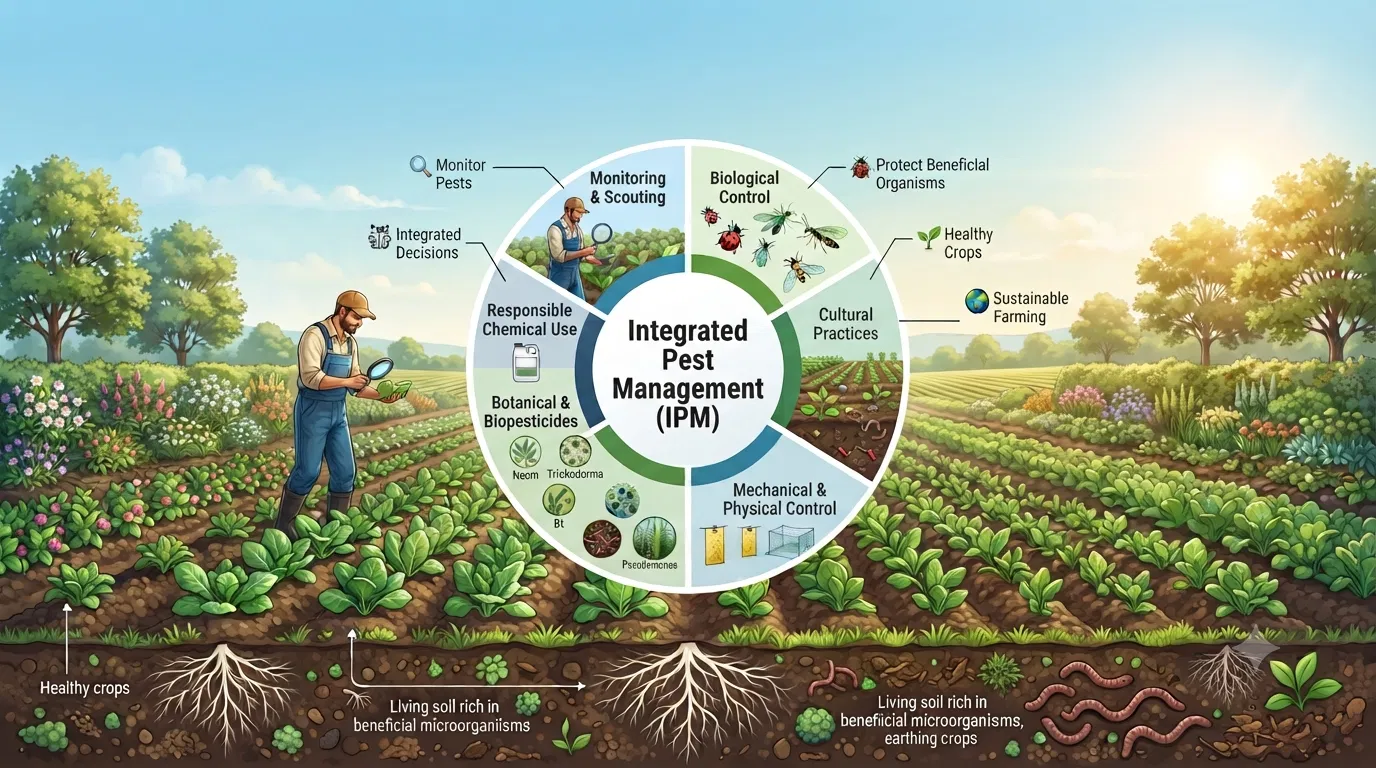
Integrated Pest Management (IPM) is a decision-making process for preventing and controlling pest problems with the least possible risk. Instead of reacting immediately with chemicals, IPM focuses on understanding the pest, monitoring its activity, and using the most effective control method only when needed.
IPM is built on a simple idea: not every pest needs to be eliminated completely. In many cases, the goal is to keep pest populations below the level where they cause real damage.
IPM is not about doing one thing. It is about using the right mix of strategies at the right time.
Why IPM Matters
Traditional pest control often relies too heavily on repeated pesticide applications. That approach can lead to resistance, harm beneficial organisms, and create unnecessary exposure risks. IPM reduces those problems by using a more balanced system.
- Safer for people and pets: Less reliance on broad chemical treatments means lower exposure risks.
- Better for the environment: IPM protects pollinators, birds, soil life, and water quality.
- More effective long term: Preventing pests is often easier than treating major infestations.
- Cost-conscious: You spend less on unnecessary products and repeated treatments.
- Helps avoid pesticide resistance: Smart rotation and reduced overuse make control methods more effective.
The Core Principles of IPM
Integrated Pest Management typically follows five major steps. These principles work together to create a complete pest control strategy.
1. Identify the Pest Correctly
Before taking action, you need to know exactly what pest you are dealing with. Different pests require different solutions. A misidentified insect, weed, or disease can lead to wasted time and ineffective treatment.
Look for clues such as:
- Damage patterns on leaves, stems, fruit, or furniture
- Droppings, webbing, holes, tunnels, or egg clusters
- Time of day the pest appears
- Location of the problem, such as indoors, on the lawn, or near water
2. Monitor and Inspect Regularly
IPM depends on observation. Regular inspections help you catch pest problems early, before they become severe. This may include checking the underside of leaves, examining soil, inspecting entry points in the home, or using traps to track activity.
Monitoring helps answer key questions:
- Is the pest population increasing or staying stable?
- Is the damage cosmetic or actually harmful?
- Are beneficial insects present?
- Is the problem isolated or spreading?
3. Set an Action Threshold
An action threshold is the point at which pest damage becomes unacceptable and control is needed. This is one of the most important parts of IPM. It prevents unnecessary treatment when pest numbers are still low or the damage is minimal.
For example, a few aphids on a rose plant may not require intervention, but a heavy infestation causing curling leaves and stunted growth likely does. In a home, one ant trail may be manageable, while repeated infestations in the kitchen may signal a larger problem.
4. Prevent Problems Before They Start
Prevention is the foundation of IPM. If you make the environment less attractive to pests, you reduce the chance of outbreaks.
- Keep areas clean: Remove food crumbs, plant debris, and standing water.
- Seal entry points: Close gaps around doors, windows, pipes, and vents.
- Choose resistant plants: Healthy, pest-resistant varieties are easier to maintain.
- Water properly: Overwatering can encourage root disease and fungus gnats.
- Encourage biodiversity: Mixed plantings support natural predators and reduce pest pressure.
- Rotate crops: In vegetable gardens, crop rotation helps disrupt pest and disease cycles.
5. Use the Least Risky Control First
When action is needed, IPM starts with the safest and most targeted methods. Chemical pesticides are not always avoided, but they are used only when necessary and in the most precise way possible.
Control options may include:
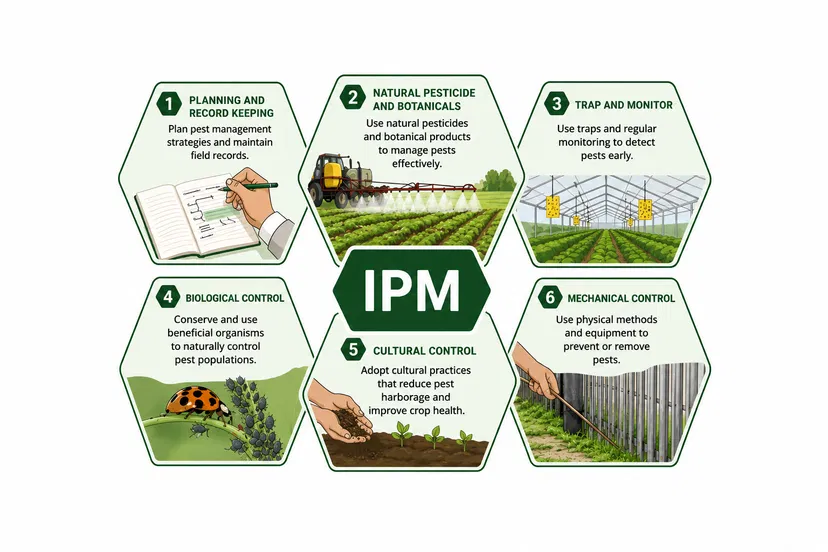
- Mechanical controls: Handpicking pests, pruning damaged plant parts, using traps, or barriers
- Biological controls: Encouraging or releasing natural enemies like ladybugs, lacewings, or parasitic wasps
- Cultural controls: Changing watering, mowing, planting, or sanitation practices
- Targeted chemical controls: Spot treatments, insecticidal soaps, or other lower-risk products used correctly
Common Examples of IPM in Practice
IPM can be used in many settings, from backyards to kitchens. Here are a few simple examples.
In the Garden
If aphids appear on your tomatoes, IPM would start with inspection and identification. If the population is small, you might spray them off with water, prune heavily infested stems, and attract beneficial insects by planting flowers nearby. If the infestation grows, a targeted treatment such as insecticidal soap may be used.
Indoors
For ants in the kitchen, cleaning spills, sealing cracks, removing food sources, and placing bait near trails are typical IPM steps. Instead of spraying across the room, the focus is on eliminating the source and blocking access.
On the Lawn
If weeds are spreading, IPM may involve mowing at the right height, improving soil health, overseeding thin areas, and pulling weeds before they seed. Herbicides, if needed, should be chosen carefully and applied only where necessary.
Benefits of Using IPM for Beginners
One of the best things about integrated pest management is how beginner-friendly it becomes once you understand the process. You do not need special equipment to get started. You only need consistency and a willingness to observe.
- Less guesswork: You make decisions based on evidence, not panic.
- Better results: Prevention and monitoring help reduce recurring problems.
- Healthier plants and spaces: Strong plants are naturally more resilient.
- More confidence: You learn how to recognize patterns and respond appropriately.
Simple IPM Tips You Can Start Today
You do not need to overhaul everything at once. Start with a few practical habits:
- Inspect plants, rooms, and outdoor areas weekly.
- Identify pests before buying a product.
- Remove food, water, and shelter that attract pests.
- Use traps or barriers before reaching for stronger treatments.
- Choose spot treatments instead of blanket spraying whenever possible.
- Track what works so you can improve your approach over time.
When to Call a Professional
IPM can solve many pest issues, but some problems need expert help. Large infestations, structural damage, or pests that pose serious health risks may require a licensed pest management professional. A good professional should still follow IPM principles, using inspection, identification, and targeted treatments rather than relying on routine spraying.
Conclusion: Smarter Pest Control Starts with IPM
Integrated Pest Management is one of the most effective and responsible ways to handle pest problems. It helps you prevent issues before they start, monitor for early warning signs, and choose the safest solution when action is needed. Instead of treating every insect, weed, or disease as an emergency, IPM gives you a structured plan that protects your home, garden, and health.
If you want better pest control results with less stress and fewer chemicals, start using IPM today. Begin by observing, identifying, and preventing—and you will already be ahead of most pest problems.
"