A good tarp can save a farmer time, money, and frustration. Whether you need to protect hay, cover equipment, shelter livestock feed, or shield crops from harsh weather, the right tarpaulin for farming can make a major difference in daily operations. But not every tarp is built to handle sun, rain, wind, and constant outdoor use.
If you want a durable tarpaulin that lasts, performs well, and delivers real value, you need to know what to look for before you buy. The best farming tarp is not always the cheapest one—it is the one that can stand up to the demands of your work environment.
Why Durability Matters in a Farming Tarpaulin
Farming is tough on materials. Tarpaulins are exposed to UV rays, moisture, mud, sharp edges, heavy loads, and repeated folding. A weak tarp can tear quickly, leak during storms, or degrade after just one season. That means wasted money and added labor.
A durable agricultural tarp should provide:
- Reliable weather protection
- Strong resistance to tearing and punctures
- Long-term UV stability
- Good flexibility in different temperatures
- Secure fastening for windy conditions
Choosing carefully helps ensure your tarp works as hard as you do.
1. Choose the Right Material
The material is one of the most important factors when buying a heavy-duty tarp for farming. Different materials offer different strengths, so it helps to match the tarp to the job.
Polyethylene Tarps
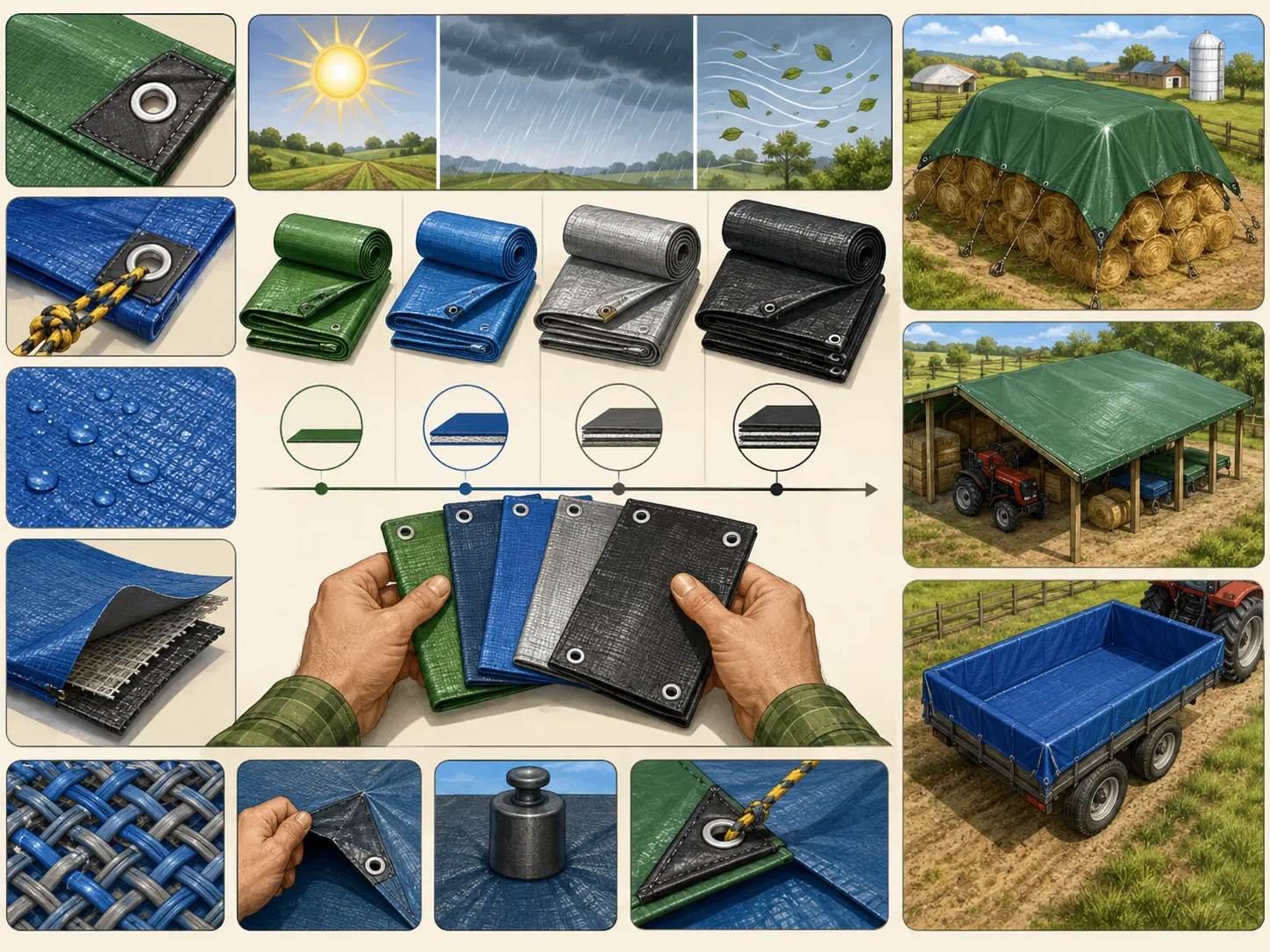
Polyethylene tarpaulins are among the most common choices for farm use. They are lightweight, affordable, waterproof, and available in many thickness levels. Reinforced polyethylene tarps are especially useful for general farm cover, hay protection, and temporary shelter.
Canvas Tarps
Canvas tarps are breathable and strong, making them a good option for covering equipment or materials that need some airflow. However, they are usually not fully waterproof unless specially treated. They are also heavier than polyethylene.
Vinyl Tarps
Vinyl tarps are highly durable and ideal for demanding outdoor conditions. They resist water, mildew, oil, and UV exposure. If you need a long-lasting tarp for livestock areas, machinery, or harsh weather, vinyl is often a top-tier choice.
Tip: For most farming applications, reinforced polyethylene offers a strong balance of durability, price, and versatility.
2. Check the Tarp Thickness and Weight
Thickness plays a big role in durability. Tarpaulins are often measured in mils or GSM, depending on the manufacturer. A thicker tarp usually offers better protection and longer service life, especially in rough farming conditions.
Here is a simple guide:
- Light-duty: Suitable for short-term cover or low-stress use
- Medium-duty: Good for general farm protection and seasonal use
- Heavy-duty: Best for frequent outdoor exposure and harsh environments
- Extra heavy-duty: Ideal for long-term or industrial-level farming tasks
If you are covering sharp-edged tools, stacked feed, or machinery, thicker is usually better. A tarp that is too thin may save money upfront but cost more in replacements later.
3. Look for UV Protection
Sun exposure can damage a tarp faster than many farmers expect. UV rays cause fading, brittleness, and cracking over time. A tarp without UV protection may become weak after repeated exposure, especially in hot climates.
When comparing options, look for phrases like:
- UV-resistant
- UV-treated
- Sun-protected
- Weather-resistant coating
For outdoor farm use, UV protection is not optional—it is a necessity. A tarp that resists sunlight will generally last much longer and maintain its strength better.
4. Inspect the Reinforcement and Stitching
Even a strong material can fail if the edges and seams are poorly made. The best durable tarpaulin should have reinforced hems, sturdy stitching, and strong corner support.
Pay attention to these features:
- Reinforced edges: Help prevent fraying and tearing
- Double stitching or heat sealing: Adds strength at stress points
- Corner patches: Improve longevity where tension is highest
- Rope or webbing reinforcement: Provides extra support around the perimeter
If a tarp looks strong in the middle but weak at the edges, it is likely to fail during tie-down or windy conditions.
5. Choose the Right Size and Shape
A tarpaulin that is too small will leave important areas exposed, while one that is too large may flap in the wind and wear out faster. Accurate sizing is essential for farming applications.
Before buying, measure the area or item you plan to cover and allow for overlap. Extra coverage helps you secure the tarp properly and reduce gaps where rain or dust can enter.
Common farm tarp shapes include:
- Rectangular: Ideal for hay, equipment, and stacked materials
- Square: Useful for general-purpose covering
- Custom shapes: Best for specialized farm setups
Always consider how the tarp will be fastened. A proper fit is just as important as the material itself.
6. Make Sure It Has Strong Grommets or Fastening Points
Tarpaulins are only as effective as their tie-down system. In farming, tarps are often exposed to strong wind, movement, and uneven surfaces. Weak grommets can rip out and make the tarp unusable.
Look for:
- Rust-resistant grommets
- Evenly spaced fastening points
- Reinforced corners around the eyelets
- Compatibility with ropes, bungee cords, or straps
For heavy-duty farming use, metal grommets with reinforced edges are usually more reliable than basic plastic options.
7. Consider Water Resistance and Breathability
Depending on what you are covering, you may need a tarp that is fully waterproof or one that allows some airflow. For example, hay and certain feed materials may need protection from rain but also limited ventilation to reduce moisture buildup.
Ask yourself:
- Will the tarp need to block all rain?
- Does the covered item need airflow?
- Will condensation be a problem?
Waterproof vinyl and polyethylene tarps are great for complete weather protection. Breathable canvas may work better in some storage situations where airflow matters.
8. Think About Tear Resistance and Puncture Strength
Farm environments can be rough. Sharp tools, rough wood, metal edges, and constant handling all increase the risk of damage. That is why tear resistance matters as much as waterproofing.
To improve durability, look for tarps with:
- Ripstop construction
- Multi-layer weave
- Heavy-duty lamination
- Strong fabric mesh reinforcement
A tear-resistant tarp is especially useful for machinery covers, feed storage, and transport applications where contact with rough surfaces is common.
9. Match the Tarp to the Farm Job
Different farm tasks require different tarp features. There is no single tarp that is perfect for every use, so match your purchase to the job.
- Hay and feed storage: UV-resistant, waterproof, and secure against wind
- Equipment covers: Heavy-duty, puncture-resistant, and weatherproof
- Livestock shelter: Strong, easy to clean, and weather-resistant
- Ground cover or silage use: Thick, tear-resistant, and moisture-blocking
- Transport and hauling: Reinforced edges, strong fastening, and wind resistance
When the tarp fits the task, it performs better and lasts longer.
10. Balance Price with Long-Term Value
It is tempting to choose the lowest-cost tarp, especially when buying in bulk. But a cheap tarp that tears quickly or fades in one season often ends up costing more in the long run.
Instead of focusing only on price, look at overall value:
- Expected lifespan
- Warranty or product guarantee
- Resistance to weather and wear
- Suitability for repeated use
A slightly more expensive tarp can be a smarter investment if it protects valuable farm assets more effectively.
Final Tips for Buying a Durable Farming Tarp
Before making a purchase, review the product details carefully. Read reviews, compare materials, and check whether the tarp is designed for agricultural or heavy-duty outdoor use. If possible, buy from a trusted supplier with clear specifications.
Keep these final tips in mind:
- Choose the strongest material your budget allows
- Prioritize UV and weather resistance
- Check stitching, edges, and grommets closely
- Select the right size for a secure fit
- Match the tarp to the specific farming task
Conclusion
Choosing a durable tarpaulin for farming is about more than just covering something up. It is about protecting your equipment, crops, feed, and time with a product that can handle real agricultural demands. The right tarp should be strong, weather-resistant, UV-protected, and built with reinforced details that hold up under pressure.
If you want a tarp that truly delivers value, focus on quality first and price second. Make the right choice now, and you will reduce replacements, save effort, and get better protection season after season.
Take the time to choose wisely—your farm deserves a tarp that works as hard as you do.