Not all weed killers work the same way. Some are designed to wipe out nearly every plant they touch, while others target specific weeds without harming your lawn, crops, or landscape plants. Understanding the difference between selective herbicides and non-selective herbicides can save you time, money, and a lot of frustration.
If you have ever sprayed weeds and accidentally damaged grass, flowers, or shrubs, you already know how important this distinction is. Choosing the right herbicide starts with knowing exactly what kind of weed problem you are facing.
What Are Herbicides?
Herbicides are chemicals used to control or kill unwanted plants, commonly known as weeds. They are used in lawns, gardens, farms, roadsides, commercial landscapes, and industrial areas. Some herbicides are meant to remove broadleaf weeds, while others are designed to eliminate all vegetation in a treated area.
The two main categories are:
- Selective herbicides – kill certain types of plants while leaving others unharmed
- Non-selective herbicides – kill most or all plants they contact
Selective Herbicides: Targeted Weed Control
Selective herbicides are formulated to control specific weeds without damaging desirable plants. This makes them especially useful in lawns, pastures, turf management, and crop production.
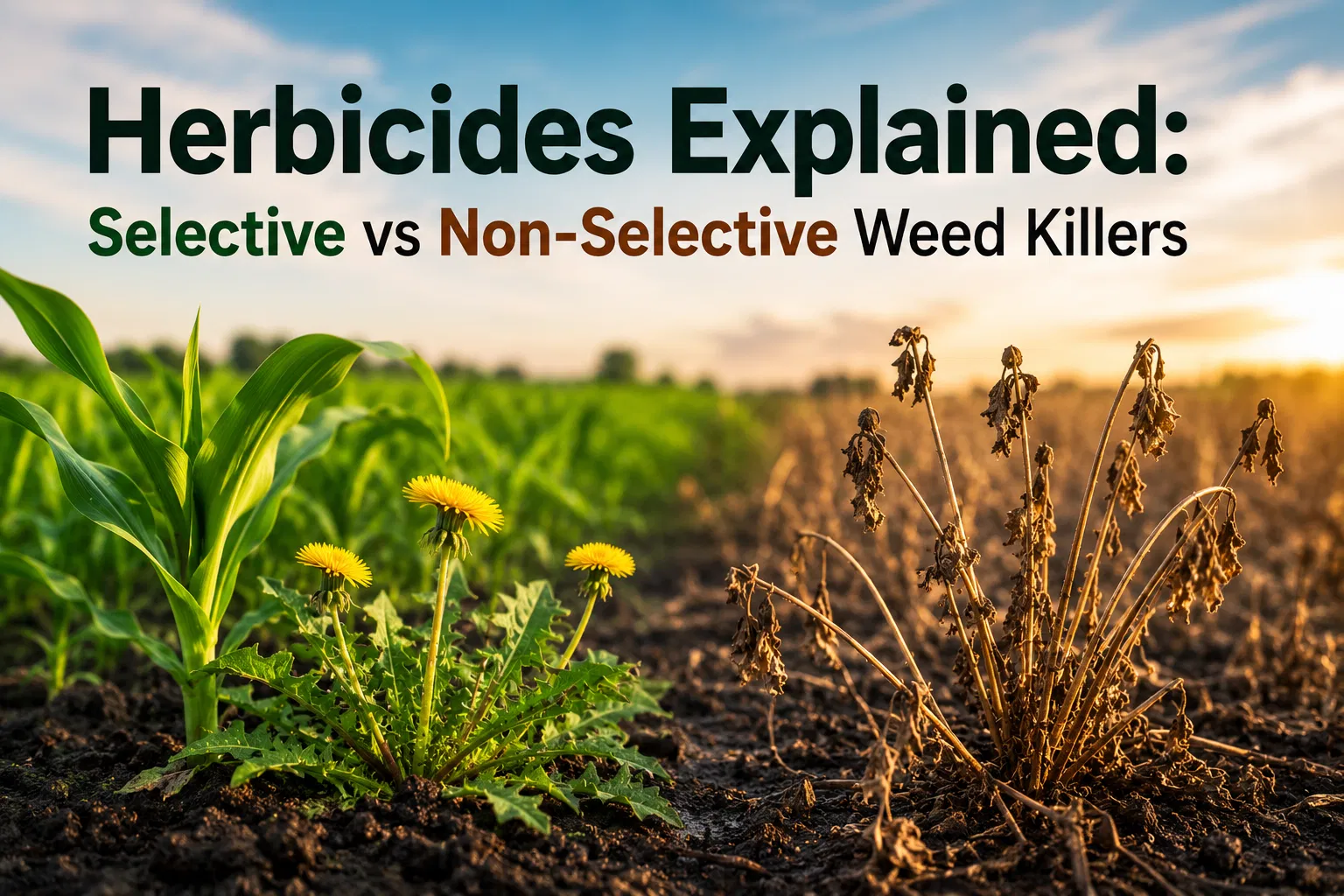
For example, a broadleaf herbicide can kill dandelions, clover, and chickweed in a lawn without harming grass. That is because grass and broadleaf plants respond differently to the active ingredient.
How Selective Herbicides Work
Selective herbicides often work by interrupting a biological process that exists in some plants but not others. Some target weed hormones, while others block growth, photosynthesis, or protein production in particular plant types.
Because plant species vary in structure and chemistry, certain herbicides can be highly effective on weeds while remaining relatively safe for turfgrass or specific crops.
Common Uses for Selective Herbicides
- Controlling dandelions, clover, and plantain in lawns
- Managing weeds in cereal crops and pastures
- Treating broadleaf weeds in turfgrass
- Protecting ornamental beds from invasive weed species
Benefits of Selective Herbicides
- Preserve desirable plants while removing weeds
- Ideal for lawn care and agriculture
- Reduce the need for hand weeding
- Can improve plant health by reducing competition for water and nutrients
Limitations of Selective Herbicides
Selective herbicides are not a universal solution. They are often limited to certain weed species, and they may not work on all grasses, broadleaf plants, or sedges. Weather, timing, and application rate also affect results.
Misuse can still cause damage. Even selective products can injure plants if applied too heavily or to the wrong crop or turf type.
Non-Selective Herbicides: Broad-Spectrum Weed Killers
Non-selective herbicides kill most plants they contact, regardless of type. These products are used when the goal is to clear an area completely or remove persistent vegetation from a specific site.
They are often used on driveways, sidewalks, fence lines, gravel areas, vacant lots, and before planting new beds or lawns.
How Non-Selective Herbicides Work
Non-selective herbicides usually damage a process common to nearly all green plants. Some destroy leaf tissue quickly, while others move through the plant and kill roots along with shoots. Because they affect essential plant functions, they do not distinguish between weeds and desirable plants.
Common Uses for Non-Selective Herbicides
- Clearing weeds from cracks in pavement
- Preparing an area for landscaping or reseeding
- Removing weeds along fences and hardscapes
- Controlling invasive growth in industrial and non-crop areas
Benefits of Non-Selective Herbicides
- Fast and effective weed removal
- Useful for total vegetation control
- Great for spot treatments in non-planted areas
- Can help reset overgrown spaces
Limitations of Non-Selective Herbicides
These products can easily damage lawns, shrubs, flowers, and garden beds. Drift, runoff, or accidental overspray can create costly plant loss. For that reason, they should be used carefully and only where complete vegetation removal is intended.
Selective vs Non-Selective Herbicides: The Key Differences
The biggest difference between selective and non-selective herbicides is simple: selective herbicides target certain weeds, while non-selective herbicides kill most plants.
| Type | Best For | Effect on Plants |
|---|---|---|
| Selective herbicides | Lawns, crops, turf, ornamental beds | Kills specific weeds only |
| Non-selective herbicides | Driveways, gravel, fence lines, land clearing | Kills most or all plants |
Choosing between them depends entirely on your location, your weed type, and whether you need to protect surrounding plants.
How to Choose the Right Herbicide
Before buying a weed killer, ask yourself a few key questions:
- What plants do I want to protect?
- What kind of weeds am I trying to remove?
- Am I treating a lawn, crop field, garden bed, or non-planted area?
- Do I need a spot treatment or full vegetation removal?
If you want to kill weeds in a lawn, a selective herbicide is usually the better choice. If you need to clear weeds from a driveway or prepare ground for a new project, a non-selective herbicide may be more appropriate.
Always read the label before applying any herbicide. The label tells you what the product controls, where it can be used, and which plants it may damage.
Application Tips for Better Results
No matter which type of herbicide you use, application matters. Poor timing or incorrect use can reduce effectiveness and increase the risk of plant injury.
- Apply when weeds are actively growing
- Avoid windy days to reduce drift
- Follow label directions for dilution and coverage
- Do not spray near desirable plants unless the product is safe for them
- Use spot treatments when possible to minimize chemical use
For best results, combine herbicide use with basic weed management practices such as mowing, mulching, proper irrigation, and regular monitoring.
Are Herbicides Safe?
When used correctly, herbicides can be safe and effective tools for weed control. The key is using the right product in the right place and following all label instructions. Safety also means protecting people, pets, pollinators, and nearby plants from unnecessary exposure.
Wear protective gear when recommended, store products securely, and keep children and animals away from treated areas until it is safe to return.
Conclusion: Know Your Weed Killer Before You Spray
Understanding the difference between selective and non-selective herbicides is one of the most important steps in smart weed control. Selective herbicides help protect lawns, crops, and ornamentals while targeting specific weeds. Non-selective herbicides offer broad weed removal when complete vegetation control is needed.
The right choice depends on your goal, your location, and the plants you want to keep. Before you spray, identify the weed, read the label, and choose the herbicide that matches the job. That simple step can make your weed control efforts safer, smarter, and far more effective.