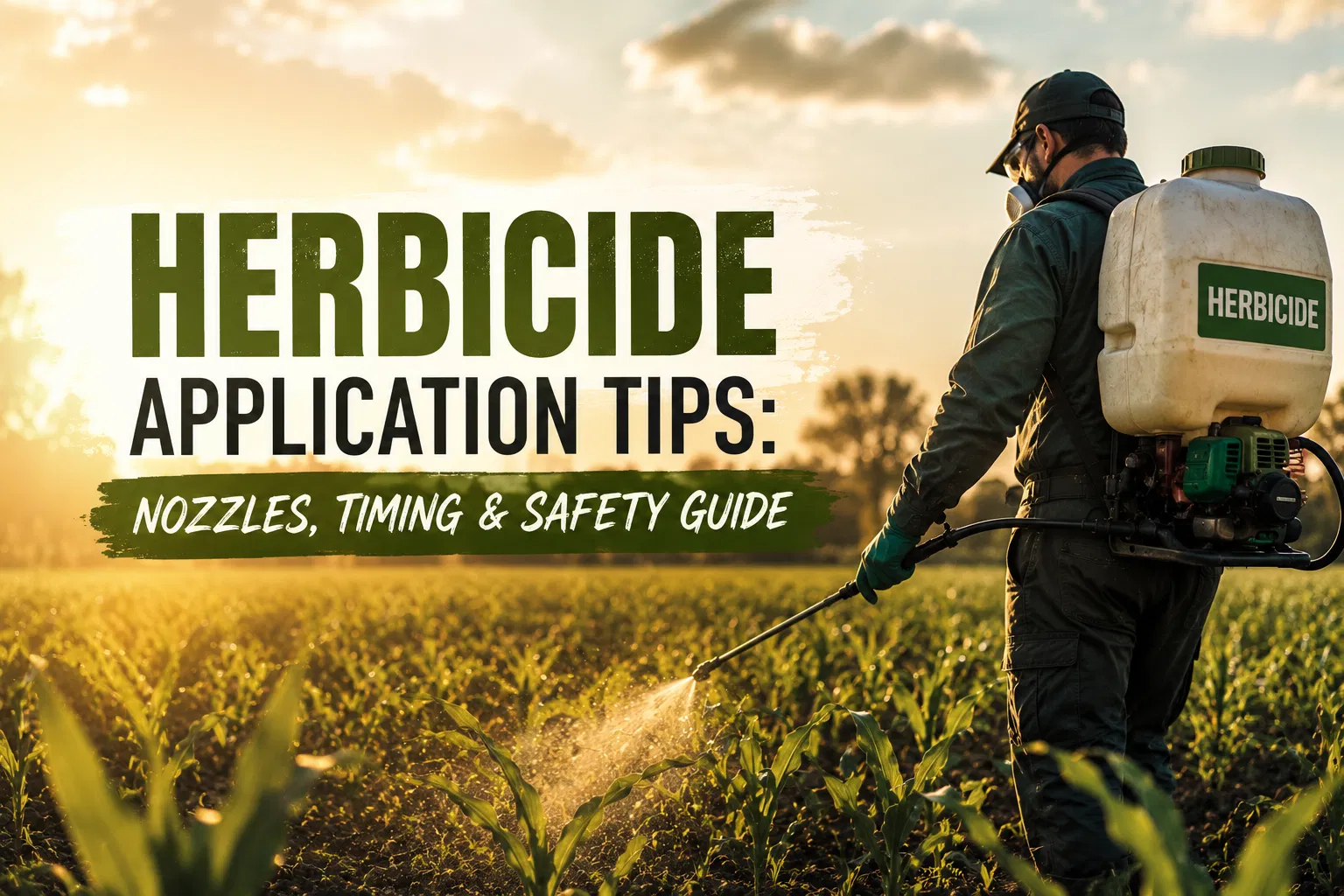
Getting herbicide application right is about more than filling the tank and spraying weeds. The nozzle you choose, the timing of the application, and the safety steps you follow all affect how well the product works and how much risk you take on. If you want better weed control, less waste, and safer spraying practices, these details matter more than most people realize.
Why Herbicide Application Technique Matters
Effective herbicide application starts with precision. A herbicide can only do its job if it reaches the target weed at the right rate, in the right droplet size, and under the right conditions. Poor spray technique can lead to drift, reduced performance, crop injury, and unnecessary environmental exposure.
Whether you are managing weeds in crops, pastures, turf, or non-crop areas, the same basic principles apply: match the nozzle to the job, spray at the right time, and protect yourself and the surrounding environment.
Choosing the Right Nozzles for Herbicide Spraying
Nozzles control spray pattern, droplet size, and coverage. That makes them one of the most important parts of any herbicide application system. The wrong nozzle can cause off-target movement or leave weeds partially treated.
Understand Droplet Size
Droplet size influences both coverage and drift. Smaller droplets provide better coverage on leaf surfaces, but they are more likely to drift in wind. Larger droplets reduce drift but may reduce coverage if the spray pattern is not matched to the herbicide and target weed.
In general:
- Fine droplets offer excellent coverage but increase drift risk.
- Medium droplets provide a balance between coverage and drift control.
- Coarse droplets help reduce drift and are often preferred for many herbicide jobs.
Match the Nozzle to the Herbicide Type
Not all herbicides work the same way. Contact herbicides often need better coverage because they must touch the weed tissue directly. Systemic herbicides may tolerate slightly larger droplets because they move within the plant after absorption.
Always check the herbicide label for nozzle recommendations. Manufacturers often specify spray pressure, droplet size, and nozzle type for the best results.
Common Nozzle Types
- Flat fan nozzles: Common for broadcast spraying and general weed control.
- Air induction nozzles: Designed to reduce drift by producing larger air-filled droplets.
- Flood nozzles: Useful for broader coverage in some applications, but less precise.
- Even fan nozzles: Often used for banding or special applications where uniformity matters.
Check Nozzle Wear and Calibration
Even the best nozzle will not perform well if it is worn or incorrectly calibrated. Nozzles wear over time, especially when abrasive formulations or poor-quality water are used. Worn nozzles may discharge too much product or create uneven spray patterns.
To stay accurate:
- Inspect nozzles regularly for visible wear or clogging.
- Replace worn tips when output becomes inconsistent.
- Calibrate the sprayer before major applications.
- Verify pressure and travel speed to maintain the intended application rate.
Timing Herbicide Applications for Better Weed Control
Timing can determine whether an herbicide succeeds or fails. Spraying too early, too late, or during poor weather conditions can reduce effectiveness and increase the chance of injury or drift.
Target Weeds at the Right Growth Stage
Young, actively growing weeds are usually easier to control than mature, stressed, or flowering weeds. Most herbicides work best when weeds are small and tender, because they absorb product more easily and are less able to recover.
For best results, spray when weeds are:
- Actively growing
- Free from drought stress
- Not covered in dust or heavy residue
- Within the label-recommended size range
Spray During Favorable Weather
Weather conditions strongly affect herbicide performance. Wind, temperature, humidity, and rainfall all matter. Wind can move droplets off target, while extreme heat or low humidity can cause droplets to evaporate too quickly. Rain too soon after spraying may wash the product away before it is absorbed.
Best practice includes:
- Applying when wind speeds are low and stable
- Avoiding temperature inversions
- Spraying in moderate temperatures when possible
- Checking rainfastness on the label before application
Respect the Crop and Weed Growth Calendar
In crop systems, herbicide timing must also fit the crop's growth stage. Some products are intended for pre-plant use, others for pre-emergence, and some for post-emergence application. Applying at the wrong stage can reduce crop safety or lower weed control.
Always consider:
- Crop emergence stage
- Weed emergence stage
- Pre-harvest intervals
- Rotational restrictions
Good timing is not just about the calendar. It is about matching weed growth, crop stage, and weather conditions to the herbicide's label instructions.
Reducing Drift and Off-Target Movement
Drift prevention is a major part of safe herbicide application. Even a highly effective herbicide can become a problem if it moves beyond the intended area. Drift can damage sensitive crops, ornamentals, gardens, and natural vegetation.
Practical Drift-Reduction Steps
- Use drift-reducing nozzles when appropriate
- Spray at the lowest effective pressure
- Maintain proper boom height
- Avoid spraying in windy conditions
- Follow label restrictions for buffer zones
Also remember that volatility is different from drift. Some herbicides can evaporate after application and move as vapor. If the label warns about volatility, take those instructions seriously and avoid conditions that increase risk.
Herbicide Application Safety: Protect Yourself First
Safety should never be an afterthought. Herbicides are designed to affect plants, and incorrect handling can expose people, animals, and the environment to unnecessary risk. Safe application depends on planning, protective equipment, and disciplined handling from start to finish.
Wear the Right Personal Protective Equipment
The product label should always guide PPE requirements. Depending on the herbicide, you may need gloves, long sleeves, long pants, eye protection, shoes plus socks, or more specialized protection.
Basic safety habits include:
- Reading the label before mixing or spraying
- Wearing all required personal protective equipment
- Keeping skin exposure to a minimum
- Washing hands and exposed skin after handling chemicals
Mix and Load Carefully
Many accidents happen during mixing and loading. Measure accurately, avoid splashes, and never use your mouth or bare hands to clear clogged nozzles or lines. Use clean equipment and mix only what you need to avoid leftover product and unnecessary disposal issues.
Safe mixing habits include:
- Prepare the work area before opening the container.
- Add water and product in the correct order.
- Use measuring tools dedicated to herbicide use only.
- Keep containers sealed when not in use.
Prevent Exposure to People and Animals
Keep children, pets, livestock, and bystanders away from treated areas until the product has dried or the label's reentry instructions are met. Communicate clearly if you are spraying near neighboring properties or public spaces.
Follow the Label Every Time
The label is the law and the most important source of application guidance. It tells you the approved crops, target weeds, rates, nozzle recommendations, spray volumes, weather restrictions, PPE requirements, and safety steps. No matter how experienced you are, the label should guide every decision.
Key label details to check before spraying include:
- Application rate
- Target weed species
- Approved nozzle types
- Environmental restrictions
- Reentry and harvest intervals
Conclusion: Better Herbicide Results Start with Better Decisions
Successful herbicide application comes down to three essentials: the right nozzles, the right timing, and the right safety habits. When you choose the proper spray tip, apply at the best weed growth stage, and follow the label closely, you improve control while reducing drift, waste, and risk.
If you want stronger weed control and safer spraying outcomes, make every application a deliberate one. Inspect your equipment, watch the weather, protect yourself, and never rush the process. Small improvements in technique can lead to much better results in the field.