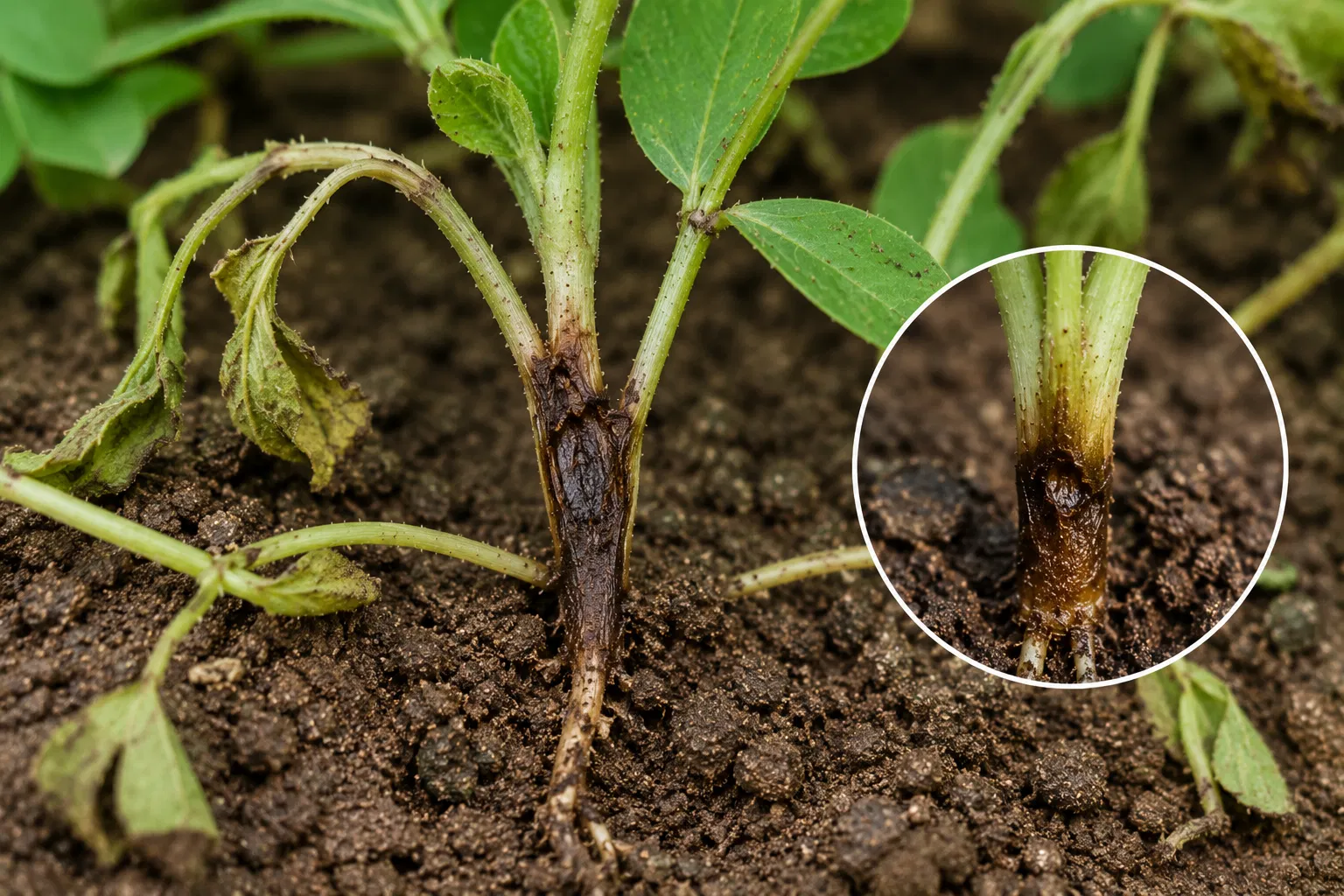
Collar rot in groundnut, caused by the soil fungus Aspergillus niger, attacks seeds and young seedlings right after sowing, causing sudden wilting and poor plant stand. Left unmanaged, it can cause serious gaps in the field and cut final yield. Because the fungus lives in soil and on seed coats, treating seed before sowing is the most effective way to prevent it. Here's what works:
1. Carbendazim 12% + Mancozeb 63% WP
This combination pairs a systemic fungicide with a contact one. Carbendazim moves into the germinating seed and stops the fungus from establishing internally, while mancozeb protects the seed coat and surrounding soil from external infection.
Product Recommendations
2. Mancozeb 75% WP
Mancozeb is a broad-spectrum contact fungicide that forms a protective barrier on the seed coat as it germinates. A small dose goes a long way toward a healthy, even plant stand.
Product Recommendations
3. Carboxin 37.5% + Thiram 37.5% WS
This is a purpose-built seed dresser, combining a systemic fungicide with a contact one to protect groundnut seed both inside and out. It has a long track record specifically against collar rot and also helps seedlings emerge more evenly and vigorously.
Product Recommendations
4. Tebuconazole 2% DS
This low-dose triazole is absorbed by the germinating seed and protects the young plant systemically from collar rot, root rot, and stem rot. Because only a small amount of active ingredient is needed, it is a cost-effective option for large seed lots.
Product Recommendations
5. Carbendazim 25% + Mancozeb 50% WS
This is a stronger version of the carbendazim and mancozeb combination, giving groundnut both systemic and contact protection against collar rot and dry root rot. It also helps improve germination and gives seedlings a healthier start.
Product Recommendations
6. Trichoderma viride 1.5% WP (Bio-fungicide)
Trichoderma viride is a beneficial fungus that colonises the root zone, competing with and breaking down the cell walls of soil-borne pathogens.
Product Recommendations
Note: All of the solutions above, chemical and biological, are applied as a seed treatment before sowing or as a soil application. Rotating between different fungicide groups from season to season also helps delay resistance build-up in the fungus.
Disclaimer: Always confirm current label registration, approved dosage, water volume, and pre-harvest interval (PHI) for your state before using any product, since labels are periodically revised by regulatory authorities.
This guide is a general advisory. Do your own research and verification before using any product. Always confirm suitability for your crop stage, region, and field conditions before making any purchase, spray, or crop-management decision.