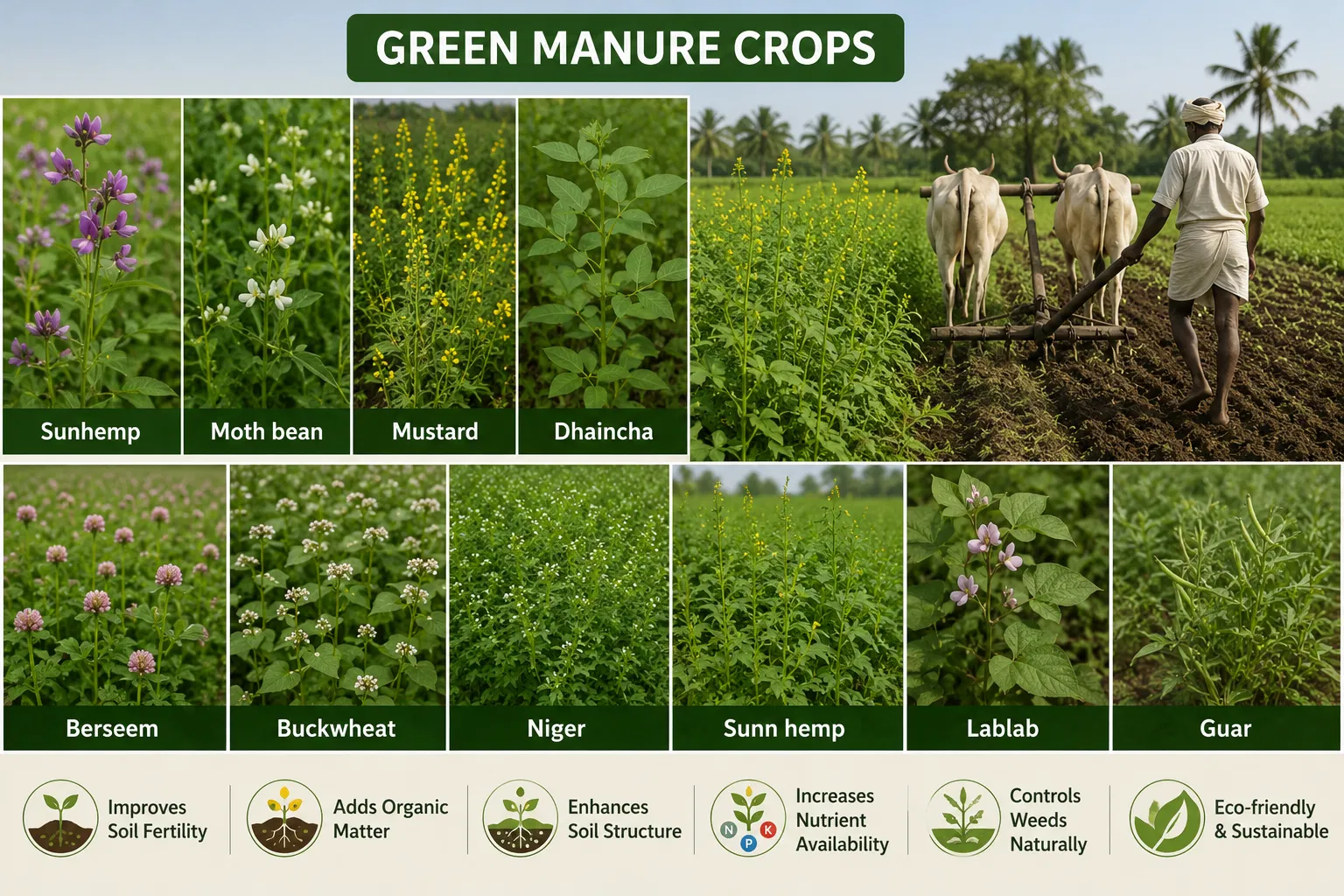
Green manuring is the practice of growing a crop mainly to return it to the soil. Instead of harvesting the crop for grain or fodder, farmers incorporate the young biomass into the field, where it decomposes and adds organic matter and nutrients.
Leguminous green manures can add biologically fixed nitrogen, while fast-growing non-legumes produce large amounts of biomass, suppress weeds, recover residual nutrients, and protect the soil surface. When planned well, green manuring can improve soil fertility at relatively low input cost.
How Green Manuring Improves Soil
Adds organic matter
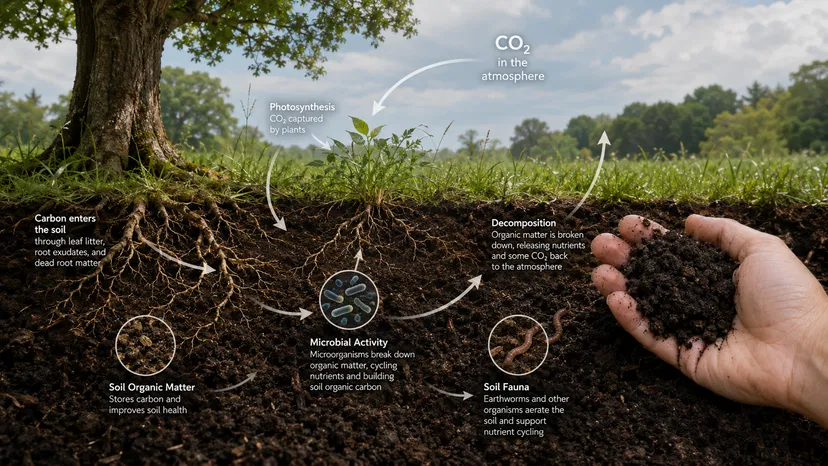
Fresh plant biomass decomposes after incorporation and contributes organic carbon. This improves aggregation, aeration, water infiltration, and moisture retention.
Supports biological nitrogen fixation
Legume roots form nodules with compatible rhizobia bacteria. These organisms convert atmospheric nitrogen into forms that contribute to plant growth and, after decomposition, to the following crop.
Recycles nutrients
Deep and fibrous roots capture nutrients that might otherwise leach below the main crop's root zone. When the green manure decomposes, part of these nutrients returns to the surface soil.
Suppresses weeds
A dense canopy shades the soil and competes with weeds. The benefit is strongest when the green manure establishes quickly and produces uniform ground cover.
Protects against erosion
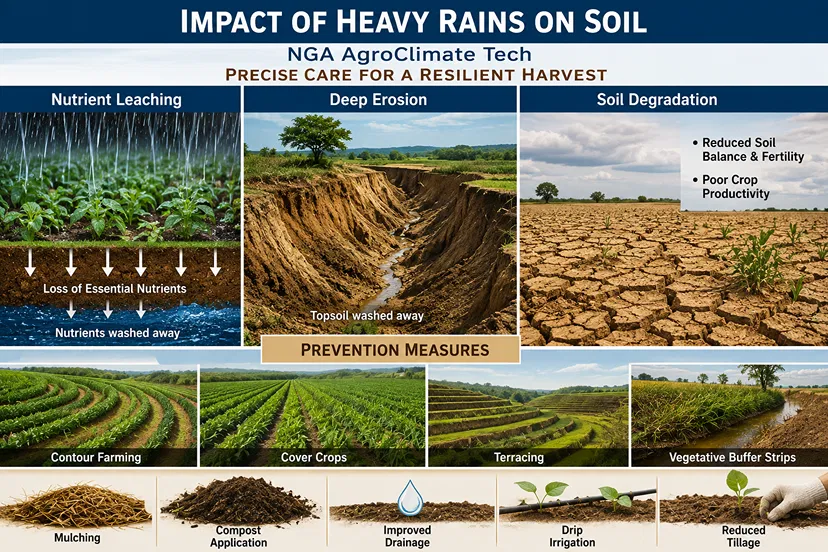
Roots hold the soil while leaves reduce the impact of rain and wind. This is useful on sloping land and during periods when fields would otherwise remain bare.
Best Legume Crops for Green Manuring
Green gram
Green gram grows quickly, fixes nitrogen, and fits well into short fallow periods. It is suitable where farmers need a relatively short-duration crop before the main season.
Incorporate it before the stems become hard and before substantial seed formation. Tender biomass decomposes faster and releases nutrients more predictably.
Black gram
Black gram is another short-duration legume that can improve soil nitrogen and organic matter. It performs well in warm conditions and can be included between major crops where moisture is available.
Cowpea
Cowpea produces rapid ground cover, good biomass, and nitrogen-rich residues. Its vigorous growth helps suppress weeds and protect the soil during hot weather.
Cowpea is useful in orchards, vegetable rotations, and field-crop systems. Select a variety and sowing density suitable for biomass rather than grain production.
Clover
Clover can serve as a cover crop and green manure in cooler conditions. It provides ground cover, supports nitrogen fixation, and can improve soil structure through its root system.
Some clovers are better suited to longer cover periods than short seasonal windows, so match the species to local climate and rotation length.
Berseem
Berseem is a winter-season legume capable of producing substantial biomass under irrigated conditions. It is often grown as fodder, but a crop or final regrowth can also be incorporated to improve soil fertility.
Because berseem can use considerable water, include it only where the irrigation schedule and following crop allow sufficient moisture.
Useful Non-Legume Green Manures
Jowar
Jowar produces large quantities of biomass and a strong fibrous root system. It is effective for adding carbon, improving soil cover, and recovering residual nutrients.
Because mature stems become fibrous and decompose slowly, incorporate the crop while it is still tender. When used alone, high-carbon residues may temporarily immobilise nitrogen.
Mustard
Mustard establishes quickly in cool weather and produces useful biomass. Its roots help improve soil structure, and the crop can capture nutrients remaining after the previous season.
Incorporate mustard before seed formation to prevent volunteer plants in the following crop.
Legumes vs Non-Legumes
Legumes are preferred when biological nitrogen addition is a major objective. Non-legumes are useful for rapid biomass, nutrient scavenging, weed suppression, and erosion control.
Mixtures can combine these advantages. A legume supplies nitrogen-rich residue, while a grass or cereal contributes carbon and root mass. The mixture must still fit the available season, moisture, and tillage system.
When to Sow Green Manure Crops
Green manure can be grown:
- Between two main crops
- During a monsoon fallow period
- After harvest in irrigated fields
- Between orchard rows
- Before vegetable-bed preparation
- As part of a crop-rotation or soil-recovery year
Allow enough time for establishment, biomass production, incorporation, and decomposition before the next crop is planted.
Best Stage for Incorporation
Most green manure crops should be incorporated at the early flowering stage. At this point, biomass is substantial but stems are still tender and nutrient concentration remains relatively high.
Very young crops provide less biomass. Overmature crops contain more lignified material, decompose slowly, and may compete with the next crop for nitrogen during early breakdown.
How to Incorporate Green Manure
- Terminate the crop before mature seed develops.
- Chop tall biomass where necessary.
- Incorporate the material evenly into moist soil.
- Avoid burying all biomass in a thick anaerobic layer.
- Allow time for partial decomposition before sowing the next crop.
The waiting period depends on biomass, temperature, moisture, and the next crop. Tender legumes may break down quickly, while fibrous cereal residues require more time.
Water Management
Green manure establishment requires adequate moisture. Rainfed farmers should sow with dependable rainfall, while irrigated farms must account for the water used by the cover crop.
After incorporation, moist soil supports decomposition. Waterlogging should be avoided because it can create anaerobic conditions and slow balanced breakdown.
Potential Limitations
- The crop occupies land and time between cash crops.
- Seed and establishment still involve some cost.
- Water use may be significant in dry areas.
- Late incorporation can delay the next planting.
- Poorly chosen species may host pests or diseases.
- Mature plants may produce unwanted volunteer seedlings.
- High-carbon residues can temporarily immobilise nitrogen.
How to Choose the Right Crop
Select a green manure based on season length, rainfall, irrigation, soil type, temperature, seed availability, and the following crop. Short-duration legumes suit narrow windows, while high-biomass crops are better where more time is available.
Avoid using a species closely related to the main crop when it could increase disease or pest carryover. Crop rotation principles still apply.
Final Thoughts
Green manuring is one of the most practical ways to produce organic matter directly in the field. The crop captures sunlight, builds biomass, supports roots and microorganisms, and returns nutrients to the soil after incorporation.
Choose a crop suited to the season, terminate it before maturity, and allow enough decomposition time before planting. With good planning, green manuring can lower input dependence while improving soil structure, biological activity, and long-term fertility.