If soybean stems in your field are drying up and breaking for no clear reason, girdle beetle is often the hidden cause. The grub works inside the stem, so by the time you notice, the damage is already done.
Signs of Girdle Beetle in Soybean
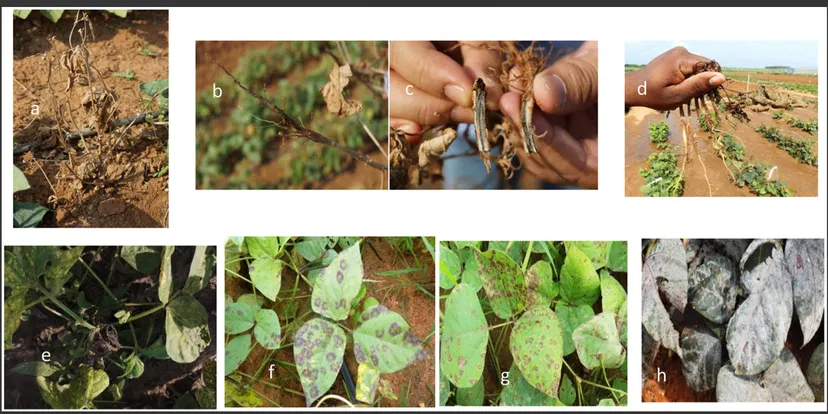
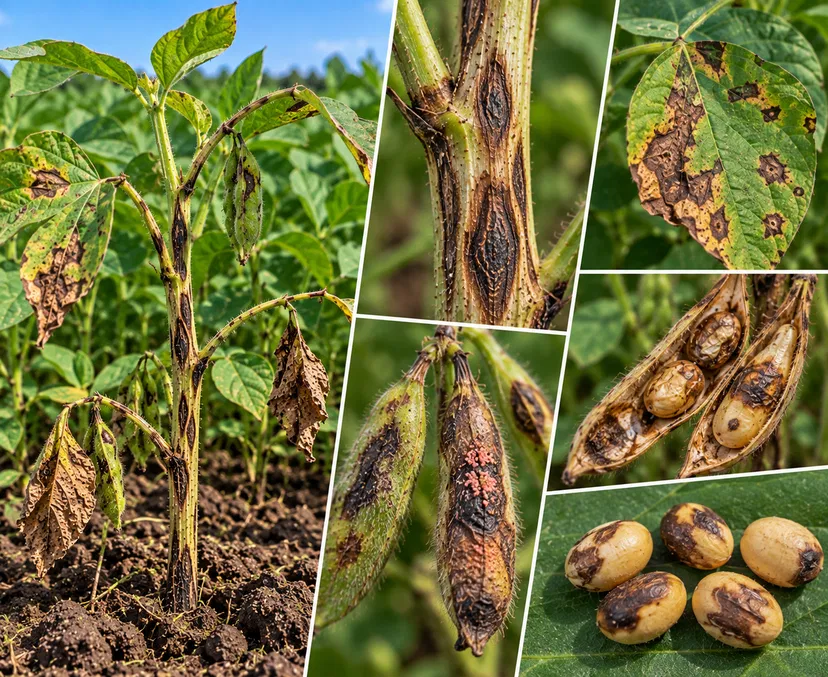
- A neat, ring-shaped groove cut around the stem or branch, as if scored with a blade
- The portion above the girdled ring wilts, turns yellow, and dries out
- Affected stems and branches snap easily at the girdled point
- A creamy white grub can be found inside the stem when it's split open
- Girdled stems left hanging or lying in the field, often noticed only after the damage is done
Causes of Girdle Beetle Outbreaks in Soybean
- Adult beetles laying eggs on stems and petioles during the vegetative stage
- Continuous soybean cultivation in the same field without rotation
- Delayed sowing, which can line up more closely with peak beetle activity
- Missing the early stage of attack, since damage is only obvious once the plant part is already girdled
- Leaving infested stems and stubble in the field after harvest, letting the beetle carry over to the next season
Prevention of Girdle Beetle in Soybean
- Monitor the crop closely through the vegetative stage for early ring marks on stems
- Collect and destroy girdled and fallen plant parts to remove grubs before they complete their cycle
- Rotate with a non-host crop where girdle beetle pressure has been high before
- Clear and destroy crop residue and stubble after harvest instead of leaving it in the field
- Avoid delayed sowing where girdle beetle has been a recurring problem locally
Solutions to Control Girdle Beetle in Soybean
1. Chlorantraniliprole 18.5% SC
This diamide insecticide disrupts muscle function in the grub, stopping it from feeding and tunnelling into the stem before it can cause girdling damage.
2. Beta-cyfluthrin 8.49% + Imidacloprid 19.81% OD
This combination pairs a fast-knockdown pyrethroid with a systemic neonicotinoid, giving soybean quick action against the beetle grub along with protection from sucking pests feeding alongside it.
3. Isocycloseram 9.2% w/w DC
This newer-generation insecticide locks open a nerve channel in the pest, causing rapid paralysis, and is a useful option where girdle beetle has become harder to control with older chemistries.
4. Thiamethoxam 12.6% + Lambda-cyhalothrin 9.5% ZC
This combination pairs a systemic neonicotinoid with a fast-acting pyrethroid, giving soybean both quick knockdown and longer residual protection against girdle beetle and stem fly.
5. Chlorantraniliprole 9.3% + Lambda-cyhalothrin 4.6% ZC
This combination pairs a diamide with a pyrethroid, giving soybean both a fast knockdown and longer-lasting protection against girdle beetle, semilooper, and stem fly in a single spray.
6. Tetraniliprole 18.18% SC
Tetraniliprole acts on the pest's muscle receptors, causing rapid feed cessation and paralysis, and holds up well even if rain follows soon after spraying.
7. Profenofos 50% EC
Profenofos is an older, well-established organophosphate that controls girdle beetle and semilooper through contact and stomach action, and remains a low-cost, broad-spectrum option.
8. Thiacloprid 21.7% SC
Thiacloprid disturbs normal nerve signalling in the pest, and its rain-fast, sunlight-stable formulation helps it hold up well in the field for longer-lasting control of girdle beetle.
9. Emamectin Benzoate 1.9% EC
This is a stomach-action insecticide that must be ingested by the grub to work, paralysing it within hours of feeding and causing death within a few days.
10. Thiamethoxam 30% WS
This seed treatment protects the young soybean plant systemically from the moment it germinates, keeping early-season girdle beetle, stem fly, and whitefly pressure down without an early foliar spray.
11. Ethion 50% EC
Ethion is a broad-spectrum organophosphate with strong residual activity, giving longer-lasting contact and stomach action against girdle beetle and stem fly, along with useful activity on mites.
12. Acetamiprid 25% + Bifenthrin 25% WG
This combination pairs a systemic neonicotinoid with a contact pyrethroid, giving soybean protection against girdle beetle along with sucking pests like whitefly feeding at the same time.
Note: Rotate between these insecticide groups through the season rather than repeating the same one, to avoid resistance development. Cutting and destroying girdled stems as soon as they're spotted removes the grub inside before it can complete its life cycle, and works well alongside spraying.
Disclaimer: Always confirm current label registration, approved dosage, water volume, and pre-harvest interval (PHI) for your state before using any product, since labels are periodically revised by regulatory authorities.
This guide is a general advisory. Do your own research and verification before using any product. Always confirm suitability for your crop stage, region, and field conditions before making any purchase, spray, or crop-management decision.