When plants need a growth boost, gibberellic acid (GA3) is one of the most widely used plant growth regulators in agriculture and horticulture. From improving seed germination to increasing fruit size and encouraging flowering, GA3 plays a powerful role in helping crops develop more efficiently and predictably.
If you have been searching for gibberellic acid uses, dosage, and benefits, this guide covers everything you need to know in a clear, practical way. Whether you are a farmer, gardener, or plant enthusiast, understanding GA3 can help you use it more effectively and safely.
What Is Gibberellic Acid (GA3)?
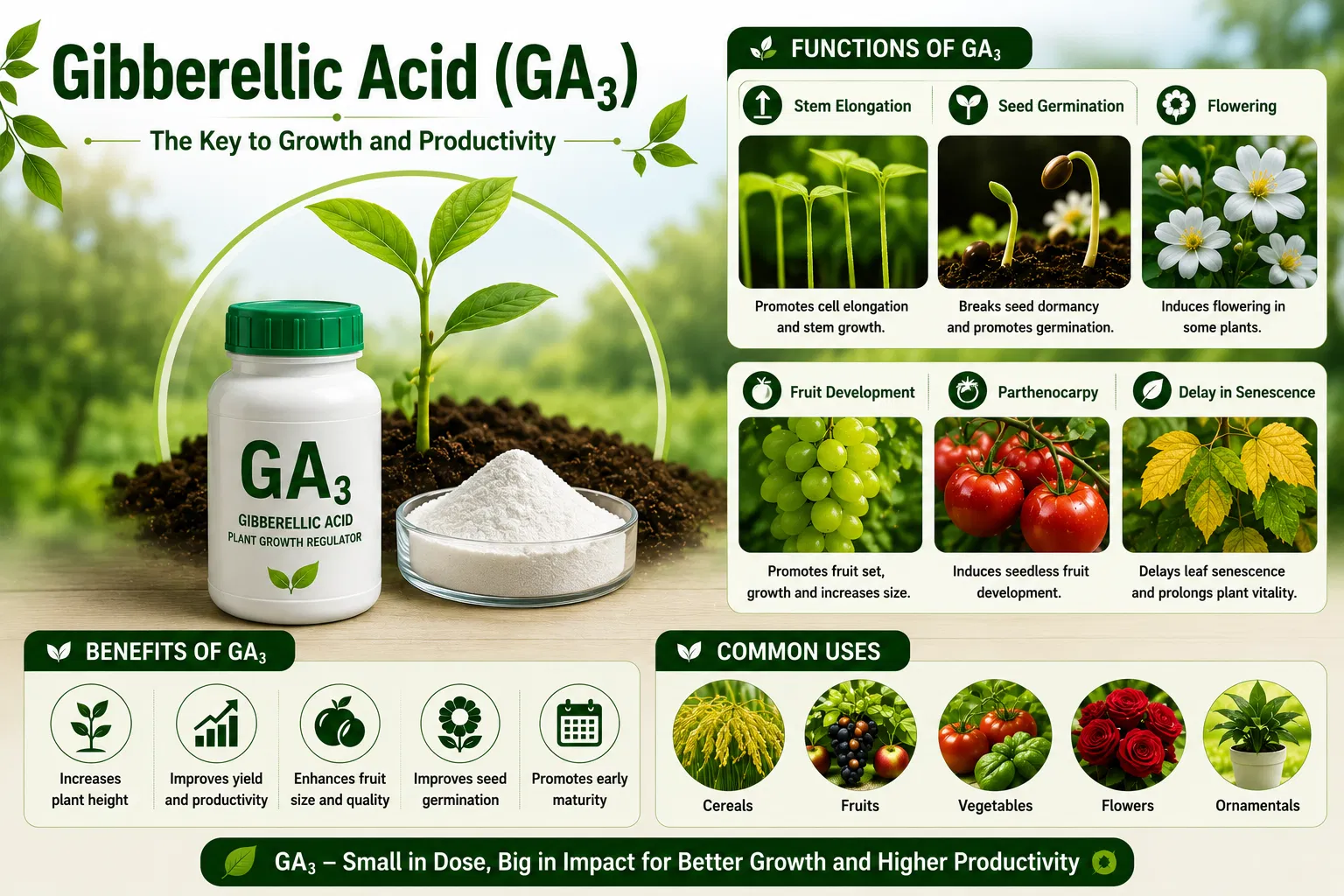
Gibberellic acid is a naturally occurring plant hormone belonging to the gibberellin family. In plant biology, it helps regulate key processes such as stem elongation, seed germination, flowering, and fruit development. GA3 is the most commonly used form in commercial agriculture because it is highly effective at low concentrations.
In simple terms, GA3 acts like a signal that tells plants to grow, wake up from dormancy, or move into a different stage of development. This makes it especially useful in crop production, seed treatment, and fruit management.
Top Uses of Gibberellic Acid (GA3)
1. Improving Seed Germination
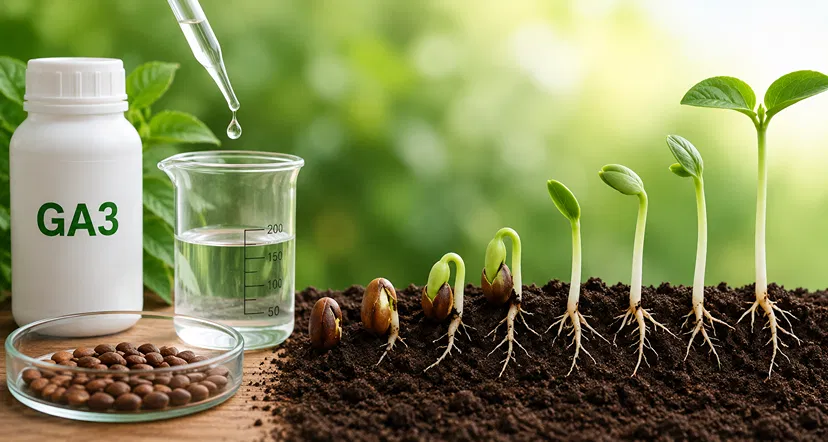
One of the most common uses of GA3 is to break seed dormancy and improve germination rates. Some seeds naturally take a long time to sprout because their outer coat is hard or because they require a hormonal trigger. GA3 helps activate the germination process, making it easier for seeds to start growing.
2. Increasing Stem Elongation
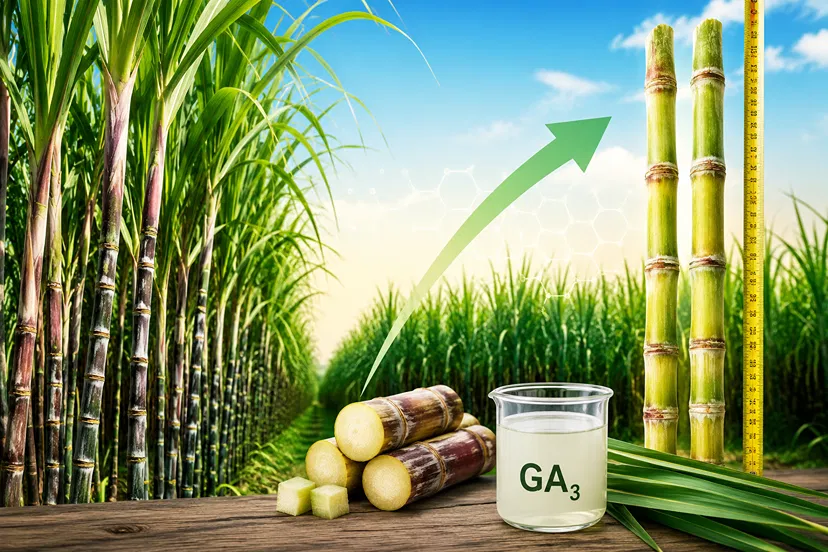
GA3 promotes cell elongation, which leads to taller plants with longer stems. This is particularly useful in crops where improved plant height or shoot growth is desired. However, it should be used carefully because excessive elongation can weaken plants.
3. Enhancing Fruit Size and Quality
In fruits such as grapes, citrus, and apples, GA3 is often used to improve fruit size, reduce seediness in some varieties, and encourage better cluster development. It can also help produce more uniform fruit, which is valuable for commercial markets.
4. Breaking Dormancy in Tubers and Buds
GA3 is used to break dormancy in potatoes, bulbs, and buds of certain plants. This helps plants begin growth sooner and can improve crop scheduling in controlled farming systems.
5. Promoting Flowering and Fruit Set
In some species, gibberellic acid can stimulate flowering or improve fruit set when natural conditions are not ideal. This is especially important in horticulture and specialty crop production.
6. Malting in the Brewing Industry
GA3 is also used in the malting process to encourage enzyme production in barley. These enzymes help break down starches, which is important in brewing and other food-processing applications.
Benefits of Gibberellic Acid (GA3)
GA3 offers several practical benefits when used correctly. Its value lies in how efficiently it can improve plant performance at very small doses.
- Faster and more uniform germination
- Improved seedling establishment
- Better fruit enlargement
- Reduced dormancy in seeds and buds
- Improved flowering in select crops
- Higher commercial yield potential
- More uniform crop development
For many growers, these benefits translate into better productivity, improved quality, and more predictable harvests. In commercial agriculture, even small improvements can have a big impact on profits and crop management.
Recommended Dosage of Gibberellic Acid (GA3)
The dosage of gibberellic acid depends on the crop, purpose, application method, and growth stage. There is no single universal dose. Using too little may not produce results, while using too much can cause unwanted stretching, poor fruit quality, or other growth issues.
Common GA3 application ranges often fall between 5 ppm and 200 ppm, depending on the use case. Some crops may require lower concentrations, while others need higher levels for specific responses.
General Dosage Guidelines
- Seed soaking: often 10–100 ppm for several hours, depending on seed type
- Foliar spray: commonly 10–100 ppm for general growth and fruit applications
- Fruit sizing treatments: may require 20–200 ppm in certain crops
- Dormancy breaking: dosage varies widely based on crop and treatment method
Important: Always follow product label instructions and crop-specific recommendations. The ideal dosage can vary significantly between plant species and growing conditions.
How to Apply Gibberellic Acid (GA3)
GA3 is usually applied as a seed soak or foliar spray. Proper mixing and timing are essential to get the best results.
- Measure carefully: Use the recommended concentration for your crop.
- Dissolve properly: GA3 is often first dissolved in a small amount of alcohol or warm water before being diluted.
- Apply evenly: Spray leaves, flowers, or fruit clusters uniformly when using foliar treatment.
- Use at the right stage: Timing is critical for seed germination, flowering, or fruit sizing.
- Avoid overuse: Excess GA3 can lead to weak stems, abnormal growth, or reduced crop quality.
Precautions and Best Practices
Although GA3 is highly effective, it should be handled with care and used responsibly. Plants respond differently, and the wrong concentration can create more problems than benefits.
- Always test on a small number of plants first
- Do not exceed label recommendations
- Wear protective gear when mixing or spraying
- Avoid application during extreme heat or stress
- Store the product in a cool, dry place away from direct sunlight
For best results, combine GA3 use with good irrigation, nutrition, and crop management practices. A plant growth regulator works best when the plant is already receiving proper care.
Who Uses Gibberellic Acid?
GA3 is used across multiple industries, including:
- Farmers growing fruit, vegetables, grains, and specialty crops
- Horticulturists managing flowers, ornamentals, and nursery plants
- Seed producers improving germination and uniformity
- Food processors and malt producers in brewing
- Research institutions studying plant growth and physiology
Conclusion
Gibberellic acid (GA3) is a powerful plant growth regulator with wide-ranging uses in agriculture and horticulture. From boosting seed germination to improving fruit size and breaking dormancy, its benefits can be significant when applied at the right dosage and stage of growth.
If you plan to use GA3, focus on precision, timing, and crop-specific guidance. With the right approach, gibberellic acid can become a valuable tool for improving plant performance and harvest quality. For the best outcome, always follow label directions and consult trusted agronomy recommendations before application.