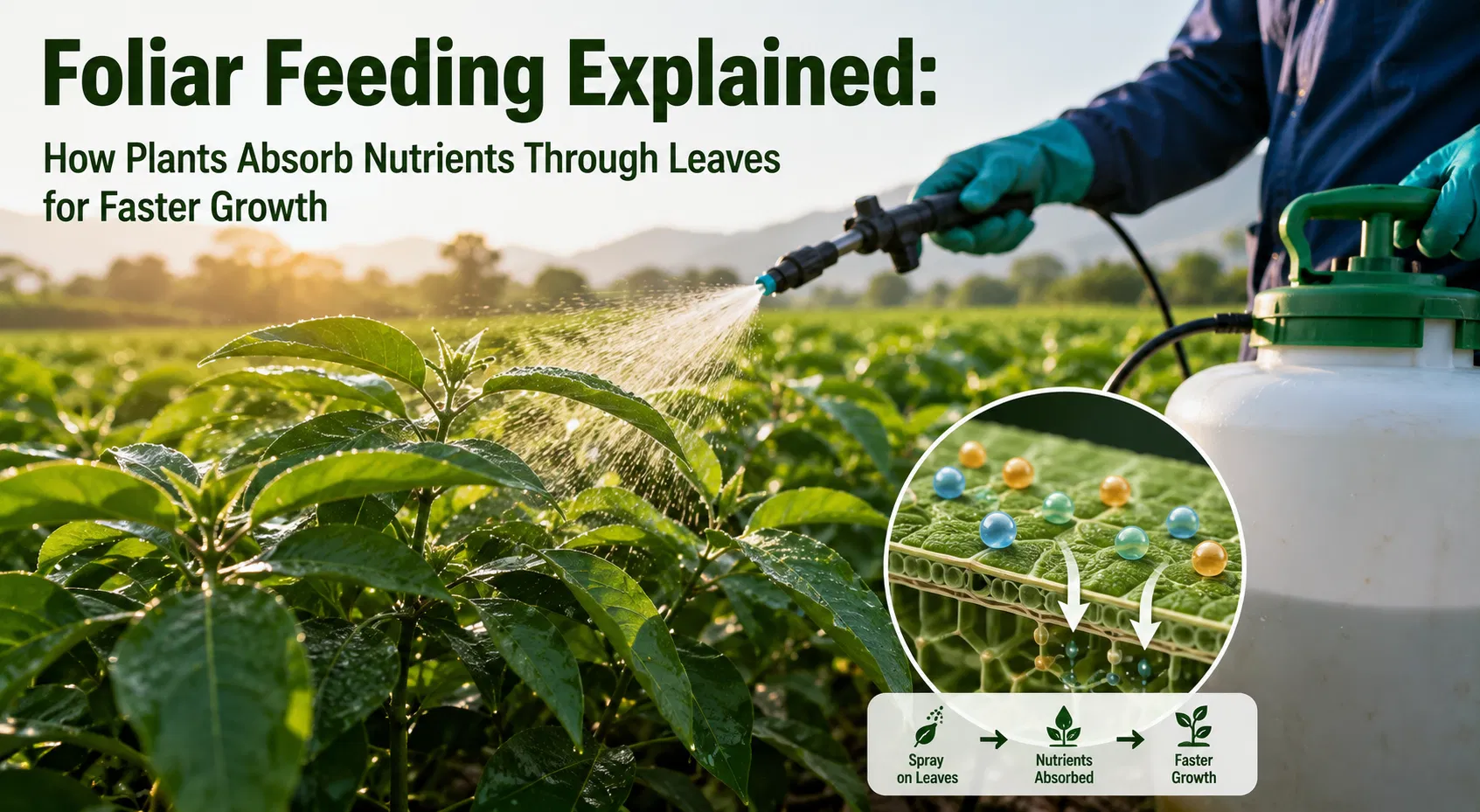
When a plant looks stressed, yellow, or slow to grow, the first fix people often think of is the soil. But sometimes the fastest way to help is from above. Foliar feeding is the practice of applying liquid nutrients directly to plant leaves, where they can be absorbed quickly and used almost immediately. For gardeners, farmers, and houseplant owners alike, understanding how plants absorb nutrients through leaves can unlock faster recovery, stronger growth, and better overall plant health.
Unlike traditional root feeding, foliar feeding bypasses the soil and delivers nutrients straight to the plant’s leaf surface. This can be especially useful when roots are under stress, when soil conditions limit nutrient uptake, or when a plant needs a quick boost. Let’s break down how foliar feeding works, what nutrients plants can absorb through leaves, and how to do it effectively.
What Is Foliar Feeding?
Foliar feeding is the process of spraying diluted nutrients onto plant leaves so they can be absorbed through the leaf tissue. This method is not meant to replace soil nutrition entirely, but it can be a powerful supplement to regular fertilization.
Plants naturally absorb most of their nutrients through roots, but leaves also have pathways that allow certain minerals and elements to enter. When conditions are right, foliar nutrient uptake can happen quickly, making this technique valuable for correcting deficiencies and supporting rapid growth stages.
How Plants Absorb Nutrients Through Leaves
Plant leaves are not sealed surfaces. They contain microscopic openings and pathways that allow small amounts of water and nutrients to enter. The main entry points include:
- Cuticle – the thin waxy layer covering the leaf surface
- Stomata – tiny pores that help with gas exchange and can allow limited absorption
- Epidermal cells – outer leaf cells that can take in dissolved nutrients under the right conditions
The cuticle is the biggest barrier, so foliar sprays work best when the solution is properly formulated and the leaf surface stays moist long enough for absorption. Nutrients must be in a form the plant can readily use, and the spray droplets need good contact with the leaf.
In foliar feeding, timing, formulation, and coverage matter just as much as the nutrient itself.
Which Nutrients Work Best for Foliar Feeding?
Not all nutrients are equally effective when applied to leaves. Foliar feeding is best suited for nutrients that plants can absorb and use quickly in small amounts.
Common foliar nutrients include:
- Nitrogen – supports green growth and can help with chlorosis
- Potassium – important for stress tolerance, flowering, and fruit quality
- Magnesium – essential for chlorophyll production
- Iron – often used to correct yellowing between leaf veins
- Zinc – supports enzyme function and new growth
- Manganese – involved in photosynthesis and metabolism
Micronutrients are especially common in foliar sprays because plants need them in small amounts and can respond quickly when deficient. Some specialty products also include amino acids, seaweed extracts, or calcium, though calcium is less mobile and more difficult to deliver effectively through leaves.
Benefits of Foliar Feeding
Foliar feeding offers several advantages when used correctly. It is not a magic fix, but it can be an efficient tool in the right situation.
- Fast nutrient uptake – nutrients can enter the plant much quicker than through soil
- Useful during root stress – helpful when roots are damaged, compacted, or poorly functioning
- Corrects deficiencies quickly – especially for micronutrients
- Supports key growth stages – such as flowering, fruiting, and transplant recovery
- Reduces nutrient loss – less risk of leaching compared with some soil applications
Because foliar feeding targets the leaves directly, it can provide a more immediate response than waiting for nutrients to move through the root system and soil profile.
When to Use Foliar Feeding
Foliar feeding is most effective when plants need a quick boost or when soil conditions limit nutrient uptake. It is especially useful in the following situations:
- Visible nutrient deficiency – such as yellow leaves, poor color, or stunted growth
- Transplant shock – when roots are temporarily struggling
- Cold or wet soil – roots may not absorb nutrients efficiently
- High-demand growth periods – flowering, fruit set, or rapid vegetative growth
- Alkaline or poor soil conditions – where certain nutrients become unavailable
For best results, foliar feeding should be used as a supplement, not the only source of plant nutrition. Healthy soil and root feeding still do the heavy lifting over the long term.
How to Apply Foliar Sprays Correctly
Applying foliar fertilizer the right way makes a big difference in results. A poorly timed or too-strong spray can lead to leaf burn or weak absorption.
Best practices for foliar feeding:
- Spray in the early morning or late evening to avoid hot sun and rapid evaporation
- Use a diluted solution to reduce the risk of damage
- Cover both sides of the leaves when possible, since the underside may absorb better
- Apply evenly so the leaf surface is lightly coated, not dripping
- Test on a small section first if using a new product or feeding sensitive plants
Cool, calm conditions are ideal. Wind, heat, and bright midday sun can all reduce the effectiveness of the spray and increase the chance of stress. Allowing the solution to remain on the leaf long enough for absorption is key.
Common Mistakes to Avoid
Foliar feeding is simple, but a few common mistakes can reduce results or even harm plants.
- Using too strong a concentration – this can scorch leaves
- Spraying in direct sunlight – leads to fast drying and poor absorption
- Overapplying – more is not better with foliar nutrients
- Ignoring the root problem – foliar feeding may mask symptoms without solving the cause
- Using the wrong nutrient form – not all fertilizers are suitable for leaf application
If a plant has repeated nutrient issues, it’s important to look at pH, soil health, watering habits, and root health. Foliar feeding can help temporarily, but it won’t correct deeper problems on its own.
Foliar Feeding vs. Root Feeding
Foliar feeding and root feeding serve different purposes. Root feeding supports long-term nutrition and plant development, while foliar feeding delivers a faster, more targeted response.
Root feeding is best for:
- Long-term nutrient supply
- Building healthy growth over time
- Supporting large nutrient demands
Foliar feeding is best for:
- Quick correction of deficiencies
- Temporary stress support
- Targeted micronutrient delivery
The best plant care strategies often combine both. Healthy roots provide the foundation, while foliar sprays offer a useful boost when needed.
Conclusion: A Smart Tool for Faster Plant Recovery
Foliar feeding gives plants a fast path to nutrient uptake through their leaves, making it a valuable technique for gardeners who want quicker results. By understanding how plants absorb nutrients through leaves, you can use foliar sprays more effectively to correct deficiencies, support stressed plants, and improve growth at critical stages.
The key is to use foliar feeding wisely: apply the right nutrients, in the right concentration, at the right time. When combined with good soil care and proper watering, foliar feeding can become one of the most practical tools in your plant care routine. If you want healthier, more resilient plants, start by feeding the leaves with purpose.