When plants start looking tired, slow, or pale, the answer is not always more synthetic fertilizer. Sometimes, the best boost comes from liquid organic fertilizers that feed both the soil and the crop at the same time. Two of the most effective options are fish amino acid and compost tea, and together they can transform the way you grow.
These natural fertilizers are popular with home gardeners, organic growers, and regenerative farmers because they are simple, nutrient-rich, and easy to apply. If you want stronger roots, greener leaves, better microbial activity, and more resilient plants, learning how to use fish amino acid and compost tea is a smart place to start.
What Are Liquid Organic Fertilizers?
Liquid organic fertilizers are nutrient solutions made from natural materials that can be absorbed quickly by plants or used to support soil life. Unlike many chemical fertilizers that deliver a fast but narrow nutrient hit, organic liquids usually provide a broader range of nutrients along with beneficial biology.
Two standout examples are:
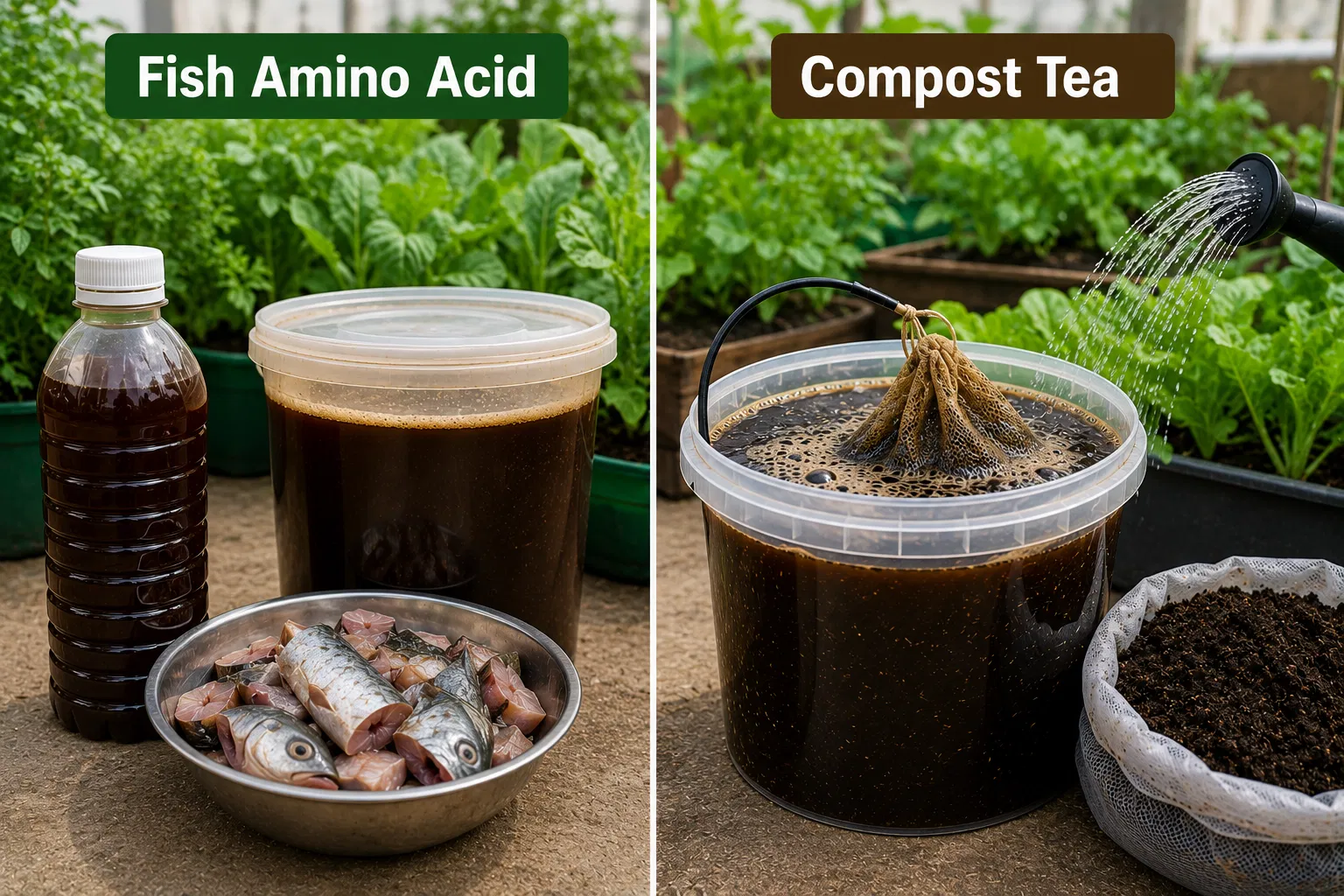
- Fish amino acid (FAA) — a fermented liquid made from fish parts, rich in nitrogen, amino acids, and trace minerals
- Compost tea — a water-based extract of finished compost, packed with microbes and soluble nutrients
Used properly, these liquid organic fertilizers can improve plant growth, soil fertility, and overall garden health.
Why Fish Amino Acid Works So Well
Fish amino acid is valued because it supplies plants with readily available nitrogen and organic compounds that support growth. It is especially helpful during the vegetative stage, when plants need energy to build leaves, stems, and overall structure.
Fish amino acid also contains amino acids, which are the building blocks of proteins. These compounds can help plants recover from stress, support enzyme activity, and improve nutrient uptake. In practical terms, that means healthier foliage, stronger growth, and better performance under pressure.
Key benefits of fish amino acid
- Promotes leafy growth
- Supports rapid recovery after pruning or transplanting
- Provides natural nitrogen
- Contains trace minerals from fish tissue
- Improves plant vigor in early growth stages
Because it is concentrated, fish amino acid should be diluted before use. A little goes a long way, especially for young plants.
How Compost Tea Supports Soil and Plants
Compost tea is different from fish amino acid in one major way: it is less about direct feeding and more about biological support. While it does contain some nutrients, its real value lies in the beneficial microbes it can introduce to the root zone and leaf surfaces.
Healthy compost tea can help encourage microbial diversity in the soil, which may improve nutrient cycling and root-zone activity. When the soil biology is active, plants often have an easier time accessing nutrients already present in the soil.
Key benefits of compost tea
- Adds beneficial microorganisms
- Supports soil health and nutrient cycling
- Can improve root-zone activity
- May help plants handle environmental stress
- Useful as a soil drench or foliar spray
Compost tea is best made from high-quality, finished compost. Poor compost can create poor tea, so the starting material matters.
Fish Amino Acid vs. Compost Tea: What’s the Difference?
Although both are liquid organic fertilizers, they serve different purposes. Fish amino acid acts more like a nutrient booster, while compost tea acts more like a biological inoculant.
Fish amino acid feeds the plant more directly, while compost tea feeds the soil life that helps the plant thrive.
Here is a simple comparison:
- Fish amino acid: best for growth, nitrogen supply, and plant recovery
- Compost tea: best for microbial support, soil health, and root-zone balance
Used together, they can complement each other beautifully. FAA gives plants an immediate nutritional boost, while compost tea supports the living system that keeps plants nourished over time.
How to Make Fish Amino Acid
Fish amino acid is typically made through fermentation. The process breaks down fish material into a liquid form that is rich in soluble nutrients and amino acids.
Basic ingredients
- Fish scraps or fish heads
- Brown sugar or molasses
- Clean container with a lid
Simple fermentation process
- Chop fish scraps into small pieces.
- Mix fish with brown sugar or molasses at a suitable ratio to help draw out moisture and start fermentation.
- Place the mixture in a container and cover it loosely to allow gases to escape.
- Store in a cool, shaded location.
- Allow it to ferment for several weeks, stirring occasionally if needed.
- Strain the liquid before use.
The result is a strong-smelling but highly useful organic fertilizer. Because of its strength, it is generally applied in small amounts after dilution.
How to Make Compost Tea
Compost tea is easier to make than fish amino acid and is often less pungent. It can be made as a simple steeped tea or an aerated brew, depending on the method and equipment available.
Basic ingredients
- Finished compost
- Non-chlorinated water
- Bucket or brewing container
- Optional: aeration pump for oxygen-rich brewing
Basic brewing steps
- Place finished compost in a mesh bag or directly into the container.
- Add water.
- Let it steep, or aerate it for a stronger microbial brew.
- Strain if necessary.
- Use soon after brewing for best results.
Fresh compost tea is usually most effective when applied shortly after preparation, since microbial activity changes over time.
How to Apply Fish Amino Acid and Compost Tea
Application method matters just as much as preparation. Used correctly, these liquid organic fertilizers can support plants at different stages of growth.
Best ways to use fish amino acid
- Soil drench: dilute and apply around the root zone
- Foliar spray: lightly mist leaves during active growth
- Transplant support: use a mild dilution after planting
Best ways to use compost tea
- Soil application: pour around plant roots to support soil biology
- Foliar spray: apply early or late in the day for best leaf coverage
- Seedling support: use carefully and in mild concentrations
Always avoid overapplication. Organic does not mean unlimited. Too much liquid fertilizer can still stress plants, wash nutrients away, or create imbalance.
When to Use Each Fertilizer
The timing of liquid organic fertilizer use can make a big difference in results.
Use fish amino acid when:
- Plants need a nitrogen boost
- Leaves look pale or growth is slow
- Crops are in vegetative growth
- Plants are recovering from pruning, transplanting, or stress
Use compost tea when:
- You want to improve soil biology
- Plants need gentle support rather than a strong nutrient push
- You are maintaining healthy garden beds
- You want to support root and microbial activity
Many growers use fish amino acid early in the season and compost tea regularly throughout the growing cycle for steady soil support.
Common Mistakes to Avoid
Liquid organic fertilizers are powerful, but a few common mistakes can reduce their effectiveness.
- Using too much FAA: it is concentrated and should always be diluted
- Brewing compost tea from poor compost: low-quality inputs lead to weak results
- Letting compost tea sit too long: fresh use is usually best
- Applying in extreme heat: foliar sprays work better in cooler parts of the day
- Expecting instant miracles: organic fertility works best with consistency
Why These Fertilizers Fit Organic Gardening So Well
Fish amino acid and compost tea fit naturally into organic systems because they work with plant biology instead of against it. They support balanced growth, healthy soil, and long-term fertility. Instead of relying on heavy synthetic inputs, growers can build productivity through natural cycles and microbial life.
This approach is especially useful in vegetable gardens, fruiting crops, raised beds, and regenerative plots where soil health is the foundation of success. Over time, liquid organic fertilizers can help create a more resilient growing environment with better structure, better nutrient availability, and better plant performance.
Conclusion: Build Healthier Plants from the Soil Up
Fish amino acid and compost tea are two of the most practical and effective liquid organic fertilizers available to growers today. One delivers a concentrated nutrient and amino acid boost, while the other strengthens the living biology that keeps plants thriving. Together, they create a powerful system for healthier soil and stronger crops.
If you want better results in your garden or farm, start with these two natural fertilizers and use them consistently and thoughtfully. Healthy plants begin with healthy inputs, and liquid organic fertilizers are one of the easiest ways to feed that process from the ground up.
Try incorporating fish amino acid and compost tea into your routine and see how quickly your plants respond.