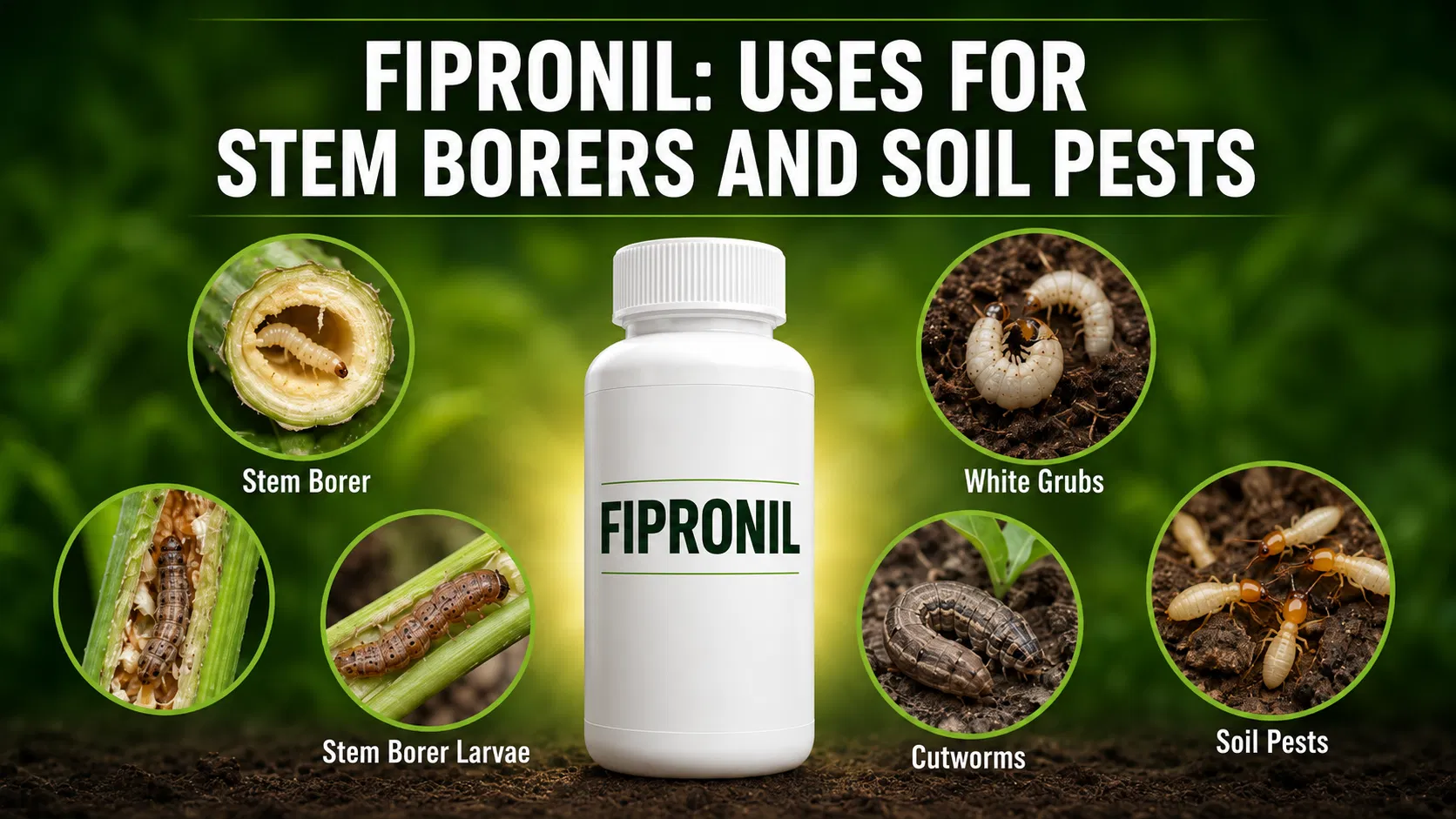
When stem borers and soil pests start damaging crops, losses can escalate fast. These hidden pests often attack below the surface or inside plant stems, making them difficult to detect until the damage is already severe. Fipronil is widely used in crop protection programs because of its strong activity against many destructive insects, especially those that live in soil or bore into plant tissue.
If you are looking for a practical, search-friendly overview of fipronil uses for stem borers and soil pests, this guide breaks down how it works, where it fits best, and what to consider for effective pest management.
What Is Fipronil?
Fipronil is a broad-spectrum insecticide known for controlling a range of chewing and soil-dwelling pests. It belongs to the phenylpyrazole class and works by disrupting the insect nervous system, leading to rapid feeding cessation and eventual death.
Because of its strong residual activity and systemic movement in some formulations, fipronil is especially valuable in situations where pests are hard to reach with standard foliar sprays. That makes it a useful tool for managing stem borers, root-feeding insects, and other soil pests.
Why Fipronil Is Used for Stem Borers
Stem borers are among the most damaging pests in crops like rice, maize, sugarcane, and various vegetables. These insects tunnel into stems, cutting off nutrient flow and weakening the plant. Since the larvae are protected inside the stem, they are often difficult to control once infestation is established.
Fipronil is used in stem borer management because it can provide early protection during vulnerable crop stages. In many cases, it is applied to the soil, nursery, or planting area so the active ingredient reaches the plant system or the pest’s feeding zone.
Key benefits for stem borer control
- Targets early infestation stages before severe plant damage develops
- Provides residual protection during critical crop growth periods
- Helps reduce larval survival in crops prone to internal stem damage
- Supports integrated pest management when used strategically
For best results, fipronil is typically more effective when used preventively or at the first sign of pest pressure rather than after heavy tunneling has already occurred.
How Fipronil Works on Soil Pests
Soil pests include insects that feed on roots, stems near the soil line, seeds, and underground plant parts. Examples include termites, white grubs, cutworms, root weevils, and other larvae that damage crops from below the surface.
Fipronil is useful against these pests because it can be delivered directly to the soil, where many of them live and feed. Once applied, it helps create a protective zone around the root system or planting area.
Common soil pest targets
- White grubs that feed on roots and weaken seedlings
- Termites that damage roots, stems, and plant crowns
- Cutworms that cut seedlings at the base
- Root-feeding larvae that stunt plant growth
- Soil-dwelling beetle pests that attack crop establishment
By reducing pest pressure in the root zone, fipronil helps plants establish more strongly, which is especially important during early growth stages when crops are most vulnerable.
Best Crops for Fipronil Use
Fipronil is commonly used in a variety of crops where stem borers and soil pests cause major yield losses. Its use depends on local registration, crop label directions, and pest pressure, but it is often considered in the following systems:
- Rice for stem borers, leaf feeders, and soil insects
- Maize for cutworms, grubs, and early-stage borers
- Sugarcane for stalk borers and soil pests
- Vegetable crops for root and seedling pests
- Plantation crops where termites and soil larvae are a concern
Crop response may vary based on pest species, application timing, and soil conditions. That is why label guidance and local agronomic recommendations matter so much.
Application Methods for Better Results
Fipronil can be applied in several ways depending on the formulation and target pest. The right method helps place the insecticide where the pests are most active.
Common application options
- Soil application – Used to target root-feeding and underground pests.
- Seed treatment – Protects seedlings from early pest attack after germination.
- Nursery or transplant treatment – Helps shield young plants before field establishment.
- Granular application – Often used in fields with high soil pest pressure.
- Directed crop applications – Helps protect the base of the plant where borers or soil pests attack.
Timing is critical. Applying fipronil before pest populations surge usually gives better results than waiting until plants are already severely stressed.
Advantages of Fipronil in Pest Management
Farmers and growers often choose fipronil because it offers a combination of fast knockdown and longer-lasting protection. This can be especially helpful when pests are difficult to monitor or control with foliar sprays alone.
- Effective against hidden pests that live in soil or inside stems
- Long residual activity in many field conditions
- Useful in preventive programs for high-risk crops
- Can improve crop establishment by reducing early pest damage
- Fits into integrated strategies when rotated and used responsibly
These advantages make fipronil especially valuable in crops where even minor early damage can lead to major yield loss later in the season.
Important Considerations Before Use
Although fipronil is a powerful insecticide, it must be used carefully. Overuse or misuse can reduce effectiveness and increase environmental risks. Following local regulations and label instructions is essential.
Best practices to keep in mind
- Use only on crops and pests listed on the product label
- Apply at the recommended rate and timing
- Avoid unnecessary repeat applications
- Rotate modes of action to reduce resistance risk
- Combine chemical control with scouting and cultural practices
Resistance management is especially important. Repeated use of the same insecticide class can lead to reduced control over time, so alternating products and integrating non-chemical methods is a smart strategy.
Fipronil in Integrated Pest Management
Fipronil works best as part of an integrated pest management, or IPM, program. That means using it alongside crop monitoring, field sanitation, resistant varieties, crop rotation, and biological control where appropriate.
For stem borers, early monitoring and timely intervention are key. For soil pests, proper land preparation, removal of crop residues, and preventive treatment can help reduce population buildup before planting begins.
Fipronil is most effective when it is used strategically, not reactively. Preventive timing and correct placement are often the difference between partial control and strong crop protection.
Safety and Environmental Responsibility
Any insecticide should be handled with care, and fipronil is no exception. Protective equipment, correct storage, and responsible application are important for user safety and environmental protection.
It is also wise to be mindful of pollinators, beneficial insects, and aquatic habitats. Prevent drift, avoid contamination of water sources, and follow all precautionary statements on the product label.
Conclusion
Fipronil for stem borers and soil pests remains a valuable option for protecting crops from hidden insect threats that can quietly reduce yield and plant vigor. Its strength lies in preventive control, soil-based applications, and targeted protection during early crop stages.
When used correctly and responsibly, fipronil can help growers protect seedlings, reduce internal stem damage, and improve overall crop establishment. For the best long-term results, pair it with good scouting, integrated pest management, and label-compliant application practices.
If stem borers and soil pests are threatening your crop, a timely and well-planned fipronil strategy can make a significant difference.