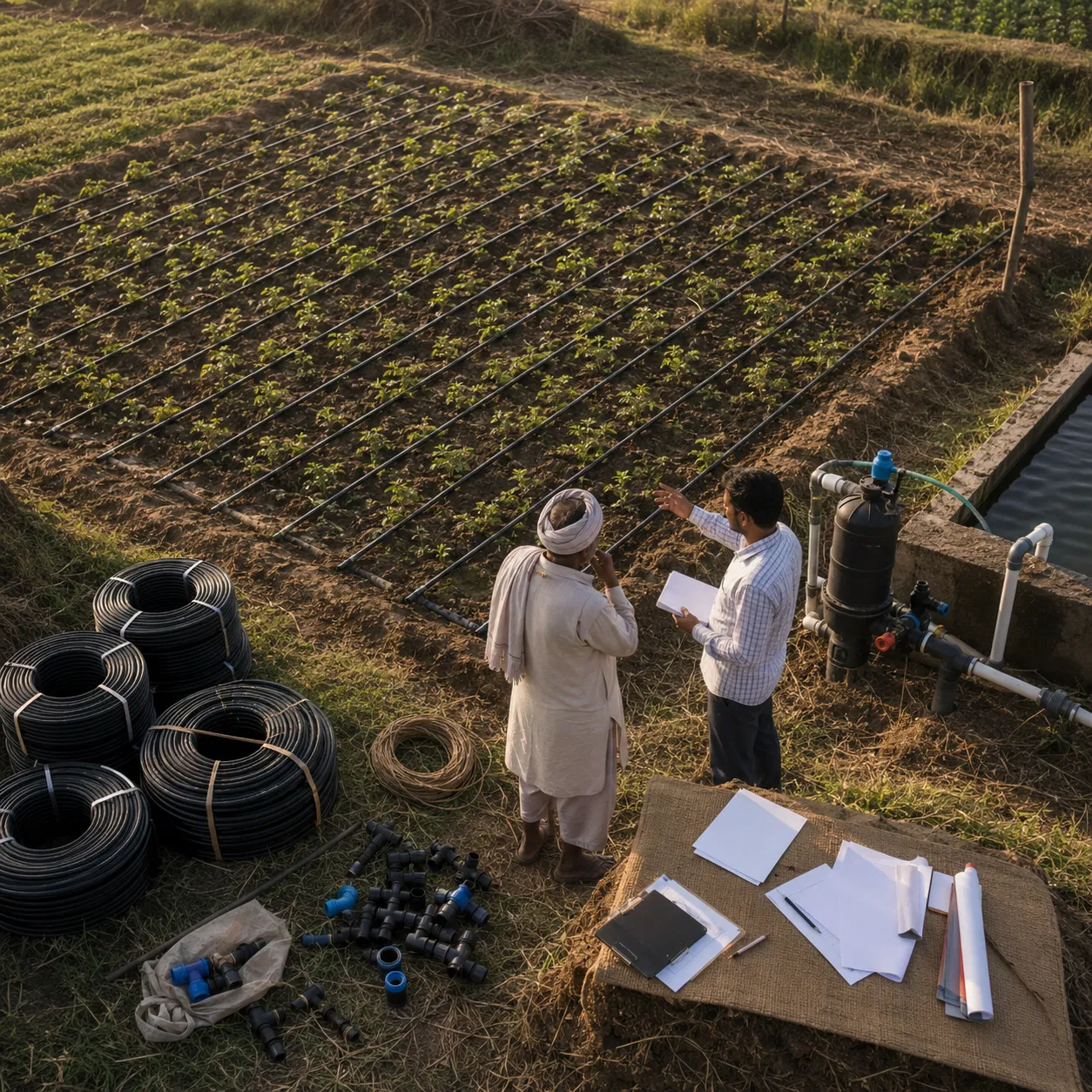
If you are planning to save water, improve crop yield, and make farming more efficient, drip irrigation is one of the smartest investments you can make. But before installing a system, the big question is simple: what is the drip irrigation cost per acre in India? The answer depends on crop type, land conditions, pipe quality, automation level, and subsidy availability. In this guide, we break down the real cost, what affects pricing, and how to estimate your budget accurately.
Drip Irrigation Cost Per Acre in India
In India, the drip irrigation cost per acre typically ranges from ₹30,000 to ₹80,000 per acre for most standard farms. For high-value crops, orchards, or fully automated systems, the cost can go above ₹1,00,000 per acre. The final amount depends on whether the system is basic, semi-automatic, or fully automated.
A well-designed drip irrigation system can reduce water usage by up to 50% and improve fertilizer efficiency, making the upfront investment worthwhile for many farmers.
Average Cost Based on Farm Type
1. Field Crops
For crops like sugarcane, cotton, maize, vegetables, and pulses, the cost is usually lower because the layout is simpler. The average range is:
- ₹30,000 to ₹45,000 per acre for basic drip systems
- ₹45,000 to ₹60,000 per acre for better-quality materials or wider coverage
2. Orchards and Plantation Crops
For crops like mango, grapes, banana, pomegranate, coconut, and sapota, the system requires more precise design. The cost is generally:
- ₹40,000 to ₹70,000 per acre for standard orchard setups
- ₹70,000 to ₹1,00,000+ per acre for advanced layouts with fertigation and automation
3. Polyhouse and Greenhouse Farming
Protected cultivation needs more accurate water delivery and often includes automation, so the cost is higher:
- ₹80,000 to ₹1,50,000 per acre depending on design and control systems
What Affects Drip Irrigation Cost Per Acre?
The price is not fixed because several factors influence the total project cost. Knowing these helps you compare quotations more effectively.
1. Crop Type
Different crops need different emitter spacing, pipe sizes, and water output. A banana farm and a cotton farm will not need the same design. High-value crops usually need more precise components, which increases the cost.
2. Land Shape and Soil Conditions
Flat land is easier and cheaper to install. Uneven land, rocky soil, or irregular plot shapes may require extra fittings, pressure control, and longer piping, all of which add to the budget.
3. Quality of Materials
Pipe thickness, emitter quality, filters, valves, and main lines all affect durability and price. Cheaper systems may save money initially but can lead to frequent repairs and shorter life.
4. Water Source and Pumping Requirement
If your water source is far from the field or requires powerful pumping, the installation cost rises. A filtration unit is also essential if the water contains sand or organic matter.
5. Automation and Fertigation
Basic systems are less expensive, while systems with timers, sensors, fertilizer injectors, and remote control features cost more. However, automation can improve precision and reduce labor costs over time.
6. Brand and Warranty
Established brands may charge more, but they often provide better warranty support, technical service, and product reliability. This can be important for long-term use.
Breakdown of Drip Irrigation System Cost Components
To understand the pricing better, here is a simple breakdown of what you are paying for:
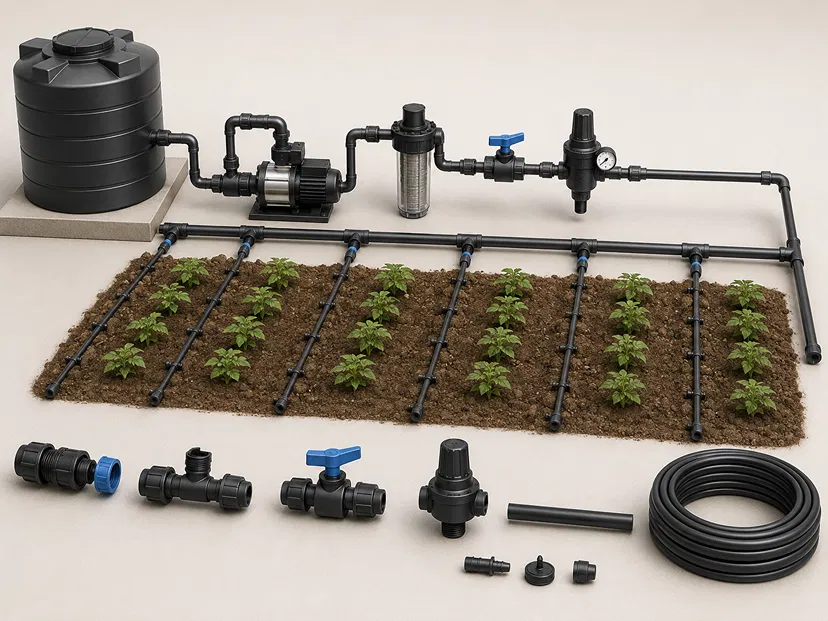
- Mainline pipes: Carry water from source to the field
- Sub-main and lateral pipes: Distribute water across crop rows
- Drippers or emitters: Release water directly to plant roots
- Filters: Prevent clogging caused by dirt and debris
- Valves and connectors: Control water flow and connect parts
- Fertigation unit: Adds fertilizer through the drip system
- Pressure regulators: Maintain consistent water pressure
- Installation and labor: Field setup, testing, and commissioning
Drip Irrigation Cost Per Acre After Subsidy in India
In India, farmers can often reduce the final cost through government subsidy schemes. Under various state and central agriculture programs, subsidies may cover up to 50% to 90% of the total project cost, depending on category, state policy, and farm size.
After subsidy, the effective cost may come down to:
- ₹10,000 to ₹25,000 per acre for eligible small and marginal farmers in some states
- ₹20,000 to ₹40,000 per acre for standard installations after partial subsidy
Subsidy availability changes from state to state, so farmers should always check with the local agriculture department or authorized vendor before purchasing.
Is Drip Irrigation Worth the Cost?
For most Indian farmers, the answer is yes. Although the initial investment may seem high, drip irrigation can lower water consumption, reduce weed growth, improve fertilizer use, and increase crop quality. Over time, these benefits often lead to better profit margins.
Key Benefits
- Saves water and reduces wastage
- Delivers nutrients directly to roots
- Improves crop yield and quality
- Reduces labor and irrigation time
- Works well in water-scarce regions
- Helps maintain more uniform plant growth
How to Estimate Your Drip Irrigation Budget
If you want a rough estimate, follow this simple approach:
- Measure your total acreage
- Identify the crop type and spacing requirement
- Check whether the land is flat or uneven
- Decide if you need fertigation or automation
- Request quotations from at least three suppliers
- Confirm subsidy eligibility before final purchase
For example, a 5-acre vegetable farm may require a different system and budget than a 5-acre mango orchard. That is why personalized quotations are always more accurate than general price charts.
Tips to Reduce Drip Irrigation Installation Cost
- Choose the right system size for your crop
- Compare multiple vendors before buying
- Use subsidy schemes where available
- Buy from trusted brands to reduce maintenance costs
- Maintain filters regularly to avoid clogging and replacement expenses
- Plan layout carefully to avoid unnecessary pipe wastage
Conclusion
The drip irrigation cost per acre in India usually starts around ₹30,000 and can go beyond ₹1,00,000 depending on crop, land, and system quality. While the upfront cost matters, the real value comes from long-term savings in water, labor, and fertilizer, along with improved crop productivity.
If you are serious about making farming more efficient and profitable, drip irrigation is not just an expense—it is an investment. Compare prices, check subsidy options, and choose a system that matches your crop needs. The right setup can pay for itself through better harvests and lower input costs.