Great dairy quality starts long before the milk reaches the tank. Every step, from the milking parlor to storage, affects product safety, shelf life, and the reputation of the farm. Strong dairy farm hygiene is not just about looking clean—it is about protecting milk from bacteria, preventing contamination, and keeping cows, equipment, and employees working at their best.
If you want better milk quality and fewer risks, the answer begins with a consistent, practical sanitation routine. Here is how to improve hygiene on a dairy farm from milking to storage.
Why Dairy Farm Hygiene Matters
Milk is highly sensitive to contamination. Dirt, manure, bacteria, and residues can enter the milk at any point if hygiene is poor. Even small lapses can lead to high bacterial counts, reduced milk value, and possible health concerns.
Good dairy hygiene helps with:
- Lower bacterial contamination
- Better milk flavor and shelf life
- Reduced risk of mastitis
- Improved animal welfare
- Compliance with food safety standards
In short, clean practices protect both the product and the business.
Start with Cow Cleanliness
Hygiene begins with the animals themselves. Clean cows are less likely to introduce dirt and bacteria into the milking process. Before milking, inspect udders, teats, flanks, and tails for manure, mud, or bedding material.
Keep housing areas dry and comfortable by managing bedding regularly. Wet or dirty bedding increases the chance of teat contamination. Frequent scraping, proper drainage, and fresh bedding reduce the load of pathogens in the barn.
Key cow hygiene practices
- Keep stalls clean and dry
- Trim muddy buildup from udders and legs
- Use clean bedding materials
- Maintain good ventilation to reduce moisture
- Separate sick or infected cows when needed
Maintain a Clean Milking Parlor
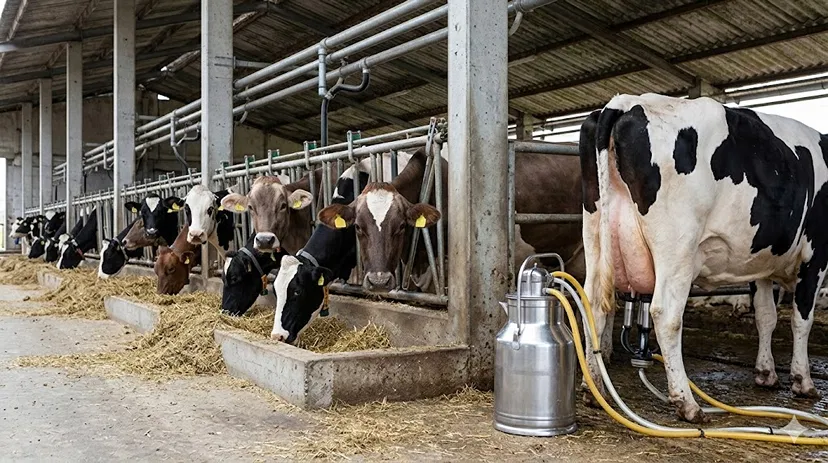
The milking parlor is one of the most important hygiene points on the farm. A dirty parlor can quickly compromise milk quality, even if the cows are well managed. Floors, walls, gates, hoses, and touchpoints should be cleaned regularly.
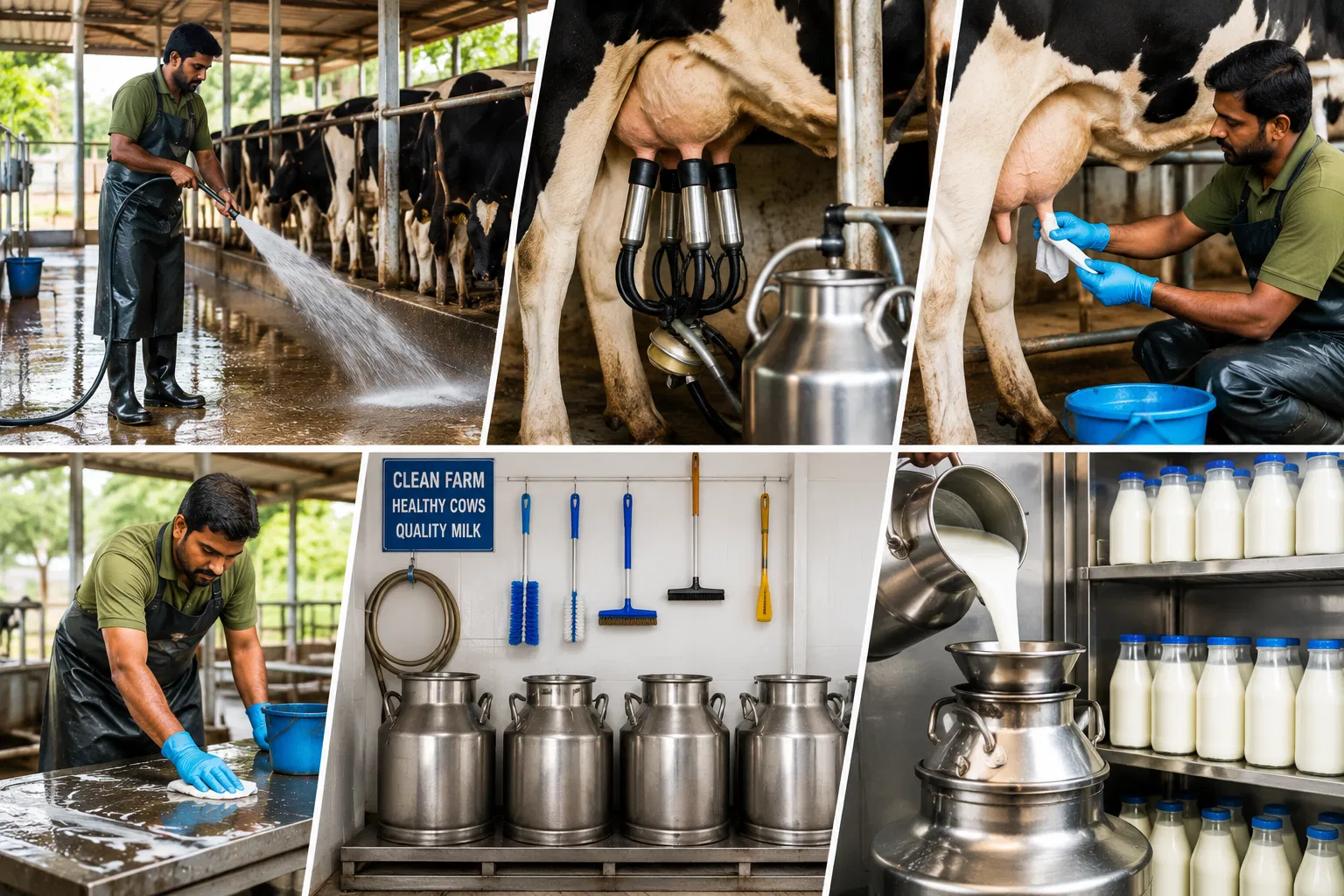
Sanitation should happen before and after each milking session. Remove manure, rinse visible debris, and disinfect surfaces according to the farm’s cleaning protocol. Pay close attention to areas where milk splashes or moisture collects.
Consistent cleaning is more effective than occasional deep cleaning. A daily routine prevents buildup and keeps contamination risks low.
Milking parlor checklist
- Wash and sanitize floors after each milking
- Clean high-touch equipment and handles
- Remove manure and organic debris promptly
- Keep drains clear and functional
- Use approved disinfectants at the correct concentration
Focus on Teat Preparation and Milking Routine
Proper teat preparation is a critical part of dairy farm hygiene. Before milking, teats should be cleaned and dried using clean, single-use towels or sanitized cloths. This step helps remove dirt and reduces the transfer of bacteria into the milk system.
A consistent milking routine also matters. When every worker follows the same order and technique, the farm reduces the chance of cross-contamination and improves udder health.
Best practices for teat prep
- Inspect teats for cuts, swelling, or abnormal discharge.
- Pre-dip teats with an approved disinfectant if used on the farm.
- Wipe teats thoroughly with clean towels.
- Allow the disinfectant to remain in contact for the recommended time.
- Attach milking equipment only after teats are fully clean and dry.
After milking, a post-dip can further reduce bacteria and help protect the teat ends. This is especially important in farms aiming to reduce mastitis cases.
Clean and Inspect Milking Equipment Regularly
Milking equipment comes into direct contact with milk, so it must be cleaned with precision. Residues in pipelines, liners, claws, and tanks can become a major source of bacterial growth if ignored.
Establish a cleaning system for all equipment after every milking. This usually includes rinsing, washing with detergent, sanitizing, and allowing surfaces to dry properly. Avoid shortcuts, because even minor residue can affect milk quality.
What to inspect in milking equipment
- Liner wear and cracks
- Vacuum levels and pulsation performance
- Milk hoses and joints
- Tank seals and fittings
- Signs of buildup, corrosion, or leakage
Replace worn parts on schedule. Old or damaged components are harder to clean and more likely to harbor bacteria.
Protect Milk During Transfer and Storage
Once milk leaves the cow, storage hygiene becomes the next priority. The milk should move quickly and safely into a clean, temperature-controlled bulk tank. Delays, dirty transfer lines, or poor cooling can shorten shelf life and encourage bacterial growth.
Milk storage tanks should be washed after each emptying and inspected routinely for residue, odors, or mechanical issues. The cooling system must bring milk to the proper temperature as quickly as possible and keep it stable until collection.
Storage hygiene essentials
- Clean transfer lines after use
- Monitor tank temperature consistently
- Ensure lids and seals are secure
- Prevent dust, insects, and foreign matter from entering tanks
- Document cleaning and temperature records
Milk should never sit at unsafe temperatures. Reliable cooling is one of the simplest ways to preserve quality and reduce spoilage.
Train Farm Workers on Hygiene Protocols
Even the best equipment and facilities cannot compensate for poor worker habits. Every person involved in milking and storage should understand hygiene procedures and follow them every day. Training should cover handwashing, sanitation, equipment handling, and how to identify contamination risks.
Clear instructions reduce mistakes. Written checklists, visual reminders, and regular refreshers help maintain consistency across shifts and new employees.
Training topics to cover
- Proper handwashing and glove use
- Cleaning and disinfecting routines
- Safe milk handling practices
- Signs of mastitis or contaminated milk
- Emergency steps for equipment failure or sanitation issues
When workers understand why each step matters, they are more likely to follow the process carefully.
Control the Farm Environment
Farm hygiene also depends on the surrounding environment. Dust, pests, standing water, and poor drainage all increase contamination pressure. A well-managed farm yard and barn area support better sanitation inside the milking system.
Keep feed areas tidy, control rodents and flies, and remove waste regularly. Maintain drainage so water does not pool near barns or walking paths. These simple actions reduce disease pressure and help keep cows cleaner before milking.
Build a Daily and Weekly Hygiene Schedule
The most effective farms do not rely on memory alone. They follow a routine. A written schedule helps ensure that no hygiene task gets missed, especially during busy periods.
Daily tasks might include cleaning the parlor, sanitizing equipment, and checking cow cleanliness. Weekly tasks could include deeper inspections, filter changes, drainage checks, and reviewing records. Monthly reviews can help spot recurring issues and improve the system over time.
Example hygiene routine
- Daily: Clean milking area, sanitize equipment, inspect cows, monitor tank temperature
- Weekly: Check liners, inspect drains, review cleaning supplies, deep-clean problem areas
- Monthly: Audit procedures, train staff, inspect storage systems, evaluate milk quality trends
Monitor Results and Improve Continuously
Dairy hygiene should be measured, not guessed. Track milk quality data, somatic cell counts, bacterial counts, mastitis cases, and equipment issues. These numbers show whether current hygiene practices are working.
If problems appear, investigate quickly. The cause may be a cleaning gap, worn equipment, poor cow hygiene, or improper storage temperature. Regular monitoring makes it easier to correct issues before they become costly.
Conclusion: Clean Habits Lead to Better Milk
Improving dairy farm hygiene from milking to storage is one of the smartest investments a farm can make. Clean cows, sanitized equipment, careful milking routines, and proper storage all work together to protect milk quality and farm profitability.
Start with the basics, stay consistent, and train every team member to follow the same standard every day. Small improvements in hygiene can lead to major gains in milk safety, shelf life, and overall performance. If you want better results, make cleanliness a daily habit, not a one-time task.