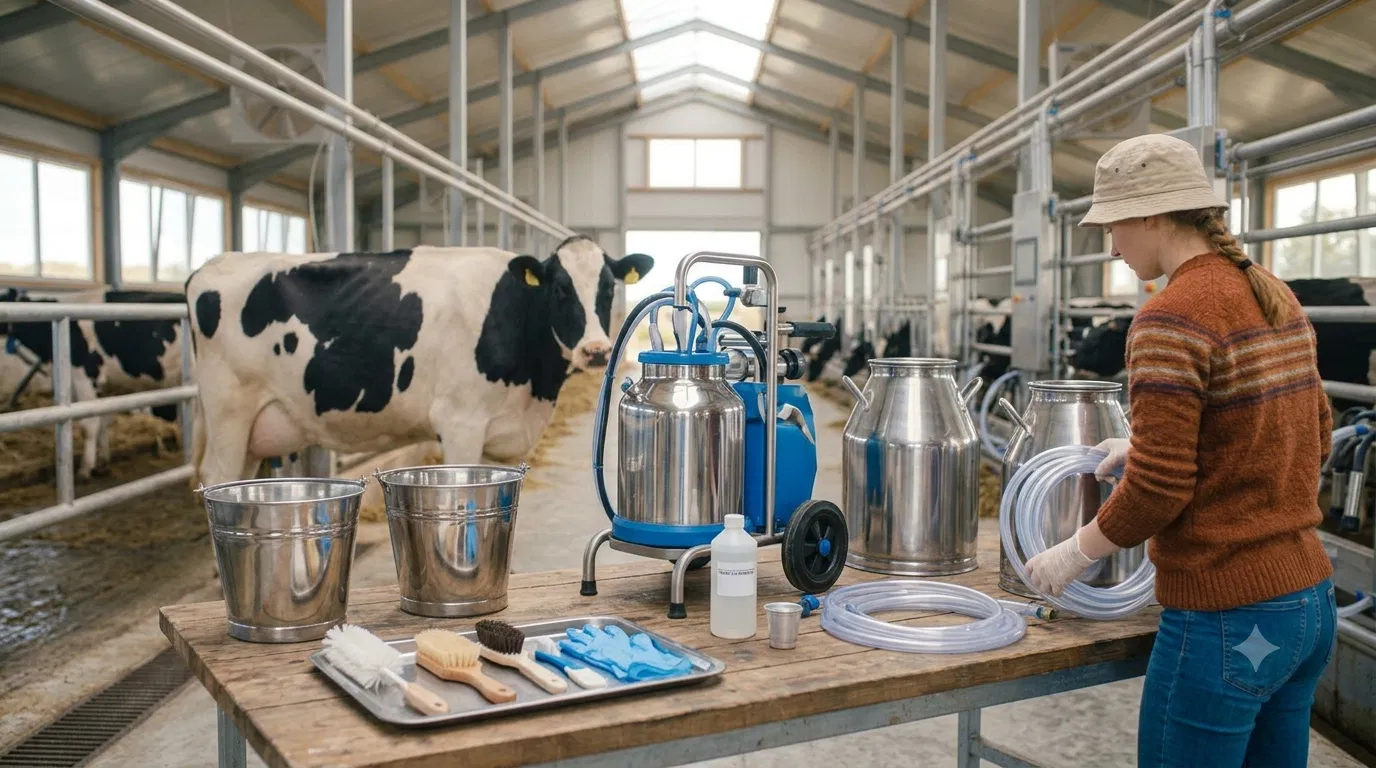
If you’re getting ready to start milking cows, the right equipment can make the difference between a smooth, efficient routine and a frustrating one. Whether you’re building a small homestead dairy setup or upgrading an existing barn, investing in dependable cow milking equipment helps protect milk quality, support cow comfort, and save valuable time every day.
Before you buy anything, it helps to understand the core equipment needed for cow milking and how each piece fits into the process. From the milking machine to cleaning supplies, every item plays a role in keeping your operation clean, safe, and productive.
What Cow Milking Equipment Do You Need?
The basic cow milking equipment list depends on your herd size, budget, and whether you’re hand milking or using a machine. For most modern dairy setups, a reliable milking system includes collection equipment, sanitation tools, and storage containers.
1. Milking Machine or Milking System
The most important piece of cow milking equipment is the milking machine itself. A machine uses vacuum pressure and pulsation to extract milk gently and consistently. This reduces labor, speeds up milking, and helps maintain a regular routine.
Common options include:
- Bucket milking machines – Ideal for small farms and beginner dairy operations
- Pipeline milking systems – Better for larger herds and higher-volume milking
- Portable milking machines – Great for flexible, smaller-scale use
When choosing a machine, look for durable parts, easy cleaning, and a vacuum level suited for cows. A good system should be efficient without causing discomfort.
2. Milking Claw and Inflation Liners
The milking claw connects the vacuum system to the teat cups and helps collect milk from the cow. Inflation liners, which fit inside the teat cups, are the parts that come in direct contact with the teats during milking.
These components matter because they affect both milk flow and cow comfort. Worn liners can lead to poor milking performance and possible teat irritation, so they should be checked and replaced regularly.
3. Teat Cups
Teat cups hold the inflation liners and help create the seal needed for milking. They need to fit properly and work in sync with the rest of the system. A good set of teat cups supports consistent milk extraction while minimizing stress on the animal.
If you’re comparing equipment, pay attention to the material, weight, and ease of handling. Lighter equipment can make repetitive milking sessions easier on the operator.
4. Vacuum Pump
The vacuum pump powers the entire milking process. It creates the suction needed to move milk from the udder into the collection container. Without a dependable vacuum pump, even the best milking machine won’t perform properly.
When selecting a pump, consider:
- Vacuum stability
- Noise level
- Maintenance requirements
- Energy efficiency
A quiet, consistent vacuum pump can improve the milking experience for both cows and operators.
5. Milk Collection Container or Tank
Once milk is extracted, it must be collected in a clean, food-safe container. Small setups may use stainless steel buckets, while larger farms often rely on bulk milk tanks for cooling and storage.
Stainless steel is the preferred material because it is durable, easy to sanitize, and resistant to corrosion. Milk should be transferred into storage quickly to preserve freshness and reduce bacterial growth.
Sanitation Equipment Is Just as Important
Clean equipment is essential in dairy farming. Poor sanitation can lead to contamination, lower milk quality, and health issues for your cows. That’s why milking equipment cleaning tools are just as necessary as the machine itself.
6. Udder Cleaning Supplies
Before milking, udders and teats should be cleaned to remove dirt, manure, and bacteria. Basic udder cleaning supplies include:
- Disposable wipes or reusable cloths
- Teat sanitizing spray or dip
- Warm water and cleaning solution
- Single-use paper towels or clean drying cloths
Pre-milking hygiene helps protect milk quality and reduces the risk of mastitis. Clean teats also make the milking process more efficient.
7. Post-Milking Teat Dip
After milking, applying a teat dip helps protect open teat ends from bacteria. This is a standard practice in dairy hygiene and is especially important if cows are housed in muddy or crowded conditions.
A good teat dip should be approved for dairy use and easy to apply evenly. Consistent use can help reduce infection risk and support udder health.
8. Cleaning and Sanitizing Supplies
Your milking equipment must be cleaned thoroughly after every use. This usually requires:
- Detergent made for dairy equipment
- Sanitizer
- Brushes for tubing and parts
- Hot water supply
- Drying rack or clean storage area
Cleaning routines should be simple, repeatable, and effective. Milk residue can quickly build up inside hoses and containers, so daily washing is non-negotiable.
Helpful Accessories for a Better Milking Setup
While the essentials are enough to get started, a few extra tools can make the job easier and more efficient.
9. Milk Filter
Milk filters help remove tiny particles before milk is stored or processed. They improve cleanliness and are a useful final step in the milking process.
10. Platform or Milking Stanchion
A milking stanchion holds the cow in place during milking. This improves safety, keeps the animal calm, and makes the process easier for the operator. If your setup involves frequent milking, a sturdy stanchion is a smart investment.
11. Replacement Parts
Having spare parts on hand is one of the smartest things you can do. Common replacement items include:
- Inflation liners
- Rubber tubing
- Gaskets and seals
- Vacuum pump oil
- Clamps and connectors
Downtime during milking can be costly, so keeping backups reduces stress and keeps your routine on track.
How to Choose the Right Equipment for Your Needs
Not every farm needs the same milking setup. The best cow milking equipment for you depends on herd size, available labor, and long-term goals. A small homestead may do well with a portable bucket milker, while a growing dairy business may need a pipeline system and bulk cooling tank.
Ask yourself these questions:
- How many cows will I milk each day?
- Do I need portable or stationary equipment?
- How much time do I want to spend cleaning?
- What kind of storage and cooling system do I need?
- How easy will it be to get replacement parts?
Durability, sanitation, and ease of use should always come before flashy features. The best milking equipment is the kind that performs reliably day after day.
Final Thoughts on Getting Started with Cow Milking Equipment
Starting a dairy routine becomes much easier when you have the right cow milking equipment in place. At a minimum, you’ll need a milking machine, vacuum pump, teat cups, milk collection container, sanitation supplies, and a safe way to keep the cow steady during milking.
Clean equipment, proper maintenance, and consistent routines are the foundation of successful milking. If you invest in quality tools from the beginning, you’ll protect your cows, improve milk quality, and make daily work far more manageable.
Start with the essentials, choose equipment that fits your herd, and build a milking system you can trust every day.
If you’re ready to begin, make a checklist, compare your options, and choose the cow milking equipment that will support your operation for the long term.