Cow dung manure is one of the most widely available organic inputs on livestock-based farms. When collected, decomposed, and applied correctly, it adds organic matter, improves soil structure, supports microbial activity, and supplies a gradual source of plant nutrients.
Fresh cow dung should not be treated as a direct substitute for concentrated fertilizers. Its nutrient content is relatively low and variable, and improper use can damage seedlings, spread weeds or pathogens, and cause nutrient losses.
What Cow Dung Manure Contains
Cow dung contains partially digested plant material, microorganisms, organic carbon, and nutrients such as nitrogen, phosphorus, potassium, calcium, magnesium, and sulphur. It may also contain small amounts of micronutrients.
The actual nutrient content depends on animal feed, bedding, water content, collection method, urine recovery, storage, and degree of decomposition. Manure exposed to rain and sun may lose a substantial share of its nutrients.
Main Benefits in Farming
Adds organic matter
Regular application increases soil organic carbon. This improves aggregation, porosity, aeration, and root penetration. Soils with better structure are easier to cultivate and less likely to form a hard surface crust.
Improves water retention
Organic matter helps sandy soils retain moisture and improves infiltration in compacted soils. These benefits support crop growth but do not eliminate the need for proper irrigation scheduling.
Supports soil biology
Decomposed manure provides energy for beneficial microorganisms. Increased biological activity supports residue breakdown and nutrient cycling.
Supplies nutrients gradually
Nutrients in cow dung manure are released as organic matter decomposes. This slow release can support crop nutrition over time and reduce sudden salt stress when the manure is well matured.
Uses locally available resources
Livestock farms can recycle dung, bedding, and crop residues instead of allowing them to accumulate as waste. Proper processing converts these materials into a useful input.
Fresh Cow Dung vs Decomposed Manure
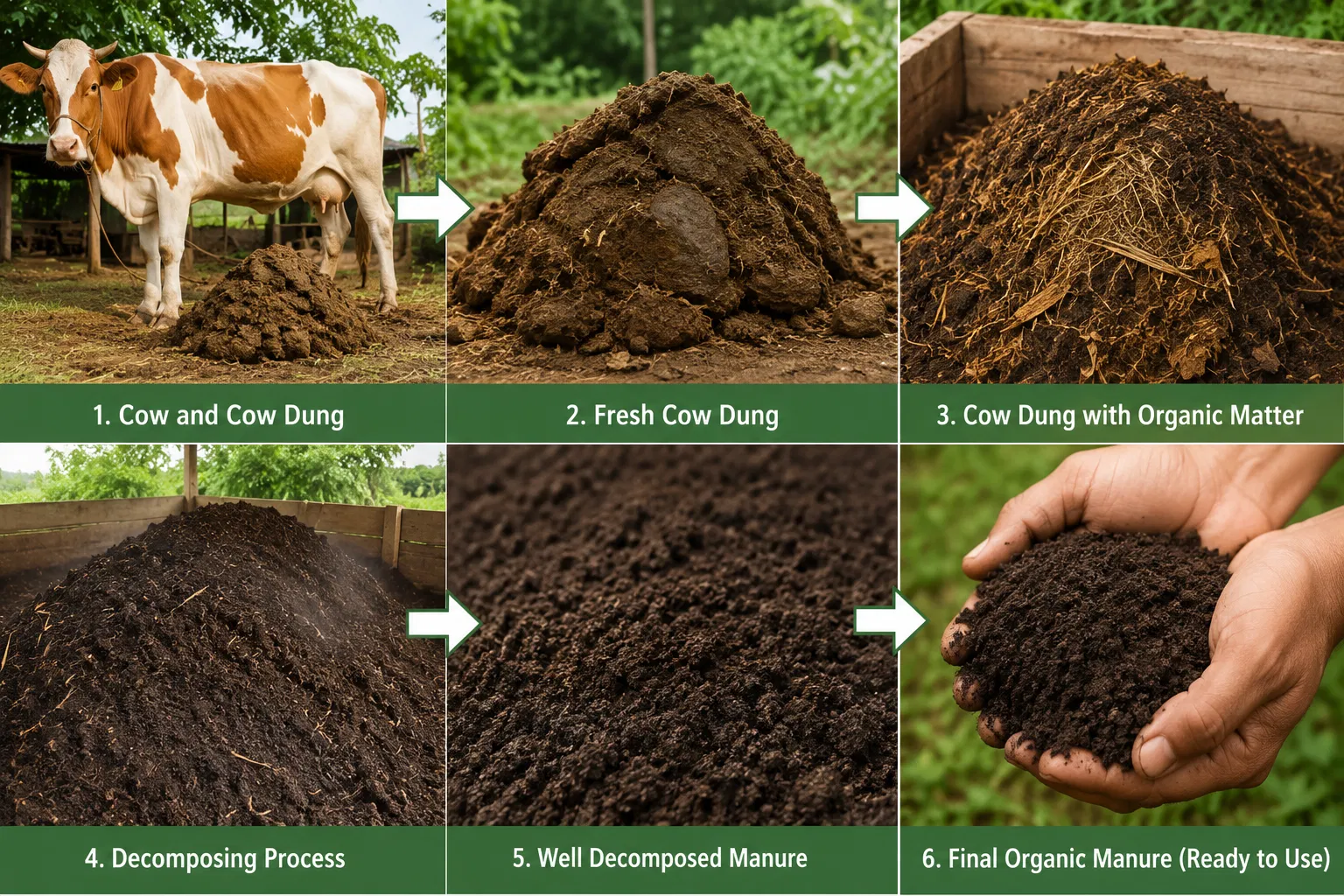
Fresh dung has high moisture, active microbial decomposition, and potentially unstable nitrogen compounds. Applying it directly near seeds or roots can cause ammonia injury, oxygen depletion, or excessive heating.
Well-decomposed manure is darker, more stable, and easier to spread. It should have an earthy smell rather than a strong foul odour. Decomposition also reduces the risk from many pathogens and weed seeds, although the result depends on the temperature and duration achieved.
How to Prepare Cow Dung Manure
Traditional farmyard manure method
- Collect dung, urine-soaked bedding, leftover fodder, and farm litter.
- Place the material in a covered pit or compact heap.
- Maintain enough moisture for decomposition without creating runoff.
- Protect the heap from direct sun and heavy rain.
- Allow the material to decompose for several months.
Covering the manure reduces nitrogen loss and prevents rainwater from washing nutrients away.
Controlled composting method
Cow dung can be mixed with chopped crop residues to produce compost. Alternate moist nitrogen-rich materials with dry carbon-rich residues, maintain aeration, and turn the pile periodically.
Controlled composting produces more uniform decomposition and may reach temperatures that reduce pathogens and weed seeds.
Vermicomposting method
Partially decomposed cow dung is an excellent earthworm feedstock. Allow fresh dung to cool before adding worms. Maintain shade, moisture, and aeration until the material becomes fine and granular.
How to Apply Cow Dung Manure
Before field preparation
Apply well-decomposed manure before final land preparation and incorporate it into the topsoil. Early application gives the material time to interact with soil moisture and microorganisms.
For vegetable beds
Mix mature manure evenly into the bed rather than placing concentrated pockets directly beneath seeds. Seedlings are sensitive to fresh or salty material.
For orchards
Apply manure in the active root zone beneath the canopy, keeping it away from direct contact with the trunk. Light incorporation and irrigation help begin nutrient release.
For nursery media
Use only fully decomposed and screened manure. Nursery mixtures should be free from large undecomposed pieces, weed seeds, and visible contaminants.
As a top dressing
A thin layer of mature manure can be applied around established crops. Avoid piling it against stems, crowns, or tree trunks.
Application Rate Considerations
There is no single rate suitable for every field. The correct quantity depends on manure nutrient analysis, soil organic matter, salinity, crop demand, and other nutrient inputs.
Apply lower rates to salt-sensitive seedlings and soils with drainage problems. Higher bulk rates may be used for degraded soils when the material is well decomposed and the nutrient plan accounts for the nutrients supplied.
Combining Manure With Other Inputs
Cow dung manure can be combined with mineral nutrients in an integrated program. The manure builds soil health, while precise nutrient sources correct immediate crop demand.
It can also provide a supportive environment for approved bio-fertilizers. However, microbial products should not be mixed with hot, fresh manure or incompatible chemicals.
Storage Best Practices
- Store manure under a roof or waterproof cover.
- Prevent runoff into wells, canals, and ponds.
- Use a compact pit or heap to reduce nitrogen loss.
- Keep fresh manure away from harvested produce.
- Separate plastics, metal, glass, and veterinary waste.
- Use older, mature material before newly collected dung.
Common Mistakes
- Applying fresh dung directly to seeds or young roots
- Leaving manure exposed to rain and sun
- Using excessive rates without testing
- Applying contaminated manure to vegetable crops
- Ignoring salinity and drainage problems
- Assuming all cow dung has the same nutrient value
Safety Considerations
Wear gloves when handling manure and wash hands and tools afterward. Keep manure away from drinking-water sources and harvest areas. For food crops eaten raw, follow appropriate pre-harvest intervals and local manure-management recommendations.
Final Thoughts
Cow dung manure is most valuable when it is conserved, decomposed, and applied as part of a balanced soil-fertility program. Its main strength is not rapid nutrient delivery but the gradual improvement of soil organic matter, biological activity, and physical condition.
Protect the manure during storage, apply only mature material near crops, and use soil and manure testing wherever possible. These practices turn a common farm waste into a reliable long-term resource.