Organic growers often turn to copper fungicides when disease pressure rises, but "organic" does not mean unrestricted. Copper can be a valuable tool against fungal and bacterial diseases, yet its use is tightly controlled in certified organic production. Understanding what's allowed, how copper products are labeled, and when they should be used is essential for staying compliant and protecting soil health.
What Are Copper Fungicides?
Copper fungicides are crop protection products that use copper-based compounds to suppress or prevent disease. They are commonly used against problems such as:
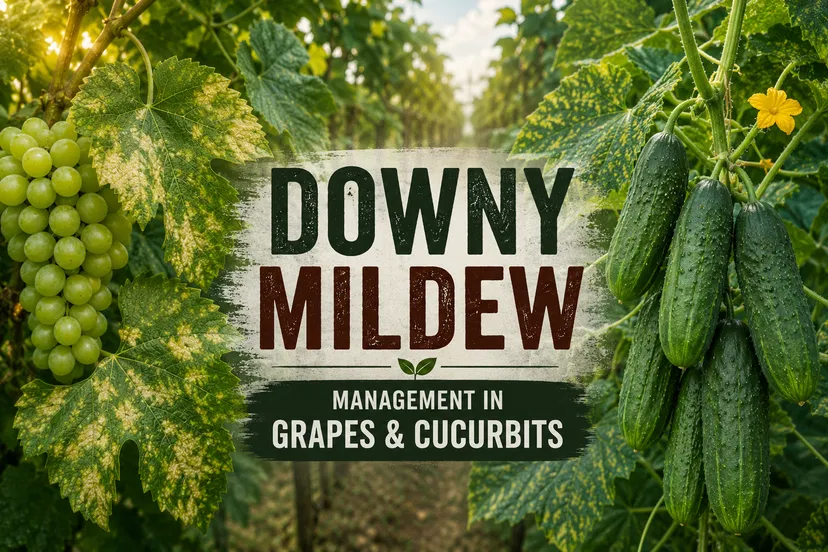
- Downy mildew
- Early and late blight
- Bacterial spot
- Anthracnose
- Leaf spots and fruit rots
These products work as protective fungicides, meaning they help prevent infection before disease becomes established. They are not usually curative, so timing matters. In organic systems, copper is often part of a broader disease management plan that includes resistant varieties, crop rotation, sanitation, and canopy management.
Is Copper Allowed in Organic Farming?
Yes, certain copper fungicides are allowed in organic farming, but only under specific conditions. In most organic standards, copper is considered a permitted synthetic substance because of its usefulness in controlling disease when other methods are insufficient.
However, allowed does not mean unlimited. Organic certification programs typically require growers to use copper as a last-resort or limited-use input and to document that cultural and biological controls were attempted first.
In organic production, the goal is not simply to replace conventional sprays with copper, but to use copper sparingly as part of an integrated disease management strategy.
Common Organic Copper Fungicide Ingredients
Several copper compounds may be approved for organic use, depending on the product label and certifier approval. Common active ingredients include:
- Copper hydroxide
- Copper sulfate
- Copper octanoate
- Basic copper sulfate
- Copper oxychloride
Not every copper product is automatically approved. Organic growers must verify that the specific brand and formulation are listed for organic use and comply with their certification requirements.
What Makes a Copper Fungicide Organic-Compliant?
For a copper fungicide to be allowed in organic farming, it generally must meet several criteria:
- Approved active ingredient – The copper compound itself must be permitted under organic rules.
- Approved inert ingredients – The full formulation, including additives and carriers, must be acceptable.
- Label approval for organic use – The product label should specifically indicate suitability for organic production or appear on an approved input list.
- Use according to restrictions – Application rates, timing, and frequency must stay within organic limits.
Because inert ingredients can change a product's status, the label matters just as much as the active ingredient. A copper formulation that looks similar to another approved product may not actually qualify for organic use.
Key Restrictions on Copper Use in Organic Farming
Organic standards allow copper, but they also place important restrictions on its use. These restrictions are designed to limit environmental buildup and reduce unnecessary applications.
1. Use Only When Needed
Copper should not be the first response to every disease risk. Organic rules generally expect growers to rely on preventive practices first, such as:
- Choosing disease-resistant varieties
- Improving airflow through pruning and spacing
- Avoiding overhead irrigation when possible
- Removing infected plant debris
- Practicing crop rotation
2. Follow Application Limits
Many organic programs place limits on the amount of elemental copper that can be applied over time. These limits vary by standard, crop, and region. Growers should always check current certification guidance before applying copper products.
3. Avoid Overuse
Copper can accumulate in soil because it does not break down like many other inputs. Repeated overapplication may harm beneficial microbes, earthworms, and long-term soil fertility. For that reason, organic farming emphasizes restraint and careful recordkeeping.
4. Keep Records
Certified organic growers are usually required to document:
- Product name and formulation
- Active ingredient and rate used
- Date of application
- Crop and field treated
- Reason for use
Good records help demonstrate compliance and support better decision-making in future seasons.
When Copper Fungicides Make Sense in Organic Systems
Copper fungicides are most useful when disease pressure is high and preventive strategies are not enough. They are especially common in wet, humid conditions where fungal and bacterial diseases spread quickly.
Copper may be appropriate when:
- Weather favors rapid disease development
- A crop is highly susceptible to a known disease
- Non-chemical methods alone are not sufficient
- An outbreak is likely to cause significant yield loss
Even then, copper is best used strategically. The goal is to protect vulnerable growth stages, not to rely on repeated sprays all season long.
Risks and Drawbacks of Copper Fungicides
While copper is one of the most important disease tools in organic farming, it comes with tradeoffs. Understanding those risks helps growers make better decisions.
Soil Accumulation
Unlike many inputs, copper can build up in soil over time. Excess copper may reduce microbial activity and affect soil biology. This is a major reason why organic standards limit use.
Phytotoxicity
Some copper products can burn leaves or fruit, especially under hot conditions or when applied at too high a rate. Sensitive crops may be more vulnerable, so label directions matter.
Limited Curative Action
Copper is primarily preventive. Once disease is established, it often cannot reverse the damage. That's why scouting and early application timing are critical.
Resistance and Effectiveness Issues
Although resistance is less of a concern than with some synthetic fungicides, repeated use of any single tool is not ideal. Rotating tactics and integrating non-copper controls improves long-term effectiveness.
Best Practices for Using Copper in Organic Farming
To get the most benefit from copper fungicides while staying within organic rules, follow these best practices:
- Scout regularly to catch disease early
- Apply only when conditions justify it
- Use the lowest effective rate allowed by the label
- Rotate with non-copper disease controls whenever possible
- Protect soil health with compost, cover crops, and reduced compaction
- Check organic approval before every purchase and application
These practices help growers maintain crop quality without overusing a material that should be used with care.
How to Check Whether a Copper Product Is Allowed
Before using any copper fungicide in organic farming, confirm that it is permitted under your certification program. A good process includes:
- Read the full product label carefully.
- Verify the active ingredient and formulation.
- Check whether the product is approved for organic use.
- Consult your certifier if you have any doubt.
- Document the decision before application.
When in doubt, do not assume approval based on ingredient name alone. Two similar products can have different inert ingredients and different certification status.
Conclusion: Copper Is Allowed, But It Must Be Used Wisely
Copper fungicides remain a valuable option in organic farming, especially for controlling stubborn fungal and bacterial diseases. But their use is carefully restricted for good reason: copper can accumulate in soil, affect beneficial organisms, and create long-term management challenges if overused.
The best organic programs treat copper as one tool among many, not as a routine solution. By choosing approved products, following label directions, keeping detailed records, and prioritizing preventive practices, growers can stay compliant and protect both crop health and soil vitality.
Bottom line: copper is allowed in organic farming, but only when used responsibly, sparingly, and in full alignment with organic standards.