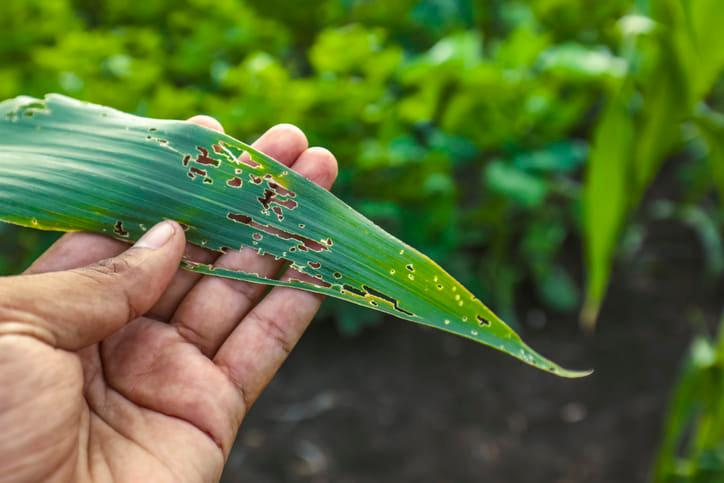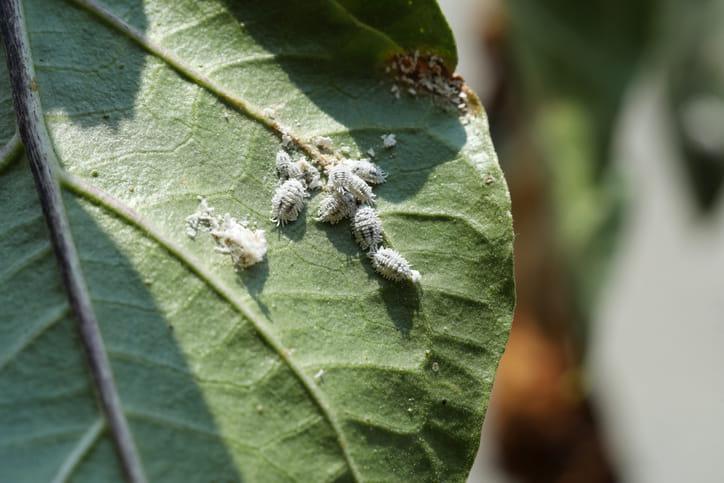
Sucking pests are small insects that pierce plant tissues and feed on the sap. Common ones include aphids, jassids (leafhoppers), thrips, mites, whiteflies, and mealybugs. They damage crops directly by weakening plants and indirectly by spreading viral diseases. A few of them can quickly become a yield-killing infestation if not managed early.
Common Sucking Pests in Indian Crops
Pest | Main Crops | Damage Symptom |
|---|---|---|
Aphids | Mustard, wheat, vegetables, pulses | Curled leaves, sticky honeydew, sooty mould |
Jassids (Leafhoppers) | Cotton, okra, brinjal, potato | Yellowing, leaf cupping, hopper burn |
Thrips | Chilli, onion, cotton, grapes, tomato | Silvery streaks, curled leaves, scarred fruit |
Whiteflies | Cotton, tomato, brinjal, pulses | Yellowing, virus spread, sticky honeydew |
Mites (red, yellow) | Chilli, brinjal, papaya, cucurbits | Bronzing of leaves, downward curling |
Mealybugs | Cotton, brinjal, papaya, ber, sugarcane | White waxy clusters, stunted growth |
How Sucking Pests Damage the Crop
- They suck plant sap and reduce vigour.
- They inject toxins or saliva that distort leaves and shoots.
- They transmit important plant viruses (whitefly transmits cotton leaf curl and chilli leaf curl).
- They secrete honeydew, which leads to black sooty mould and reduced photosynthesis.
- Heavy infestation reduces flower setting and fruit quality.
Step 1: Monitor Regularly
Walk the field at least twice a week. Inspect the under-surface of leaves, growing tips, and flower buds — sucking pests usually hide there. Install yellow sticky traps (for aphids, whiteflies, leafhoppers) and blue sticky traps (for thrips) at 10 to 12 per acre to detect outbreaks early.
Step 2: Cultural and Mechanical Practices
- Remove and destroy heavily infested leaves and shoots.
- Keep fields free of weeds that host pests (e.g., parthenium, congress grass).
- Avoid excessive nitrogen, which encourages soft, sap-rich growth.
- Use reflective mulch in nursery beds to repel whiteflies and thrips.
- Maintain proper spacing for airflow.
Step 3: Biological Control
Encourage and release natural enemies wherever possible:
- Ladybird beetles (Coccinellids) feed on aphids and mealybugs.
- Green lacewings (Chrysoperla) feed on aphids, thrips, mites, whiteflies.
- Predatory mites against pest mites in vegetables.
- Verticillium lecanii and Beauveria bassiana for sap-feeders in moist conditions.
Step 4: Botanical and Organic Sprays
- Neem oil (1500 to 10000 ppm) at 3 to 5 ml per litre.
- Neem seed kernel extract (NSKE) at 5 percent.
- Pongamia oil for mealybugs and scales.
- Soap solution (mild) for soft-bodied insects in vegetables.
These options work best at early infestation stages and can be alternated with chemical insecticides to slow resistance.
Step 5: Chemical Control (Use Only Above ETL)
When pest count crosses the economic threshold level (ETL), apply a recommended insecticide. Always read the label, follow the dose, and observe the pre-harvest interval. Common groups used (verify current registration for your crop and region):
- Neonicotinoids: Imidacloprid, Acetamiprid, Thiamethoxam — for aphids, jassids, whiteflies.
- Diafenthiuron: for whiteflies, mites, and thrips.
- Spiromesifen: for whiteflies and mites.
- Fipronil / Spinosad: for thrips in chilli and onion.
- Buprofezin: for whiteflies, mealybugs, and scales.
Do not spray the same molecule repeatedly. Rotate chemical groups every 2 to 3 sprays to delay resistance. Mites need a true miticide (acaricide) — most insecticides do not kill mites.
Step 6: Manage Whiteflies and Virus Vectors With Extra Care
Whiteflies and thrips also transmit damaging viruses (cotton leaf curl, chilli leaf curl, tomato spotted wilt). Once the virus is in the plant, no insecticide will cure it. The strategy is to reduce vector population early and remove infected plants quickly.
Safety Reminders
- Wear gloves, mask, and full sleeves while spraying.
- Spray in early morning or late afternoon when bees are less active.
- Avoid spraying during flowering wherever possible.
- Wash hands and equipment after use.
- Store and dispose of empty containers safely.
Conclusion
Sucking pests are best managed through prevention, monitoring, and a mix of cultural, biological, and chemical methods. Spraying alone — especially the same chemical again and again — usually leads to resistance and crop damage. Build an integrated pest management plan with help from your local agriculture officer or KVK and always follow label instructions on every product.