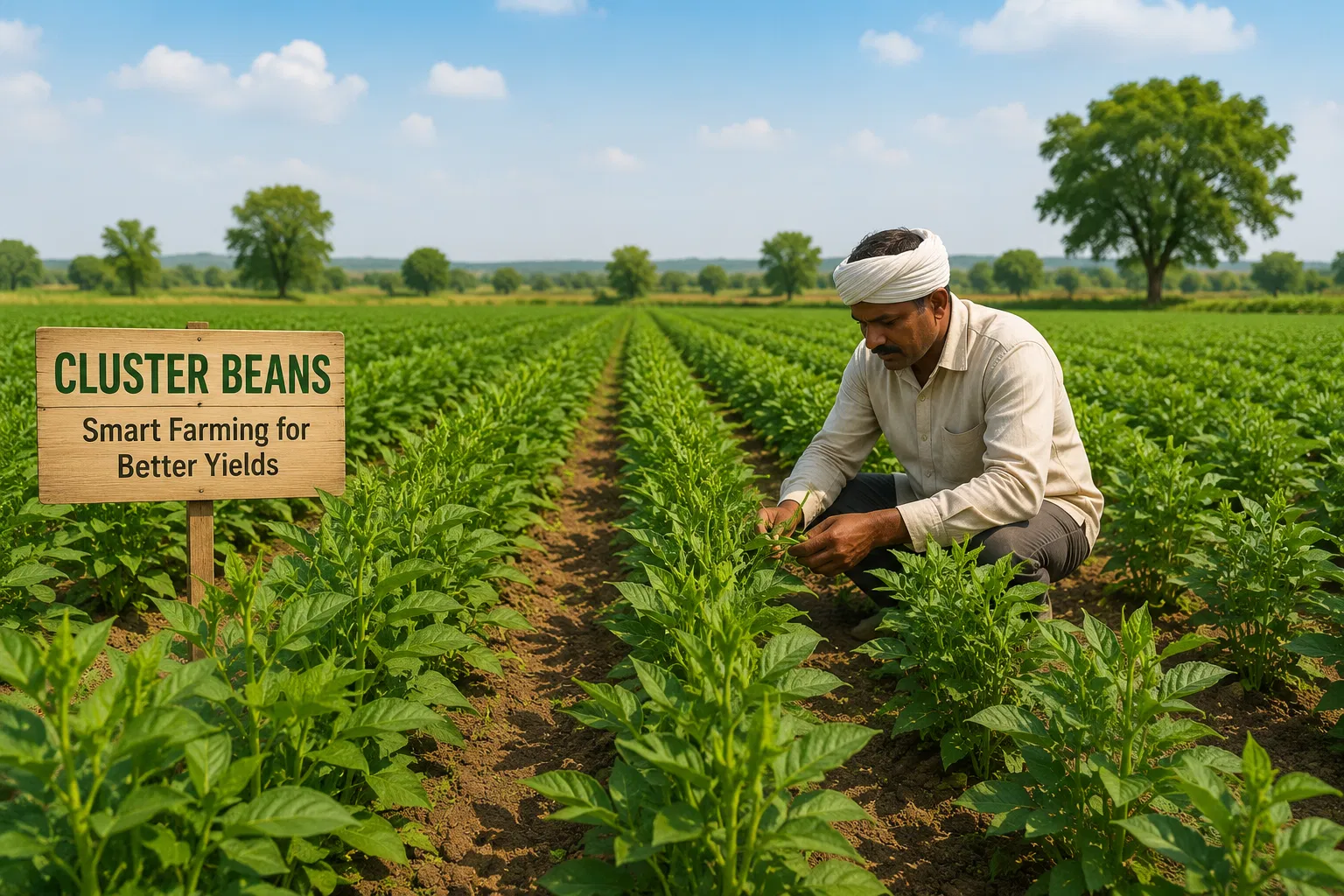
Cluster beans farming can be highly rewarding when you get the basics right. Also known as guar or guar beans, cluster beans are valued for their drought tolerance, quick growth, and strong market demand. Whether you grow them for tender pods, seed, or green manure, success depends on smart sowing practices, balanced nutrition management, and timely crop care that supports healthy pod formation and higher yield.
If you want better germination, stronger plants, and more uniform harvesting, this practical guide covers everything you need to know about cluster beans cultivation from field preparation to yield improvement.
Understanding Cluster Beans Farming
Cluster beans are a warm-season legume crop grown mainly in semi-arid and arid regions. The crop performs well in light to medium soils with good drainage and moderate fertility. Because it fixes atmospheric nitrogen through root nodules, cluster beans can improve soil health while producing a profitable harvest.
The crop is commonly grown for:
- Fresh green pods for vegetable markets
- Dry seeds for guar gum processing
- Green fodder in some farming systems
- Soil improvement as a legume crop
Ideal Climate and Soil for Cluster Beans
Cluster beans thrive in hot weather and can tolerate dry conditions better than many other vegetables. However, very high humidity and waterlogging can reduce plant health and pod quality.
Best climate conditions
- Warm growing season with plenty of sunlight
- Temperature range of 25°C to 35°C for strong growth
- Low to moderate rainfall during early growth
- Dry weather during pod development and harvest
Soil requirements
- Well-drained sandy loam or loam soil
- pH between 6.0 and 8.0
- Field free from standing water
- Moderate organic matter for better root development
Tip: Avoid heavy clay soils and poorly drained fields, as they can cause weak roots, poor nodulation, and lower yield.
Land Preparation for Better Stand Establishment
Good land preparation helps cluster bean seeds germinate evenly and supports uniform crop growth. Start by ploughing the land thoroughly to create a fine, level seedbed.
Steps for field preparation
- Remove crop residues, stones, and weeds from the field.
- Plough 2–3 times to loosen the soil.
- Level the land for proper irrigation and drainage.
- Mix well-decomposed farmyard manure or compost into the soil.
- Prepare ridges and furrows if the area receives irregular rainfall or needs controlled watering.
Applying organic matter during field preparation improves soil structure, moisture retention, and nutrient availability, all of which support healthy cluster beans farming.
Best Sowing Practices for Cluster Beans
Sowing is one of the most important stages in cluster beans cultivation. Proper sowing depth, spacing, and seed treatment directly affect plant stand and final yield.
Seed selection
Use certified, disease-free seeds with high germination percentage. Choose varieties suited to your local climate, market demand, and harvest purpose.
Seed treatment
Seed treatment helps protect seedlings from soil-borne diseases and improves root nodulation. Before sowing, treat seeds with recommended biofungicides or fungicides as advised locally. Rhizobium inoculation can also support better nitrogen fixation.
Sowing time
The best sowing time usually falls at the beginning of the warm season or with the onset of monsoon in suitable regions. Timely sowing helps the crop avoid extreme heat stress during flowering and pod development.
Sowing method
- Direct seeding is the most common method.
- Sow seeds in rows for easier weeding, irrigation, and harvesting.
- Maintain proper spacing to reduce competition and disease spread.
Spacing and depth
- Row spacing: 45–60 cm
- Plant spacing: 10–15 cm
- Sowing depth: 2–4 cm
Do not sow too deep. Deep sowing delays emergence and weakens seedlings, especially in sandy soil.
Nutrition Management for Healthy Growth and Higher Yield
Although cluster beans can fix nitrogen, they still need balanced nutrition for strong vegetative growth, flowering, and pod development. Nutrient management should focus on soil health, root development, and timely support through organic and mineral fertilizers.
Organic nutrition
Incorporating compost, farmyard manure, or vermicompost before sowing improves soil fertility and microbial activity. Organic inputs also help the soil hold moisture better, which is important in dry regions.
Key nutrients for cluster beans
- Nitrogen: supports early growth, but excess nitrogen can reduce pod setting
- Phosphorus: promotes root growth and nodulation
- Potassium: improves flowering, pod quality, and stress tolerance
- Sulfur and micronutrients: support enzyme activity and overall crop health
Balanced fertilizer approach
Apply fertilizers based on soil test results whenever possible. A soil test helps you avoid overuse of nitrogen and identifies nutrient shortages early. For best results, combine organic manures with recommended doses of fertilizers to maintain productive soil over time.
Healthy cluster beans yield starts with healthy soil. The more balanced your nutrition plan, the stronger your plants will perform during flowering and pod formation.
Foliar feeding and crop support
When plants show signs of nutrient stress, foliar sprays of micronutrients may help correct deficiencies quickly. This is especially useful during flowering, when the crop needs extra support to maintain pod set and reduce flower drop.
Irrigation Management
Cluster beans are relatively drought tolerant, but timely watering is still important for consistent yield and tender pod quality. Moisture stress during flowering and pod formation can significantly reduce production.
Critical irrigation stages
- After sowing, if soil moisture is low
- During seedling establishment
- At flowering stage
- During pod development
Avoid overwatering. Too much moisture can lead to root problems, nutrient loss, and disease development. Drip irrigation is a smart choice where available because it saves water and keeps moisture more uniform.
Weed, Pest, and Disease Control
Weeds compete strongly with young cluster bean plants, especially in the first 30–40 days after sowing. Keeping the field clean during this stage is essential for good crop establishment.
Weed management tips
- Carry out 1–2 manual weedings early in the crop cycle
- Use shallow hoeing to avoid root damage
- Mulch where suitable to suppress weed growth and conserve moisture
Common pest and disease concerns
- Leaf-eating insects
- Aphids and sap-sucking pests
- Powdery mildew in humid conditions
- Root rot in poorly drained fields
Use integrated pest management practices, including field scouting, resistant varieties, crop rotation, and need-based sprays. Early action prevents major yield loss and protects pod quality.
Flowering and Pod Development Tips
Flowering is a sensitive stage in cluster beans farming. Stress during this period often leads to flower drop and lower pod numbers. Keep the crop healthy, moist, and well-nourished before flowering begins.
How to improve pod setting
- Maintain even soil moisture
- Avoid excess nitrogen after vegetative growth
- Support plants with potassium and micronutrients
- Protect the crop from pest attack during flowering
Timely harvesting also encourages continued pod production in many vegetable-type cluster bean varieties. Pick tender pods regularly to improve marketable yield.
Harvesting and Expected Yield
Harvesting time depends on the purpose of cultivation. For green pods, harvest when pods are tender, smooth, and not fibrous. For seed production, allow pods to mature and dry on the plant before harvesting.
Harvest indicators for green pods
- Pods are tender and fleshy
- Seeds inside are not fully hardened
- Color is bright green and market-friendly
Yield tips for better returns
- Use high-quality seed and proper seed treatment.
- Sow at the right time and correct spacing.
- Keep nutrients balanced, especially phosphorus and potassium.
- Control weeds early and maintain moisture during flowering.
- Harvest pods on time to encourage more pod formation.
Yield varies by variety, season, soil fertility, and crop management. With good practices, farmers can achieve strong pod yield and better market returns.
Conclusion
Cluster beans farming becomes much more profitable when every stage is managed with care. From sowing at the right time to maintaining balanced nutrition and protecting the crop during flowering, each decision affects final yield. Focus on healthy soil, proper spacing, timely irrigation, and early weed control to grow a vigorous crop with good pod quality.
If you want better results in cluster beans cultivation, start with strong agronomy and consistent field monitoring. Small improvements in sowing and nutrition can lead to noticeably better harvests and stronger farm income.