Borer pests can silently devastate crops before visible damage even appears. By the time stems are hollowed, shoots are wilted, or fruits begin to fail, the infestation is often well established. That is why growers increasingly turn to chlorantraniliprole, a modern insecticide known for reliable borer pest control and long-lasting crop protection.
Whether you are managing rice stem borer, sugarcane borers, fruit borers, or other destructive caterpillar pests, chlorantraniliprole offers a targeted approach that helps protect yield potential while fitting into integrated pest management programs. In this article, we’ll explore how it works, why it is effective, and how it supports healthier, more productive crops.
What Is Chlorantraniliprole?
Chlorantraniliprole is a next-generation insecticide belonging to the anthranilic diamide class. It is widely valued for its strong activity against a broad range of lepidopteran pests, especially borers that attack economically important crops. Farmers and agronomists often choose it for its combination of efficacy, selectivity, and lasting residual control.
Unlike older insecticides that may act broadly and quickly lose effectiveness, chlorantraniliprole targets a specific biological pathway in insects. This makes it especially useful for managing pest pressure in a more strategic and sustainable way.
How Chlorantraniliprole Works Against Borers
Chlorantraniliprole works by disrupting calcium regulation in insect muscles. When borers ingest or come into contact with the active ingredient, their muscle function is affected, leading to reduced feeding, paralysis, and eventually death.
This mode of action is important because it:
- Stops pest feeding early
- Reduces internal plant damage
- Provides long-lasting control
- Helps protect new crop growth
Because borers often feed inside stems, fruits, or shoots, a product with strong systemic or translaminar movement can be especially valuable. Chlorantraniliprole is often preferred for its ability to reach pests that are difficult to control with contact-only solutions.
Why Borer Pests Are So Damaging
Borer pests are among the most destructive insects in agriculture because they feed hidden inside plant tissues. That makes them hard to detect early and even harder to control once damage begins.
Common signs of borer infestation include:
- Dead hearts in cereals and rice
- Frass or sawdust-like material near entry holes
- Holes in stems, fruits, or shoots
- Wilting or premature drying of plant parts
- Reduced flowering, fruiting, or grain filling
Left unchecked, borers can cause major yield losses and lower crop quality. In commercial farming, even minor infestations can affect market value and profitability. That is why early intervention is critical.
Key Benefits of Chlorantraniliprole for Borer Control
Chlorantraniliprole has become a trusted choice for many growers because it offers multiple advantages in the field.
1. Strong Efficacy on Target Pests
It delivers excellent control of many borer species and other caterpillar pests. This makes it highly useful in crops where lepidopteran damage is a recurring issue.
2. Long Residual Activity
One of the biggest strengths of chlorantraniliprole is its long residual effect. After application, it continues protecting crops for an extended period, which helps reduce reinfestation pressure.
3. Reduced Feeding Damage
Even before pests die, chlorantraniliprole quickly reduces feeding activity. This helps limit immediate crop injury and protects plant tissues from further destruction.
4. Selective Pest Management
Because it is targeted toward specific insect groups, chlorantraniliprole can be a valuable part of integrated pest management programs. It may help preserve beneficial insects when used correctly and according to label guidance.
5. Flexible Application Options
Depending on the crop and product formulation, chlorantraniliprole may be used as a foliar spray, soil treatment, seed treatment, or other application method. This flexibility makes it easier to adapt to different production systems.
Major Crops Where Chlorantraniliprole Is Used
Chlorantraniliprole is widely used across many crop types where borers and caterpillar pests pose serious threats.
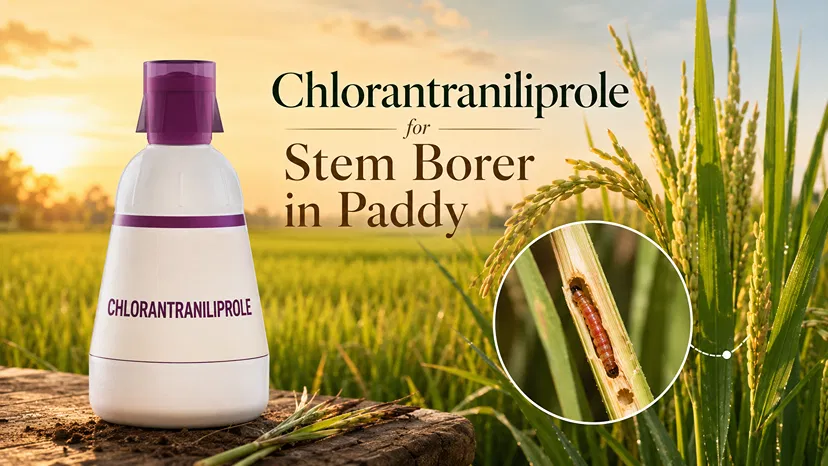
- Rice: For stem borer management and yield protection
- Sugarcane: For top borer and internode borer control
- Vegetables: For fruit borers and shoot borers in crops such as tomato, okra, and eggplant
- Fruits: For caterpillar pests that damage developing fruits and shoots
- Maize and corn: For stalk and ear-feeding borers
Its broad utility across these crops makes it an important option for growers looking to reduce pest pressure without relying on repeated broad-spectrum sprays.
Best Practices for Using Chlorantraniliprole
To get the best results from chlorantraniliprole, proper timing and application matter. Since borers often cause damage early in the infestation cycle, preventive or early-curative use is usually more effective than waiting for severe injury.
Application Tips
- Monitor crops regularly. Look for early signs of pest activity before damage spreads.
- Apply at the right stage. Use at periods when eggs hatch or young larvae begin feeding.
- Follow label instructions. Always use the recommended dosage, timing, and method for your crop.
- Ensure good coverage. Proper spray coverage improves performance, especially in dense crop canopies.
- Rotate modes of action. Avoid overusing the same insecticide class to help delay resistance.
By combining chlorantraniliprole with scouting and crop monitoring, growers can make treatment more precise and cost-effective.
Resistance Management Matters
Like all effective crop protection tools, chlorantraniliprole should be used responsibly. Repeated use without rotation can increase the risk of resistance in pest populations. For that reason, it is important to integrate it into a broader pest management strategy.
Resistance management strategies may include:
- Rotating with insecticides from different mode-of-action groups
- Using cultural controls such as field sanitation
- Encouraging natural enemies where possible
- Applying only when pest pressure justifies treatment
This balanced approach helps protect the long-term value of chlorantraniliprole and supports more sustainable agriculture.
Why Chlorantraniliprole Is a Modern Solution
Modern farming demands insect control that is effective, efficient, and compatible with evolving pest management practices. Chlorantraniliprole fits that need well because it offers targeted action, lasting protection, and strong performance against hard-to-control borer pests.
For growers dealing with repeated infestations, it can help reduce crop losses, protect marketable yield, and support more predictable harvest outcomes. In a landscape where pest pressure continues to challenge food production, having a dependable borer control tool is essential.
When borers strike, early action makes all the difference. Chlorantraniliprole gives growers a modern, proven way to protect crops before hidden pests become visible losses.
Conclusion
Chlorantraniliprole has earned its place as a modern solution for borer pests because it combines targeted control, long-lasting protection, and practical crop safety benefits. From rice and sugarcane to vegetables and fruiting crops, it helps growers defend against some of the most destructive hidden feeders in agriculture.
If you want stronger borer pest control and better protection for yield and quality, chlorantraniliprole is a smart option to consider within a well-planned integrated pest management program. Monitor early, apply correctly, and rotate wisely to keep your crops protected season after season.