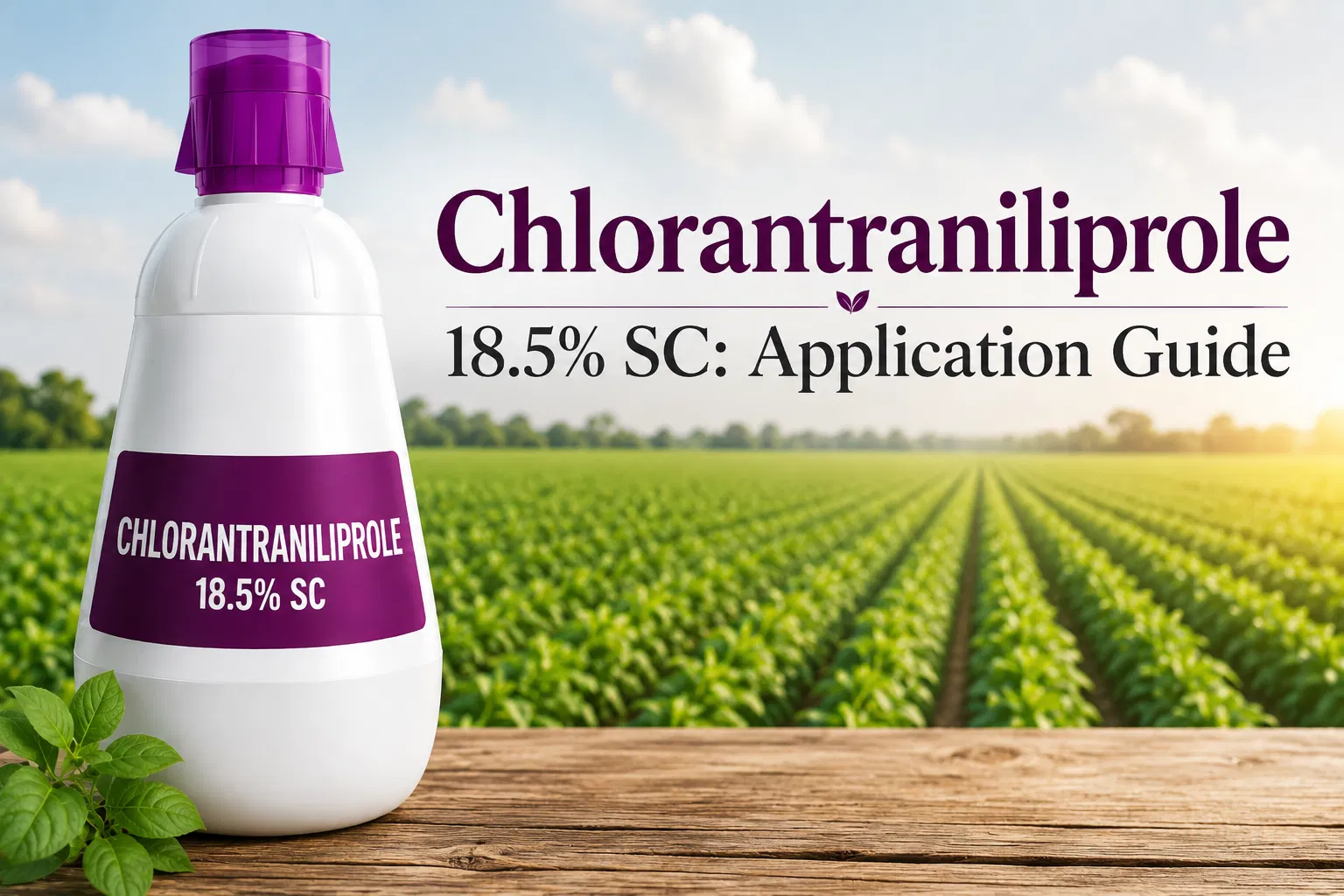
If you are looking for a powerful, targeted solution for tough chewing pests, Chlorantraniliprole 18.5% SC is one of the most effective insecticides used in modern crop protection. Known for its strong performance against caterpillars, borers, and other destructive larvae, it helps protect crop quality and yield with precise application and long-lasting control.
This guide explains how to use Chlorantraniliprole 18.5% SC correctly, when to apply it, which pests it controls, and the best practices that help you get the most from every spray.
What Is Chlorantraniliprole 18.5% SC?
Chlorantraniliprole 18.5% SC is a systemic insecticide formulated as a suspension concentrate. It belongs to the anthranilic diamide group and is widely used to control a broad range of lepidopteran pests, especially those that damage vegetables, fruits, cotton, and field crops.
It works by affecting the insect’s muscles, causing feeding to stop quickly, followed by paralysis and death. Because it is highly effective at low doses, it has become a preferred pest management tool in many integrated crop protection programs.
Key Benefits of Chlorantraniliprole 18.5% SC
Farmers and growers choose Chlorantraniliprole 18.5% SC for several practical reasons:
- Fast feeding cessation: pests stop damaging crops soon after exposure.
- Long residual activity: protection lasts longer than many conventional insecticides.
- Effective on hard-to-control pests: especially caterpillars, borers, and fruit worms.
- Low application rate: effective at relatively small doses.
- Flexible crop use: suitable for several vegetables, fruits, and commercial crops.
Its performance is especially valuable when pest pressure is high and crop damage can quickly become irreversible.
Pests Controlled by Chlorantraniliprole 18.5% SC
This insecticide is mainly used against pests that chew through leaves, stems, fruits, and growing points. Common target pests include:
- Fruit borers
- Stem borers
- Leaf folders
- Bud worms
- Armyworms
- Cutworms
- Helicoverpa species
- Diamondback moth larvae
Because it is highly effective against larval stages, early intervention gives the best results.
How Chlorantraniliprole 18.5% SC Works
Chlorantraniliprole acts on insect muscle function by targeting ryanodine receptors. This disrupts calcium release in muscle cells, causing the pest to stop feeding almost immediately. Over time, the insect becomes immobile and dies.
One of the biggest advantages of this mode of action is that crop damage is reduced quickly, even before visible pest death occurs.
This makes it especially useful when protecting high-value crops where every day of damage affects yield and market quality.
Application Guide for Best Results
1. Apply at the Right Pest Stage
The best time to use Chlorantraniliprole 18.5% SC is when pests are in their early larval stage. Young larvae are more vulnerable and easier to control than mature caterpillars or borers already deep inside plant tissue.
Regular field scouting is essential. Do not wait until heavy infestation has already caused major crop injury.
2. Follow the Recommended Dose
Always use the label-recommended dosage for the specific crop and pest target. Application rates may vary depending on crop type, pest pressure, and local guidelines. Overuse does not improve results and may lead to unnecessary cost and resistance pressure.
For accurate application:
- Measure product carefully
- Mix in the correct water volume
- Use calibrated spray equipment
- Avoid guesswork in the field
3. Ensure Proper Spray Coverage
Good coverage is critical, especially for pests feeding on undersides of leaves, fruit clusters, or hidden plant parts. Use enough water volume to reach the target area thoroughly.
For better coverage:
- Use fine to medium spray droplets as recommended
- Maintain proper nozzle selection and pressure
- Spray during calm weather to reduce drift
- Cover both upper and lower plant surfaces where needed
4. Time the Application Correctly
Spray in the early morning or late afternoon when temperatures are moderate and wind conditions are favorable. This helps improve deposition and reduces evaporation loss.
Avoid spraying during:
- Strong winds
- Extreme heat
- Expected rainfall shortly after application
Rainfastness improves after proper drying, but heavy rain immediately after spraying can reduce performance.
5. Rotate with Other Insecticide Modes of Action
Resistance management is essential for long-term effectiveness. Chlorantraniliprole should be rotated with insecticides from different mode-of-action groups, especially if the same pests appear repeatedly.
Using the same product too often can encourage resistance and reduce control over time. Integrated pest management practices should always support chemical control.
Best Practices Before and After Spraying
To maximize results, combine Chlorantraniliprole 18.5% SC with good crop management practices:
- Scout fields regularly for pest eggs, larvae, and early damage.
- Remove heavily infested plant parts where practical.
- Use crop rotation to reduce pest build-up.
- Maintain field sanitation to limit breeding sites.
- Follow pre-harvest intervals and local label instructions.
These steps improve insecticide performance and support healthier crops throughout the season.
Safety and Handling Precautions
Although Chlorantraniliprole 18.5% SC is valued for its selectivity and crop protection benefits, safe handling is still important. Always read the product label before use and follow all directions carefully.
Basic safety measures include:
- Wear protective clothing, gloves, and eye protection
- Avoid inhaling spray mist
- Do not eat, drink, or smoke during application
- Wash hands and exposed skin after use
- Store the product in a cool, dry place away from children and animals
If local regulations require specific re-entry intervals or harvest intervals, follow them strictly.
Common Mistakes to Avoid
Even a strong product can underperform if used incorrectly. Avoid these common mistakes:
- Spraying too late after pest damage has already spread
- Using the wrong dose for the crop or pest
- Poor coverage due to faulty equipment
- Repeated use without rotation
- Ignoring label instructions and safety precautions
Correct application is just as important as product selection.
Why Growers Trust Chlorantraniliprole 18.5% SC
Growers value this insecticide because it combines effective pest control with convenience and crop safety. It helps protect yield, reduce visible damage, and support marketable produce quality.
When used correctly, Chlorantraniliprole 18.5% SC becomes an important part of a smart pest management program, especially in crops vulnerable to caterpillars and borers.
Conclusion
Chlorantraniliprole 18.5% SC is a reliable, high-performance insecticide for controlling destructive chewing pests in many crops. For the best results, apply it early, use the correct dose, ensure complete spray coverage, and rotate it with other insecticide groups to prevent resistance.
When paired with regular scouting and strong field practices, it can help protect crop health, improve yield, and reduce unnecessary pest losses. For any application, always follow the product label and local agricultural recommendations for safe, effective use.