Choosing the right cattle milking machine can make a major difference in milk yield, labor efficiency, animal comfort, and overall farm profitability. For dairy farmers, the decision often comes down to one big question: should you use a manual milking machine or invest in an automatic milking machine?
Both options have clear benefits, and both can be the right choice depending on the size of your herd, budget, and long-term goals. In this guide, we’ll compare manual vs automatic cattle milking machines in a practical way so you can choose the best system for your dairy operation.
What Is a Cattle Milking Machine?
A cattle milking machine is a device designed to extract milk from cows efficiently and hygienically. It replaces or reduces hand milking by using suction, vacuum pressure, and collection units to gather milk safely and quickly.
Modern dairy farms use milking machines to improve consistency, reduce labor, and maintain better hygiene. The two main types are:
- Manual milking machines – operated with more human control and basic features
- Automatic milking machines – equipped with advanced automation for faster and more consistent milking
Manual Cattle Milking Machine: How It Works
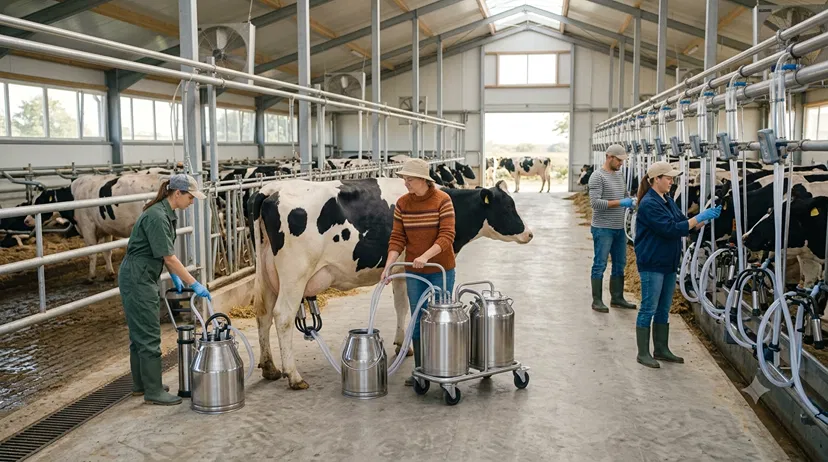
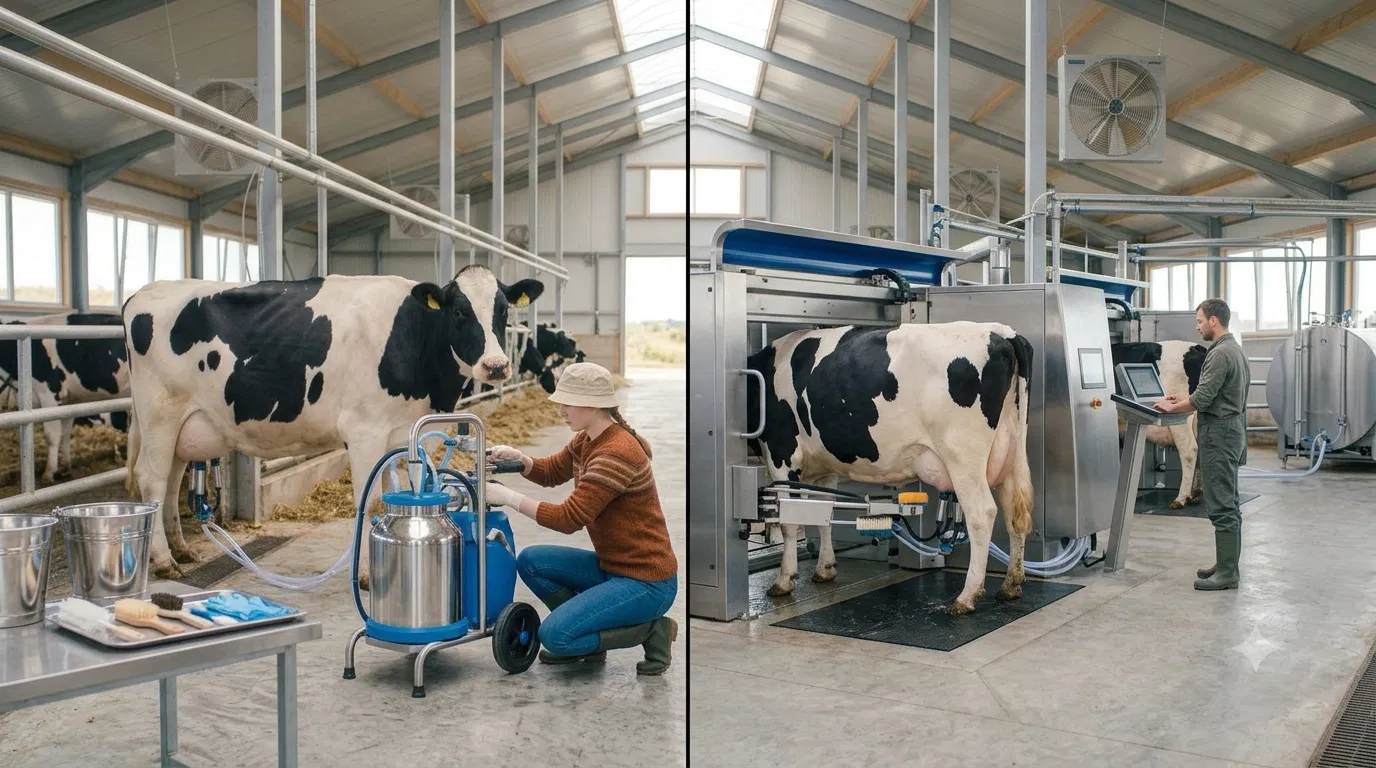
A manual milking machine usually requires an operator to start, monitor, and sometimes adjust the milking process. It still uses suction and vacuum pressure, but the system is simpler and more hands-on compared to automated models.
These machines are often used on small farms or by farmers who want a more affordable and straightforward solution. They are typically easier to install and may require less technical knowledge to operate.
Advantages of Manual Milking Machines
- Lower upfront cost – ideal for farmers with limited budgets
- Simpler design – easier to understand and maintain
- Better for small herds – suitable for low-volume dairy operations
- Less dependency on technology – fewer electronic components to troubleshoot
Disadvantages of Manual Milking Machines
- More labor required – operators must be present throughout the milking process
- Slower operation – takes more time to milk larger herds
- Less consistency – performance may vary depending on the operator
- Limited scalability – not always practical for expanding dairy farms
Automatic Cattle Milking Machine: How It Works
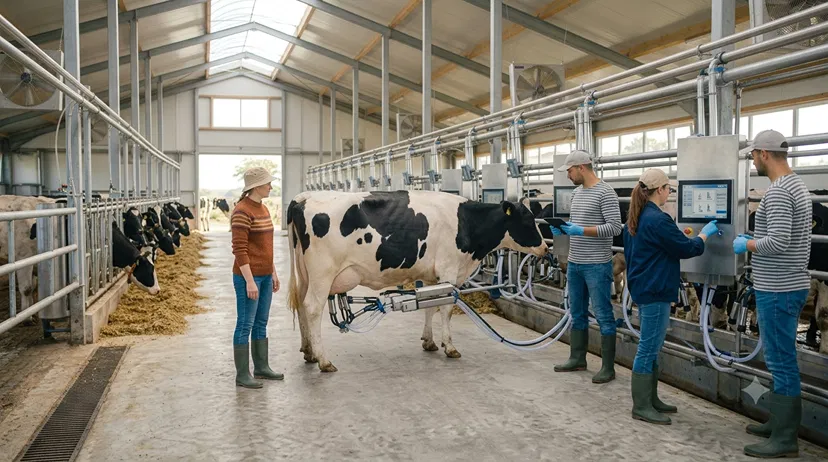
An automatic cattle milking machine uses advanced sensors, controls, and sometimes robotic systems to handle much of the milking process with minimal human involvement. These systems can detect milk flow, control suction, and in some cases automatically detach when milking is complete.
Automatic milking systems are designed for efficiency, precision, and convenience. They are commonly found on medium to large dairy farms where speed and productivity matter most.
Advantages of Automatic Milking Machines
- High efficiency – milk more cows in less time
- Reduced labor costs – fewer workers needed for milking tasks
- Consistent milking performance – automated systems maintain uniform settings
- Improved herd management – some systems track milk output and cow health
- Better scalability – suitable for growing dairy businesses
Disadvantages of Automatic Milking Machines
- Higher initial investment – can be expensive to purchase and install
- More complex maintenance – may require specialized servicing
- Training needed – staff must understand how to operate the system
- Technology dependence – breakdowns can disrupt milking schedules
Manual vs Automatic Cattle Milking Machine: Key Differences
When comparing a manual and automatic cattle milking machine, the biggest differences usually come down to cost, labor, speed, and farm size.
1. Cost
Manual machines are generally more affordable upfront. Automatic systems cost more, but they may save money over time through reduced labor and increased efficiency.
2. Labor Requirement
Manual systems need more human involvement, while automatic machines reduce the number of workers needed during milking.
3. Milking Speed
Automatic machines are faster and better suited for larger herds. Manual machines are slower but can still be effective for smaller operations.
4. Ease of Use
Manual machines are usually simpler to operate. Automatic systems offer convenience, but they often require training and proper setup.
5. Long-Term Productivity
Automatic milking machines often provide better long-term productivity for farms planning to expand. Manual machines may be enough for farms that want to stay small and control costs.
Which Cattle Milking Machine Is Best for Small Farms?
For small dairy farms, a manual cattle milking machine is often the more practical choice. It is affordable, easy to maintain, and well-suited to limited herd sizes. If the farm does not handle a high milk volume, the extra cost of automation may not be necessary.
However, if a small farm is planning rapid growth or struggles with labor shortages, an automatic system may be worth considering despite the higher upfront cost.
Which Is Better for Large Dairy Operations?
For large dairy farms, an automatic cattle milking machine is usually the better investment. Large herds demand speed, efficiency, and consistency. Automation helps reduce labor pressure and ensures cows are milked on time with minimal delay.
In larger operations, the return on investment often becomes more visible over time through:
- Lower labor expenses
- Higher daily output
- Better milk quality control
- Improved workflow management
Animal Comfort and Milk Quality
Both manual and automatic cattle milking machines can support good milk quality if used correctly. The real difference lies in consistency and handling. Automatic systems are often better at maintaining stable suction and timing, which can help reduce stress on cows and improve milking precision.
Tip: The best milking machine is not just the one with the most features. It is the one that matches your herd size, supports cow comfort, and fits your daily workflow.
Still, manual machines can also perform well when operated carefully and cleaned properly. Hygiene, routine maintenance, and correct milking procedures matter just as much as the machine type.
Maintenance and Durability
Manual cattle milking machines are typically easier to maintain because they have fewer complex components. This makes them attractive for farmers who want lower repair costs and simpler troubleshooting.
Automatic systems, while more advanced, may need regular servicing and technical support. Their durability can be excellent, but only when maintained properly and used according to manufacturer guidelines.
To keep any cattle milking machine in top condition:
- Clean all parts after every milking session
- Inspect suction lines and seals regularly
- Replace worn-out components on time
- Follow the recommended maintenance schedule
- Train workers to use the machine correctly
How to Choose the Right Cattle Milking Machine
Before choosing between manual and automatic, ask these important questions:
- How many cows do you milk daily?
- What is your available budget?
- How much labor do you have on hand?
- Do you plan to expand your farm?
- How important is speed and automation to your operation?
If your herd is small and your budget is tight, a manual machine may be the smartest option. If you manage a larger herd and want to save time and labor, an automatic machine is likely the better long-term solution.
Final Verdict: Manual vs Automatic Cattle Milking Machine
There is no one-size-fits-all answer. A manual cattle milking machine is best for farmers who need affordability, simplicity, and lower maintenance. An automatic cattle milking machine is better for farms that value efficiency, scalability, and reduced labor dependence.
The right choice depends on your farm’s current needs and future plans. If you want a low-cost, easy-to-manage solution, go manual. If you want to boost productivity and modernize your dairy operation, go automatic.
Choose the cattle milking machine that helps you work smarter, protect your herd, and grow your dairy business with confidence.