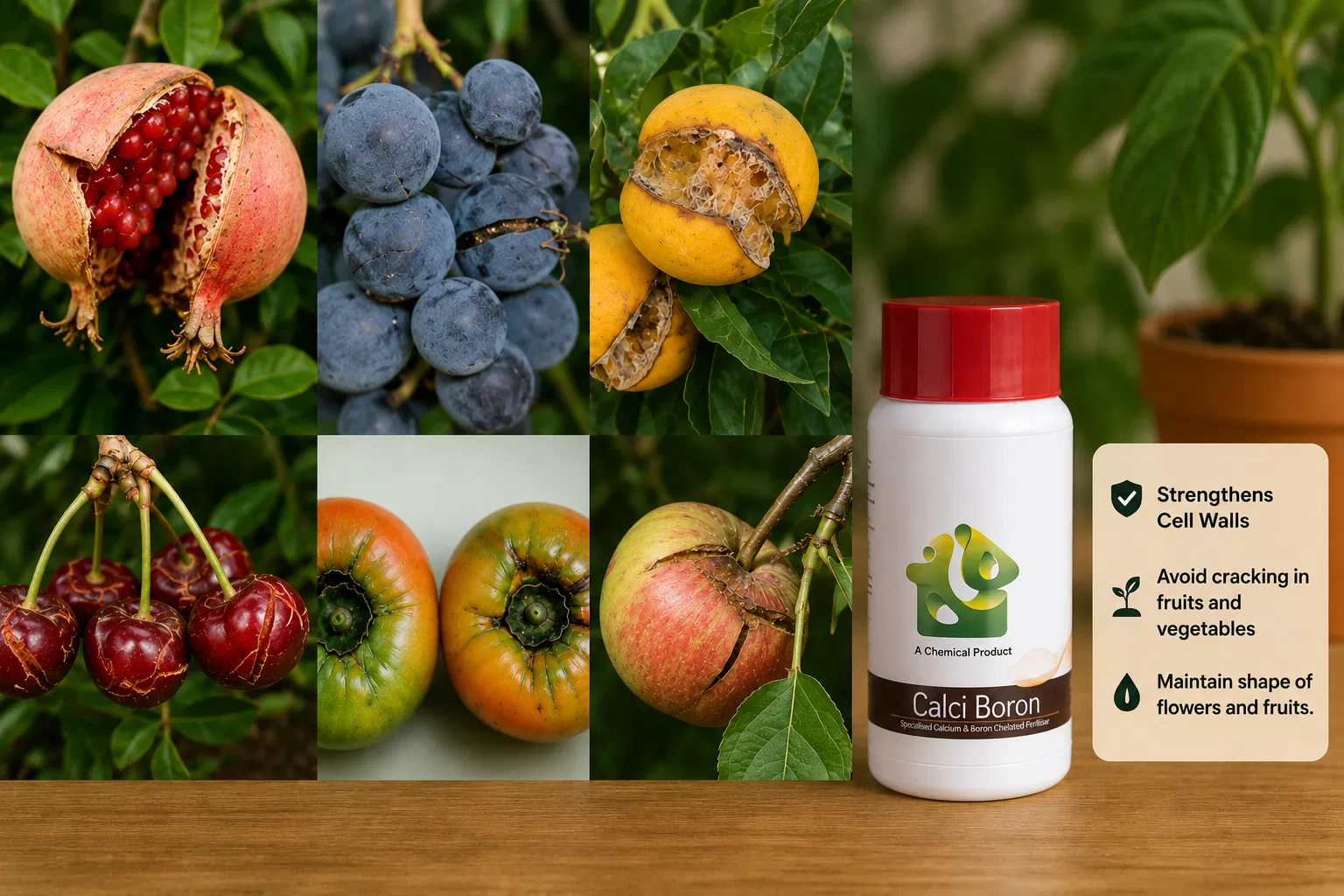
Fruit cracking can turn a promising harvest into a frustrating loss overnight. One day the fruit looks nearly ready for market, and the next it splits, spoils faster, and loses value. If you grow cherries, tomatoes, pomegranates, citrus, grapes, or other crack-prone crops, calcium and boron sprays for fruit cracking control can be a practical part of your management strategy.
These two nutrients help strengthen plant tissues, support cell wall formation, and improve fruit development during critical growth stages. Used correctly, foliar sprays can reduce cracking risk, but timing, coverage, and crop-specific management matter just as much as the product itself.
Why Fruit Cracking Happens
Fruit cracking is usually caused by rapid changes in fruit growth and water balance. When fruit absorbs water too quickly after rain or irrigation, internal pressure can exceed the skin’s ability to stretch. Thin skins, weak cell walls, and nutrient imbalances make the problem worse.
Common causes include:
- Sudden heavy rainfall or over-irrigation
- Irregular watering schedules
- High humidity followed by rapid moisture uptake
- Rapid fruit enlargement near harvest
- Calcium deficiency in fruit tissue
- Boron deficiency affecting cell structure and nutrient movement
That is why growers often look at calcium and boron sprays for fruit cracking control as part of a broader fruit quality program, not as a standalone fix.
How Calcium Helps Prevent Fruit Cracking
Calcium is essential for building strong cell walls and improving tissue firmness. In fruit crops, adequate calcium can help create more resilient skin and flesh, which may lower the likelihood of cracking under stress.
Key benefits of calcium sprays include:
- Strengthening cell walls
- Improving fruit firmness
- Supporting skin elasticity and structural integrity
- Reducing postharvest softening in some crops
Calcium moves poorly within the plant, especially into fruit. That is why foliar application is often used to supplement soil supply during periods when fruit demand is high.
How Boron Supports Fruit Quality
Boron works closely with calcium by helping with cell wall formation, membrane function, sugar movement, and reproductive growth. While calcium builds structure, boron helps transport and organize the materials needed for healthy fruit development.
Why boron matters for cracking control:
- Supports cell wall development
- Improves flower and fruit set
- Assists nutrient transport
- Helps fruit develop more uniformly
Boron is needed in very small amounts, and the margin between deficiency and excess is narrow. That makes soil testing and careful spray management especially important.
Why Calcium and Boron Work Better Together
Calcium and boron sprays for fruit cracking control are often used together because the two nutrients complement each other. Calcium improves structural strength, while boron helps coordinate development and movement of sugars and other compounds into the fruit.
When both are balanced, the fruit may develop with stronger tissue, better elasticity, and improved resilience during stress periods. However, the combination must be used correctly. Too much of either nutrient, or poor timing, can limit effectiveness or even cause phytotoxicity in sensitive crops.
Best Crops for Calcium and Boron Sprays
These sprays are commonly used in crops that are especially prone to cracking, including:
- Cherries
- Sweet and tart cherries
- Tomatoes
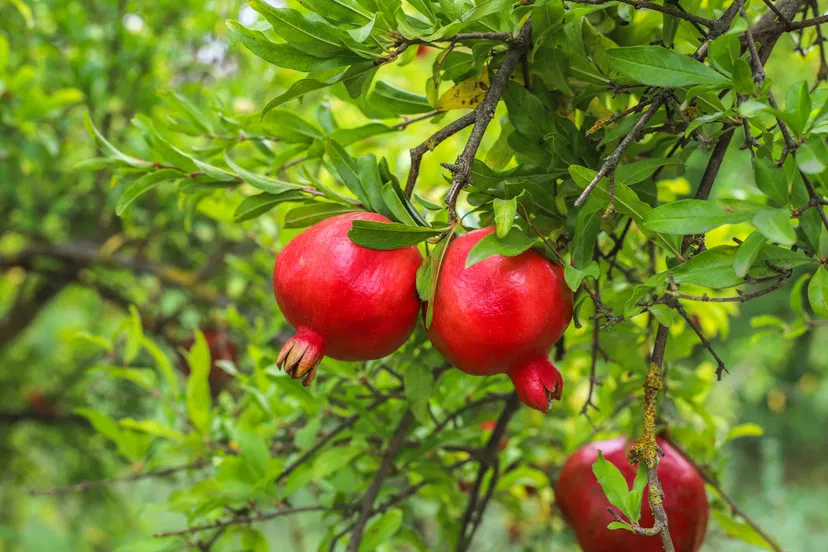
- Pomegranates
- Grapes
- Apples
- Peaches
- Plums
- Citrus in some conditions
Crop response depends on variety, climate, irrigation pattern, and fruit maturity. Some cultivars crack easily even with good nutrition, while others are naturally more tolerant.
When to Apply Calcium and Boron Sprays
Timing is one of the most important parts of any fruit cracking prevention program. Foliar sprays are generally most useful before cracking begins, during periods of active fruit enlargement, and when the fruit is vulnerable to moisture swings.
Common spray timing windows
- Early fruit development after fruit set
- During rapid cell expansion
- Several applications leading up to harvest
- After heavy rain periods, if crop and label guidance allow
For best results, applications should be planned before the critical cracking stage. Once fruit has already started splitting, sprays cannot reverse the damage.
How to Apply Foliar Sprays Correctly
Successful foliar nutrition depends on even coverage, proper concentration, and favorable spray conditions. Since fruit surface absorption is limited, every detail counts.
- Follow label directions carefully for crop, rate, and interval.
- Spray during cool parts of the day to reduce burn risk.
- Ensure thorough coverage of fruit surfaces.
- Avoid mixing incompatible products without confirming tank-mix compatibility.
- Test on a small area first if the crop is known to be sensitive.
Best practices include:
- Use clean water with appropriate pH
- Maintain consistent spray intervals
- Do not exceed recommended concentrations
- Use surfactants only if compatible and label-approved
Limitations of Calcium and Boron Sprays
Although calcium and boron sprays for fruit cracking control can be helpful, they are not a complete solution. Cracking is often driven by weather and water management, which means nutrition alone cannot solve the problem.
Sprays may be less effective when:
- Rainfall is extreme and sudden
- Irrigation is poorly managed
- Fruit skin is genetically prone to splitting
- Sprays are applied too late
- Calcium uptake is blocked by competing nutrients or stress
Foliar nutrients work best as part of an integrated fruit quality strategy that includes irrigation control, canopy management, and variety selection.
Additional Strategies to Reduce Fruit Cracking
To get the most from calcium and boron sprays, combine them with good orchard or field management practices.
- Maintain even soil moisture: Avoid long dry periods followed by heavy watering.
- Use mulch or ground cover: These can help stabilize moisture levels.
- Improve drainage: Excess water around roots can increase cracking pressure.
- Choose tolerant varieties: Genetic resistance can make a major difference.
- Manage canopy density: Better airflow can reduce stress and improve spray coverage.
- Monitor nutrient balance: Excess nitrogen can lead to softer tissues and more cracking in some crops.
Signs You May Need a Nutrient Review
If cracking keeps happening year after year, it may be a sign that the crop needs a broader nutritional assessment. Look for symptoms such as poor fruit firmness, weak set, uneven sizing, or visible deficiency symptoms in leaves and fruit.
A soil test, tissue analysis, and crop-specific nutrient plan can help determine whether calcium, boron, or other nutrients are limiting fruit quality. In many cases, the best results come from correcting the entire nutrient balance rather than chasing a single symptom.
Conclusion
Calcium and boron sprays for fruit cracking control can play an important role in protecting fruit quality, especially when used early and consistently. Calcium strengthens tissue, boron supports development, and together they can help fruit withstand stress better. Still, sprays work best when paired with smart irrigation, good variety selection, and sound field management.
If fruit cracking is cutting into your yield or marketability, start with a review of your nutrition program and spray timing. A well-planned calcium and boron strategy may be the difference between damaged fruit and a clean, profitable harvest.