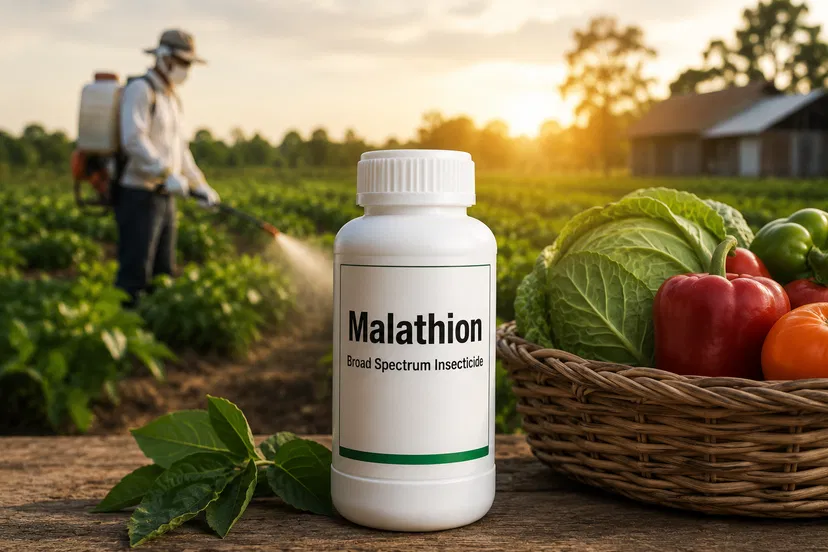
Broad-spectrum insecticides control several insect groups rather than one narrow target. They can provide rapid suppression during serious outbreaks, but they can also kill pollinators, predators, parasitoids, and other organisms that naturally protect the crop.
The decision to use broad-spectrum insecticides should be based on scouting, economic thresholds, crop stage, pest diversity, available selective options, and resistance history. They are tools for specific situations, not routine insurance sprays.
What Does Broad Spectrum Mean?
A broad-spectrum active ingredient affects multiple insect orders or feeding groups. It may control caterpillars, beetles, bugs, aphids, whiteflies, or other pests depending on the label.
Broad spectrum does not mean that the product controls every insect, mite, or disease. It also does not mean that it is stronger than a selective product against a particular target.
Potential Advantages
- Control of several confirmed pests in one application
- Rapid knockdown during a severe outbreak
- Useful emergency action when crop loss is imminent
- Simplified treatment when mixed pest populations exceed thresholds
- Possible reduction in the number of separate sprays
Major Risks
Loss of natural enemies
Predatory insects, spiders, parasitoid wasps, and beneficial bugs can be highly sensitive. Their loss may allow secondary pests to multiply after the initial spray.
Pollinator harm
Some products are hazardous to bees and other pollinators. Spraying during flowering or active foraging can cause direct mortality and residue exposure.
Resistance selection
A broad-spectrum product may expose several pest species to the same mode of action. Repeated use can select resistant populations quickly.
Residue and environmental concerns
Off-target drift, runoff, contaminated water, and incorrect pre-harvest timing can create food-safety and environmental problems.
When Broad-Spectrum Use May Be Justified
- Several damaging pest species are simultaneously above threshold.
- The crop is at immediate risk of serious economic loss.
- No effective selective product is available.
- The labelled pre-harvest interval can be met.
- Pollinator exposure can be avoided.
- The mode of action fits the resistance plan.
Document the pest counts and reason for treatment. This helps evaluate whether the application was necessary and effective.
When to Avoid Broad-Spectrum Products
- Pest numbers are below the economic threshold.
- Natural enemies are already suppressing the population.
- The crop is flowering and pollinators are active.
- Only one easily targeted pest is present.
- A selective biological or chemical option is available.
- The crop is too close to harvest.
- The same mode of action was recently used.
Secondary Pest Outbreaks
A broad spray may control the primary pest while removing predators that suppress mites, aphids, whiteflies, or mealybugs. These secondary pests can then increase rapidly.
This pattern is common in intensive crops such as cotton, where natural enemies play an important role in regulating sucking pests and caterpillars.
Role in Integrated Pest Management
Integrated crop protection uses preventive agronomy, resistant varieties, monitoring, biological control, traps, sanitation, and selective products before disruptive broad-spectrum treatments.
A broad-spectrum spray should usually be a response to verified risk rather than a fixed calendar event.
How to Reduce Harm When Use Is Necessary
- Choose the least disruptive labelled option.
- Treat only the affected field or area when allowed.
- Apply when pollinators are not active.
- Avoid drift into flowering weeds and field borders.
- Use the exact label rate.
- Do not repeat the same mode-of-action group.
- Re-scout after treatment before deciding on another spray.
Application Quality
Calibrate sprayers before use. Incorrect pressure, worn nozzles, excessive speed, or poor canopy penetration can reduce control and increase drift.
Use the labelled water volume and droplet range. More water or pressure is not automatically better.
Adjuvant Decisions
Use adjuvants only when specifically recommended. Adding a penetrant or spreader without guidance may increase crop injury or off-target exposure.
Resistance Management
- Track the mode-of-action group for every spray.
- Rotate to a different effective group.
- Use the labelled rate and timing.
- Target the most susceptible life stage.
- Combine chemical control with non-chemical measures.
- Avoid repeated rescue sprays caused by poor coverage.
Selective Alternatives
Depending on the pest and crop, alternatives may include microbial insecticides, insect growth regulators, oils, soaps, pheromone traps, biological control agents, exclusion nets, sanitation, or pest-specific active ingredients.
Selective does not mean harmless, so every product still requires label compliance and protection of workers and the environment.
Questions to Ask Before Spraying
- Which pest species are present?
- Are they above threshold?
- Which beneficial insects are active?
- Is the crop flowering?
- Is a selective option available?
- What mode of action was used recently?
- Can harvest and re-entry intervals be met?
Final Thoughts
Broad-spectrum insecticides can protect a crop during severe, complex outbreaks, but their wide activity also creates ecological and resistance risks. They should not replace scouting, thresholds, selective control, or biological protection.
Use them only when the expected benefit clearly exceeds the disruption. Careful product choice, targeted application, resistance rotation, and protection of pollinators and natural enemies make control more reliable over the long term.