Yellowing leaves on brinjal plants can be alarming, especially when healthy growth suddenly starts to fade. The cause is often either a nutrient deficiency or pest damage, and the symptoms can look very similar at first. The good news is that once you know what to look for, diagnosing the problem becomes much easier.
If your brinjal leaves are turning yellow, the key is to observe the pattern, the location of the yellowing, and any extra signs such as holes, curling, spots, or sticky residue. Those clues will help you decide whether your plant needs feeding, pest control, or both.
Why Brinjal Leaves Turn Yellow
Yellow leaves in brinjal, also known as eggplant, usually point to stress. The plant may be struggling to absorb essential nutrients, or insects may be feeding on the leaves and weakening the plant. Sometimes the issue is environmental, but nutrient and pest problems are the most common causes.
Healthy brinjal plants need consistent nutrients, good sunlight, adequate watering, and protection from common pests. When one of these factors is off, leaf color often changes first.
Signs of Nutrient Deficiency in Brinjal
Nutrient deficiencies usually create a more uniform and predictable type of yellowing. The leaves may lose color gradually, and the plant may look pale rather than damaged.
Nitrogen Deficiency
Nitrogen deficiency is one of the most common reasons for brinjal yellow leaves. It usually starts with older leaves turning yellow first because the plant moves nitrogen to newer growth.
- Older leaves yellow before younger ones
- Overall plant growth becomes weak or stunted
- Leaves may look pale green before turning yellow
- Fruit production may drop
If the entire plant looks light green and growth is slow, nitrogen deficiency is a strong possibility.
Iron Deficiency
Iron deficiency usually appears on younger leaves first. The leaf veins may stay green while the tissue between them turns yellow, creating a distinct pattern called interveinal chlorosis.
- Yellowing starts on new growth
- Leaf veins remain green
- Leaves may appear thin or weak
This often happens when soil pH is too high or roots cannot absorb iron properly.
Magnesium Deficiency
Magnesium deficiency typically affects older leaves and causes yellowing between the veins. In advanced cases, leaf edges may curl or develop brown patches.
- Older leaves show yellow areas between veins
- Veins stay green longer
- Yellowing may progress to browning
Potassium Deficiency
Potassium deficiency can cause yellowing along the leaf edges, followed by scorching or browning. This is often seen when the plant is under stress from heavy fruiting or poor soil fertility.
- Yellowing starts at leaf margins
- Edges may turn brown and dry
- Plants may produce smaller fruits
Signs of Pest Damage on Brinjal Leaves
Pest damage often looks less uniform than nutrient deficiency. Instead of simple yellowing, you may notice spots, holes, curled leaves, or discoloration caused by insects feeding on the sap or tissue.
Aphids
Aphids are tiny sap-sucking insects that can cause brinjal leaves to yellow and curl. They usually gather on the undersides of leaves and on tender new growth.
- Leaves curl or distort
- Sticky honeydew may appear on leaves
- Ants may be present around the plant
- New growth may look weak or crumpled
Whiteflies
Whiteflies also suck sap from leaves and can cause yellowing, wilting, and reduced vigor. When disturbed, tiny white insects may flutter off the plant.
- Leaves yellow gradually
- Undersides of leaves may have small white insects
- Sticky residue may collect on nearby leaves
Spider Mites
Spider mites are a common cause of yellow speckling on brinjal leaves. Their feeding leaves tiny dots that can merge into a dull yellow or bronze appearance.
- Fine yellow speckles appear on leaves
- Leaves may look dusty or bronzed
- Fine webbing may appear, especially in dry weather
Flea Beetles
Flea beetles usually create small holes in leaves, but severe feeding can also make leaves look yellow or weakened. Young seedlings are especially vulnerable.
- Small round holes in leaves
- Leaf surfaces may look shot with tiny marks
- Plants may grow slowly after repeated damage
How to Tell the Difference Quickly
The easiest way to distinguish nutrient deficiency from pest damage is to inspect the pattern and location of the yellowing.
- Check the age of the affected leaves. Older leaves usually point to nitrogen, magnesium, or potassium deficiency. Younger leaves often suggest iron deficiency or pest feeding on new growth.
- Look at the yellowing pattern. Uniform yellowing usually indicates nutrient stress. Speckles, holes, curling, or distorted growth often indicate pests.
- Inspect the undersides of leaves. Many pests hide there, including aphids, whiteflies, and mites.
- Watch for sticky residue or webbing. Honeydew and webbing are strong signs of pest activity.
- Check the whole plant. If the plant is pale overall, the issue may be feeding-related. If only certain leaves are damaged, pests are more likely.
Quick rule: Nutrient deficiency usually causes consistent yellowing, while pest damage usually causes visible physical injury or uneven leaf spotting.
What to Do If It Is a Nutrient Deficiency
If the problem is nutrient deficiency, correcting soil nutrition can restore healthy growth. Brinjal is a heavy feeder, so regular feeding is important throughout the growing season.
- Apply a balanced fertilizer suitable for fruiting vegetables
- Add compost or well-rotted manure to improve soil fertility
- Use nitrogen-rich feed if older leaves are pale and growth is weak
- Correct iron issues by checking soil pH and using chelated iron if needed
- Water consistently so roots can absorb nutrients properly
Avoid overfertilizing, especially with nitrogen, because too much can encourage leafy growth at the expense of fruiting.
What to Do If It Is Pest Damage
If pests are the cause, early action is important. Small infestations are much easier to control than severe outbreaks.
- Remove heavily infested leaves if needed
- Spray insecticidal soap or neem oil on affected areas
- Rinse off aphids and whiteflies with a strong stream of water
- Check plants regularly, especially new leaves and undersides
- Use yellow sticky traps for whiteflies and other flying insects
Encouraging beneficial insects such as ladybugs can also help reduce aphids naturally.
Preventing Yellow Leaves in Brinjal
Prevention is always better than recovery. A healthy growing environment reduces the chance of both nutrient deficiencies and pest outbreaks.
- Plant brinjal in fertile, well-drained soil
- Feed regularly with compost or vegetable fertilizer
- Mulch around plants to conserve moisture and stabilize soil conditions
- Water deeply and consistently
- Inspect plants weekly for early pest signs
- Avoid overcrowding to improve airflow
Healthy, vigorous brinjal plants are much better at resisting stress and recovering from minor damage.
When Yellow Leaves Are a Bigger Problem
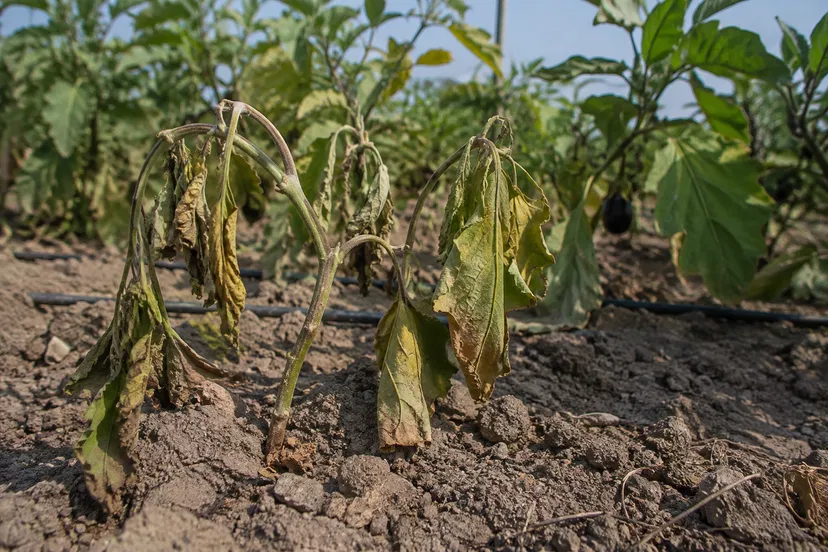
Sometimes yellow leaves signal more than a simple feeding or pest issue. If the plant continues declining even after treatment, the problem may involve root damage, poor drainage, disease, or severe environmental stress.
Watch for these warning signs:
- Rapid wilting despite watering
- Blackened stems or roots
- Leaf drop across the entire plant
- No new healthy growth after treatment
- Fruit that stays small or fails to develop
Conclusion
Brinjal yellow leaves can be caused by nutrient deficiency or pest damage, but the symptoms usually tell the story if you look closely. Uniform yellowing, especially on older or younger leaves in a predictable pattern, often points to a nutrient issue. Yellow speckles, curling, holes, sticky residue, or webbing usually indicate pests.
By checking the leaves carefully and acting quickly, you can protect your brinjal plants and keep them productive. If you notice yellowing early, treat the cause right away, and your plants will have a much better chance of bouncing back strong and healthy.